
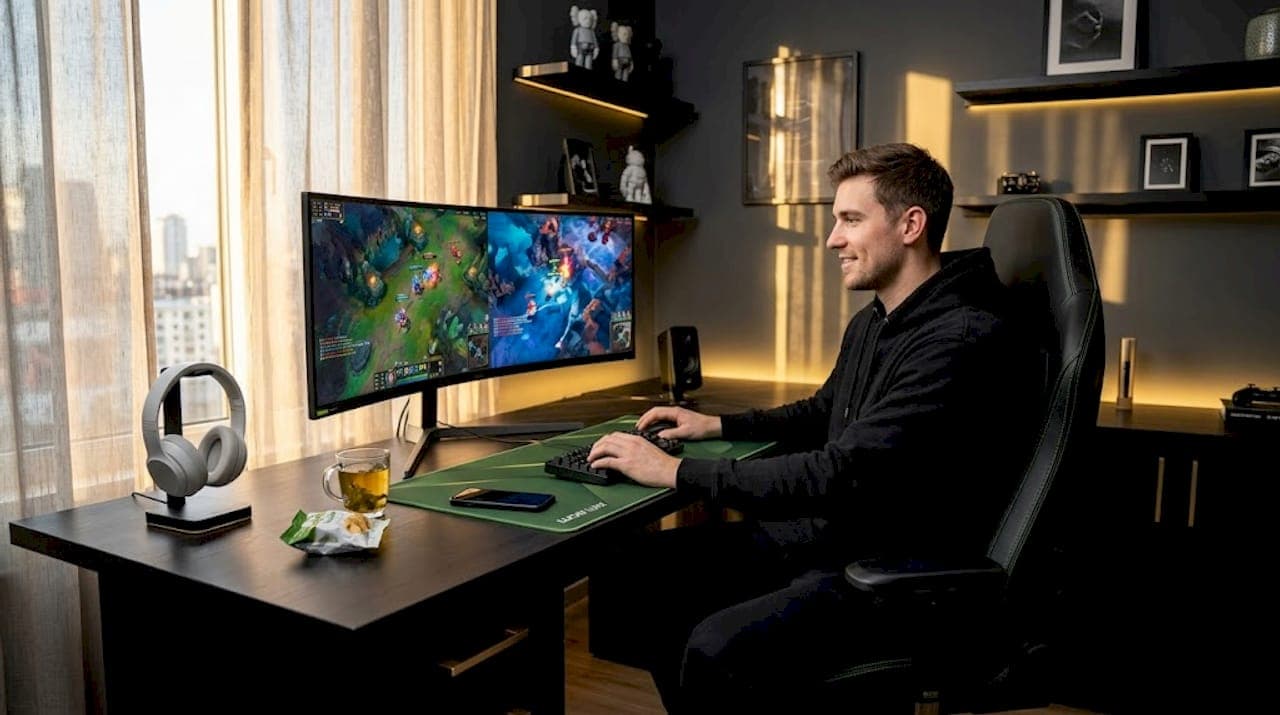
You already know the feeling. You load up a game you loved two weeks ago, play for twenty minutes, and realize you're just going through the motions. If you want to avoid boring repetitive online games, you're not alone and you're not wrong to feel that way. Most casual gamers hit this wall regularly, and the frustrating part is that the problem usually isn't you. It's the game design, the matchmaking, or simply the wrong fit. This guide breaks down exactly why games go stale, how to pick better ones, and what to do mid-session when boredom starts creeping in.
Table of Contents
- Key Takeaways
- Why online games feel boring and repetitive
- How to choose non-repetitive game options
- Step-by-step strategies to stay engaged mid-session
- Common mistakes that make game boredom worse
- How to verify your gaming experience is actually engaging
- My take on why most boredom advice misses the point
- Discover fresh games on Luckyluxe
- FAQ
Key Takeaways
| Point | Details |
|---|---|
| Boredom has specific causes | Endgame dead-ends, weak matchmaking, and poor reward pacing are the main culprits. |
| Game selection criteria matter | Look for procedural content, varied modes, and playstyle-aware matchmaking before committing. |
| The sandwich method works | Interleaving brief novel activities between repetitive tasks resets motivation and sustains engagement. |
| Self-monitoring prevents burnout | Tracking session length and enjoyment moments helps you catch boredom before it kills your interest. |
| Variety beats volume | A smaller library of genuinely varied games beats a massive catalog of games that all feel the same. |
Why online games feel boring and repetitive
Not every game gets boring for the same reason. Understanding the specific cause helps you fix the right problem instead of just quitting and starting over somewhere new.
The most common culprit is a core gameplay loop that never changes. You do the same three actions, get the same reward, repeat. Without meaningful variation or feedback, the brain stops treating the activity as a challenge and starts treating it as a chore. Research confirms that instant feedback and variation are what keep actions from feeling like pure repetition.
Then there's the endgame dead-end problem. You get good at a game, master its systems, and suddenly ask yourself: "Now what?" That question is a signal. According to game design research, mastery without new challenges causes what's called competence starvation, where players disengage not because the game is bad but because it has nothing left to offer them.
Matchmaking plays a bigger role than most casual gamers realize. When you keep getting placed against players with the exact same playstyle, every match feels scripted. There's no surprise, no adaptation required. Playstyle-driven matchmaking that gradually shifts your lobby composition is one of the most underrated tools for keeping multiplayer fresh.
Finally, effort-to-reward imbalance kills motivation fast. When you grind hard and the payoff feels arbitrary or tiny, telemetry data from gameplay sessions shows players drop off quickly. The game hasn't gotten harder. It's just stopped feeling worth it.
- Flat gameplay loops with no variation or escalation
- Endgame dead-ends where mastery leads nowhere new
- Repetitive matchmaking that creates predictable encounters
- Poor effort-to-reward ratios that make progress feel pointless
- No progression clarity, leaving you unsure what to do next
Pro Tip: When you start feeling bored, ask yourself "Now what?" If you can't answer it, the game has hit a dead-end for you personally. That's your cue to switch modes, try a new game type, or take a break.
How to choose non-repetitive game options
Picking the right game upfront saves you hours of frustration. The criteria below apply whether you're choosing a new slot title, an arcade game, or a multiplayer shooter.
Look for dynamic content and real choices
Games with procedurally generated content or multiple branching paths give you something new each session. The key question to ask before committing to a game: does it offer meaningful choices, or does it just simulate them? A game with ten modes that all play identically isn't variety. A game with three modes that each require a different strategy actually is.
Check the matchmaking design
Before you invest time in a multiplayer game, look up how its matchmaking works. Playstyle-aware matchmaking that adapts your opponent pool over time creates evolving experiences instead of static ones. Games that only match by skill level alone tend to produce repetitive encounters faster.

Use platforms with broad catalogs
Platforms offering large game libraries give you the flexibility to switch without starting from scratch. For example, Tabletopia offers 2,500+ games free online, which is a strong example of how breadth of choice directly supports casual gamers who want to avoid repetition.
| Feature to look for | Why it matters | Example |
|---|---|---|
| Multiple distinct game modes | Prevents the same loop from dominating every session | Arcade games with timed and free-play modes |
| Procedural or dynamic content | Generates new scenarios each time | Roguelite-style games |
| Playstyle-aware matchmaking | Keeps multiplayer encounters fresh | Skill plus behavior-based lobbies |
| Clear progression systems | Lets you always know what you're working toward | Level-up systems with visible milestones |
| Varied reward structures | Mixes small wins with big payoffs | Daily bonuses plus rare jackpots |
Pro Tip: Before downloading a new game, search for "endgame content" in reviews. If players consistently say there's nothing to do after the first week, skip it.
Step-by-step strategies to stay engaged mid-session
Even the best-chosen game can get repetitive if you play it wrong. These strategies work in real time, during your actual session.
-
Use the sandwich method. Research on motivation shows that brief interest episodes between boring tasks sustain engagement longer than grinding straight through. Practically, this means: play a familiar mode for 15 minutes, try a new game or mode for 5 minutes, then return. Your brain resets its reward sensitivity.
-
Make a choice whenever you can. Back-to-back low-agency segments are one of the fastest ways to kill engagement. If the game is forcing you through a scripted sequence with no input, skip it or find a mode where you're actually deciding something.
-
Switch modes before you're bored, not after. Most players wait until they're fully disengaged to change what they're doing. By then, the damage is done. Set a personal timer: after two consecutive sessions that feel flat, try a different mode or game type.
-
Use social features actively. Joining a guild, entering a tournament, or even just playing with a friend changes the dynamic of a game you already know. The social layer adds unpredictability that solo play can't replicate.
-
Adjust difficulty or pacing settings. Many games let you tweak challenge levels, speed, or session length. If a game feels too easy, it will feel repetitive. Bump the difficulty before you decide the game itself is the problem.
Pro Tip: Set a "boredom checkpoint" at the 20-minute mark of any session. If you're not genuinely engaged by then, switch. Don't push through hoping it gets better. It rarely does.
Common mistakes that make game boredom worse
Most casual gamers make at least one of these errors. Recognizing them is faster than fixing them after the fact.
- Grinding toward endgame too fast. Rushing through content to reach the "good stuff" often leads directly to the dead-end problem. You skip the variety and land in a zone where there's nothing left to unlock.
- Ignoring matchmaking signals. If you're winning or losing by huge margins every match, the matchmaking isn't working for you. That's a sign to try a different server, mode, or game entirely.
- Playing without a goal. Logging on with no objective leads to aimless sessions that feel hollow. Even a small goal, like trying one new feature or beating a personal score, gives the session a shape.
- Staying in a dead game. Some games genuinely run out of content. If the community is shrinking and updates have stopped, no strategy will fix the experience. Move on without guilt.
- Skipping the social layer. Multiplayer games especially are designed around human unpredictability. Playing them solo or avoiding community features strips out a major source of variety.
How to verify your gaming experience is actually engaging
Knowing when to stay and when to leave a game is a skill. These methods help you read your own engagement honestly.
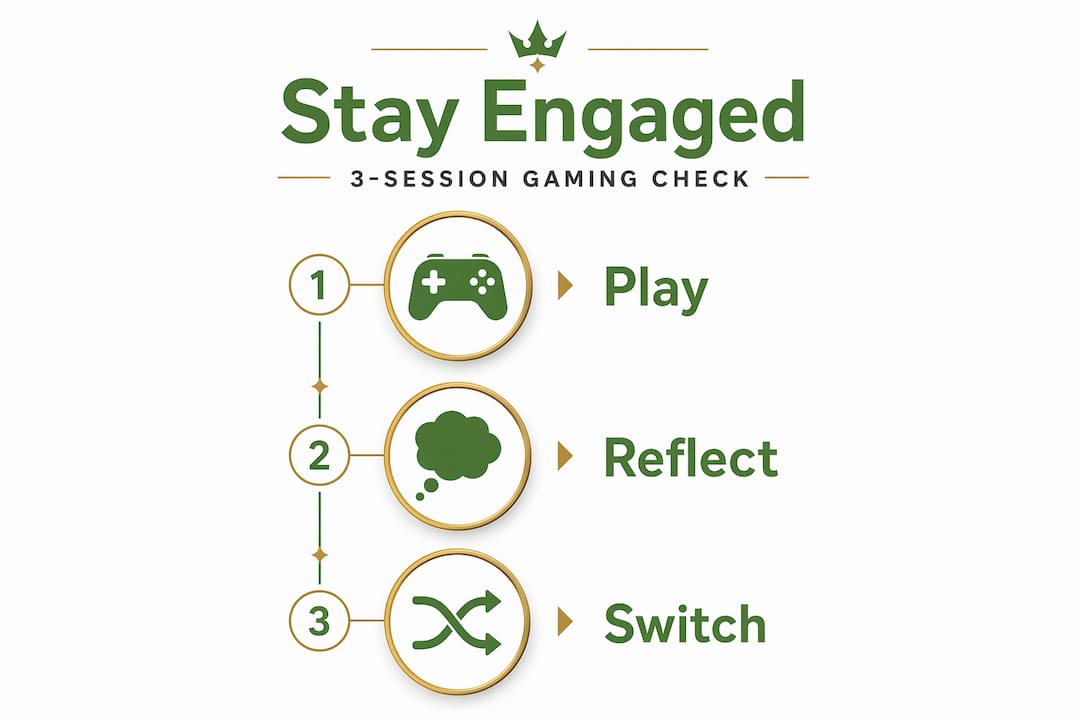
Track your own session data
You don't need an app for this. Just notice three things after each session: how long you played, how many times you retried something out of genuine interest versus obligation, and whether you felt satisfied or just relieved it was over. This mirrors what telemetry signals like retries and drop-offs reveal about where variety fails in game design. Apply the same logic to yourself.
Recognize early boredom signals
The signs show up before you consciously register boredom. You start checking your phone mid-session. You play on autopilot. You feel mildly irritated rather than challenged. These are not personality flaws. They're accurate signals that the game has stopped offering you something new.
Know when to explore new genres
| Signal | What it means | Next step |
|---|---|---|
| Auto-pilot play | Game is too familiar | Try a new mode or genre |
| Consistent lopsided matches | Matchmaking mismatch | Switch servers or game type |
| "Now what?" feeling | Endgame dead-end reached | Look for games with ongoing content |
| Session feels like a chore | Effort-reward ratio is off | Adjust difficulty or switch games |
Pro Tip: Give a new game genre three sessions before judging it. The first session is always awkward. The second is where real engagement signals start to show.
My take on why most boredom advice misses the point
I've spent years watching casual gamers cycle through the same frustration: play a game, get bored, find a new game, repeat. The standard advice is always "just try more games." That's not wrong, but it's incomplete.
What I've found is that most boredom isn't about the game. It's about the relationship between your current skill level and what the game is asking of you. When that gap closes and the game stops asking anything meaningful, you're not bored. You're competence-starved. That distinction matters because the fix isn't always a new game. Sometimes it's a harder mode, a different playstyle, or a community challenge.
The other thing I've learned is that brief novelty bursts between familiar gameplay work better than people expect. It feels counterintuitive to step away from a game you're enjoying to try something else. But the motivation reset is real and measurable.
My honest take: the best casual gamers I've seen aren't the ones with the biggest game libraries. They're the ones who know how to read their own engagement and act on it quickly. That skill is worth more than any game recommendation.
— Skyline
Discover fresh games on Luckyluxe
If you've been cycling through the same titles and hitting the same walls, the problem might simply be your platform's range.
Luckyluxe is built specifically for casual gamers who want variety without the friction of hunting across a dozen different sites. The platform offers slots, fishing games, arcade titles, and more, all in one place with high-quality graphics and fair play built in. Hot game highlights and rotating promotions surface new options regularly, so you're never stuck staring at the same catalog. Whether you're looking for a quick session or something to sink time into, explore Luckyluxe and find your next favorite game before boredom gets a foothold.
FAQ
What makes an online game repetitive?
A game becomes repetitive when its core loop stops offering meaningful variation, new challenges, or clear progression. Endgame dead-ends and flat reward structures are the most common causes.
How do I find fun online games that stay interesting?
Look for games with multiple distinct modes, procedural content, and playstyle-aware matchmaking. Platforms with large, varied catalogs also help you switch quickly when one game goes stale.
Does matchmaking affect how boring a game feels?
Yes, significantly. Playstyle-driven matchmaking that adapts over time keeps multiplayer encounters unpredictable and engaging, while static skill-only matching tends to produce repetitive encounters.
What is the sandwich method for avoiding game boredom?
The sandwich method involves placing a brief, novel activity between repetitive gameplay segments. Research shows that interest episodes between boring tasks reset motivation and sustain engagement longer than grinding straight through.
When should I quit a game and try something new?
Quit when you're playing on autopilot, sessions feel like obligations, or you keep asking "Now what?" with no answer. These are reliable signs the game has stopped offering you genuine variety in online gaming.