

Treat every shot like a dollar leaving your pocket, because that's exactly what it is. The most reliable fish table strategy is simple to state and hard to follow under pressure: farm cheap, high-probability targets for steady returns, keep your ammo bank intact, and only swing for bigger fish when a multiplier or boss window flips the math in your favor. Practice tables let you drill this without burning real value, and NCPG's responsible-gambling guidance is worth a look before you set your session limits.
TL;DR:
- Prioritize low-hit-point fish that die quickly and focus on clustered targets to maximize shot efficiency and conserve ammo.
- Use practice modes to test weapon behavior and fine-tune aiming before playing with real money, avoiding costly mistakes.
- Save a portion of your ammo reserve for multiplier windows or boss fights, and only deploy it when specific conditions like high fish density and active multipliers align.
- Avoid chasing fish near the screen edges, as they often escape before you can hit them, and adjust your firing strategy based on wave density and movement patterns.
- Set clear session limits and stop-loss points beforehand, and match cannon power to target hit points to prevent wasting ammunition on low-value targets.
Table of Contents
- Fish Table Strategy Checklist You Can Use Right Now
- Which Fish Are Worth Your Bullets?
- Ammo, Bet Sizing, and Bankroll Rules
- When to Go Aggressive: Power-Ups and Multiplier Windows
- Reading the Table Before You Fire
- Boss Fights: When the Ammo Math Actually Works
- Practice Modes and Playing Within Your Limits
- What Playtesting These Rules Actually Taught Me
- Try These Tactics on Lucky Luxe's Fish Tables
- Sources
- FAQ
Fish Table Strategy Checklist You Can Use Right Now
Before the cannons even load, run through this list. It's the difference between a session that builds your balance and one that bleeds out in ten minutes.
- Farm small fish first. They die in one or two hits and keep your ammo bank alive.
- Cluster-focus your aim. Groups of fish crossing the same lane let one shot clip two or three targets.
- Use the moustache sweep on dense waves. A slow diagonal drag across a school lands partial damage on everything in its path.
- Skip edge-runners. Fish hugging the screen border often escape before your shot lands.
- Bank ammo during dead phases. Save your reserve for when a multiplier icon lights up.
- Learn the paytable cold. Payout-to-HP ratio is the only number that matters.
- Test weapons in play mode first. Cannon behavior varies more than most players expect.
- Set a stop-loss before you start, not after you're down.
Pro Tip: Time your moustache sweep at the very start of a wave, right as fish spawn in tight formation. Wait two seconds and they scatter, and the sweep loses most of its value.
Which Fish Are Worth Your Bullets?
Value-per-bullet is the entire game. A fish worth 50 coins with 10 hit points is a worse bet than one worth 20 coins with 2 hit points, even though the payout looks smaller. Experienced players lean on a four-tier priority system to make that call in a second or two: small fish for steady farming, medium clusters for efficient multi-kills, corner-trapped or slow-moving mid-tier fish when they're cornered against the screen edge, and bosses only when specific conditions line up. That tiered framework keeps you from wasting shots chasing flashy targets that eat your ammo bank alive.
Reading speed and position takes practice, but three checks cover most decisions:
- Check hit points against payout. Anything with a payout-to-HP ratio you can't recall from the paytable gets skipped.
- Check clustering. Two or more fish moving in a line beat one isolated high-value target almost every time.
- Check escape trajectory. If a fish is heading toward a screen edge or a exit lane, let it go.
Ammo, Bet Sizing, and Bankroll Rules
Your ammo is your bankroll, full stop. Set a session limit before you touch the cannon, decide your stop-loss (the point where you walk away), and pick a win-target so a hot streak doesn't quietly turn back into a loss.
A commonly used split among consistent players runs roughly 60% on farming small fish, 30% on mid-value clustered targets, and 10% reserved for boss attempts or high-risk plays.
Session allocation example: With a $20 session bankroll, that's about $12 spent farming, $6 on mid-tier targets, and $2 held back strictly for a multiplier or boss window. If that reserve gets spent early, the smart move is to drop back to farming, not chase it.
Adjust the split as your balance moves. Dropping below your stop-loss threshold means tightening back to farming only, full stop, no exceptions. Match cannon power to the target too. A higher-power cannon on a two-HP fish just burns extra ammo for no extra payout.
When to Go Aggressive: Power-Ups and Multiplier Windows
Multipliers change the entire equation. A shot that normally returns less than it costs can flip to solidly positive expected value the moment a multiplier or bonus fish appears on screen. That's when reserved ammo earns its keep.
Three things should line up before you spend from that reserve:
- You still have ammo held back specifically for this moment.
- The table shows clear activity, meaning other players are engaged and fish density is high.
- A visible bonus or multiplier indicator is active, not just a hunch that one is coming.
Pre-position your aim before activating any global power-up rather than after. Activating it and then scrambling to aim hands-free value to everyone else at the table. A conservative play during a quiet multiplier window is to hold fire and wait for density to build. An aggressive play, once density and multiplier line up, is a fast sweep across the whole cluster before the window closes.
Reading the Table Before You Fire
Fish tables run in cycles. Cold phases bring sparse, slow spawns. Hot waves bring dense schools, faster movement, and sometimes special or bonus spawns that signal a shift worth reacting to.
Watching spawn markers and movement speed tells you which phase you're in before you fire a single shot, and that pattern repeats across sessions once you know what to look for.
Other players' behavior matters just as much as the fish. A wounded boss with heavy damage already on it is worth a last-shot snipe. A fresh school that three other cannons are already tracking usually isn't worth contesting for scraps.
- Switch to a faster, lower-power weapon during hot waves to farm volume.
- Move your aim toward the densest cluster rather than chasing the flashiest single fish.
- Slow your fire rate during cold phases to conserve ammo until the next wave builds.
Boss Fights: When the Ammo Math Actually Works
Boss kills pay big, but they're high variance, and the ammunition cost adds up fast if the boss survives long enough to drain your reserve. Boss mechanics reward patience over persistence: the smartest window to commit is when someone else has already worn the target down.
Three conditions should all be true before you spend reserve ammo on a boss:
- The boss is already weakened, ideally by other players, so you're not funding the whole fight solo.
- A multiplier or bonus window is active, boosting the expected payout on every shot you land.
- Your reserve can absorb the attempt without touching your farming budget for the rest of the session.
Solo attempts demand a full reserve and a healthy target already showing damage. Group attempts increase your odds of a kill but split the reward, so the sharper move in a crowded fight is often to hold back and land the last shot rather than burn ammo throughout.
Pro Tip: If three or more cannons are already locked onto a boss, wait. Fire your reserve only when its health bar is nearly empty, since that last shot often carries the kill credit.
Practice Modes and Playing Within Your Limits
Every tactic above is easier to learn without real money on the line. Testing weapon behavior and aiming timing in free or Gold Coin play before you touch redeemable currency saves you from expensive trial and error. The fish table lineup runs on this same Gold Coin model, so you can calibrate cannon sensitivity and get comfortable with the moustache sweep before switching to Sweeps Coin play.
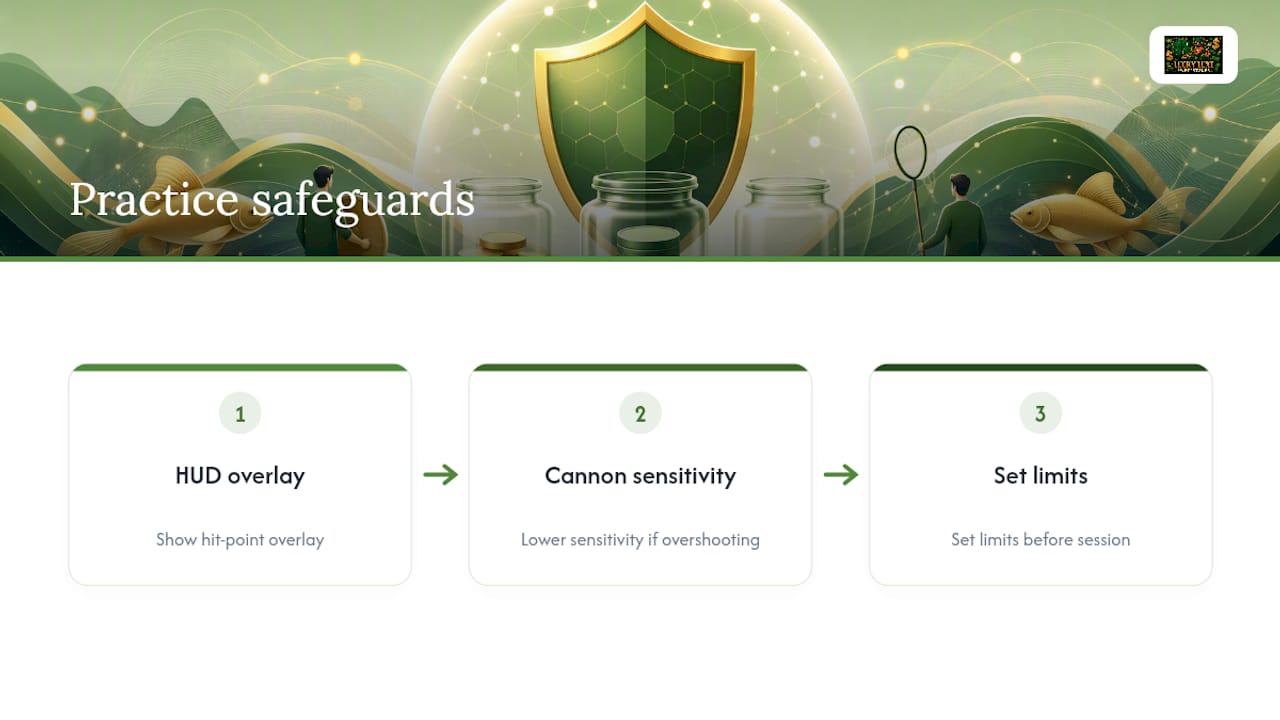
A couple of settings tweaks are worth trying in your next practice block: turn on any HUD overlay showing hit points, and lower cannon sensitivity slightly if your shots consistently overshoot moving clusters. Pair that practice habit with the responsible-play toolkit so your limits are set before, not after, a session gets exciting.
What Playtesting These Rules Actually Taught Me
Running the 60/30/10 split through a handful of practice sessions changed one habit fast: the urge to chase a boss the moment it appeared. Waiting for an actual multiplier window instead of firing on impulse turned a break-even stretch into a session that ended ahead. Try this in your next ten-minute practice block: hold your reserve ammo untouched until you see a multiplier indicator, even if it means watching a boss walk past untouched.
— Skyline
Try These Tactics on Lucky Luxe's Fish Tables
You can run every rule in this guide before a single Sweeps Coin is on the line. Gold Coin play mirrors the same cannons, hit points, and multiplier windows you'll see in paid sessions, so testing your value-per-bullet instincts and your 60/30/10 split costs nothing while you're still building confidence.
The platform's fish table lineup rotates featured games regularly, and the referral program adds bonus Gold Coins if you want extra practice room without buying more. Ready to test your ammo discipline for real? Start a practice session on Lucky Luxe and see how the 60/30/10 allocation holds up over a full round.
Sources
- Responsible gambling — NCPG
- Boss fishing hunting guide — DungeonPath
- Fish Shooting Game Strategy Guide | How To Win At Fish Games
FAQ
What is the secret to winning at fish table games?
There's no single trick. Consistent winners treat ammo as bankroll, prioritize high value-per-bullet targets, and save aggressive plays for multiplier or boss windows instead of firing at everything on screen.
How do I win at a fish card or fish shooting game consistently?
Consistency comes from knowing your paytable, testing weapons in practice mode first, and setting a stop-loss before you start rather than reacting after a losing streak. Lucky Luxe's Gold Coin practice tables are built for exactly that kind of low-stakes calibration.
What are the best tips and tricks for fish eat fish games?
Focus on clustered targets over isolated ones, use sweeping fire patterns during dense waves, and avoid chasing fish near the screen edge since they tend to escape before a shot connects.
Should I ever go after a boss fish?
Only when it's already weakened, a multiplier is active, and your ammo reserve can absorb the attempt without touching your farming budget for the rest of the session.