
Sweepstakes casinos remain legal to operate in most of the United States, but that map is shrinking fast. Roughly a dozen states now have explicit bans or gambling laws that capture the dual-currency model, several more are restricted through active enforcement, and the rest still allow it under promotional sweepstakes law, at least for now. Check the state-by-state table below or an operator's own eligibility page before you deposit, because the Office of the New York Attorney General and states like California, under AB 831, moved fast in 2025 and 2026.
TL;DR:
- Most states still legally permit sweepstakes casinos as long as no-purchase entry methods are genuine and disclosed, though enforcement actions are increasing.
- Active legislative and enforcement efforts from 2025 to 2026 have targeted the dual-currency model, leading several states to ban or restrict sweepstakes gambling.
- States with explicit bans include California, New Jersey, New York, Maine, and others, often citing virtual currency equaling consideration as illegal gambling.
- Get familiar with your state's current laws and check operator eligibility pages before depositing, as many platforms geo-block banned or restricted states automatically.
- If an operator exits your state or stalls redemptions, keep records and file complaints with your state attorney general or the FTC; avoid using VPNs to bypass bans.
Table of Contents
- How Many States Allow Sweepstakes Casinos Right Now?
- Which States Have Banned Sweepstakes Casinos Outright?
- Sweepstakes Legal States: A Quick Reference by Status
- What Makes a Sweepstakes Casino Illegal Gambling?
- Tracking the 2025 to 2026 Legislative and Enforcement Wave
- What Should You Do If Your State Restricts or Bans Play?
- Player Resources on Redemption, Taxes, and AMOE Timing
- What 2026's Legal Shift Really Means for Players
- Lucky Luxe: Checking Eligibility Before You Play
- Where to Verify Current Sweepstakes Law
- Sources
- FAQ
How Many States Allow Sweepstakes Casinos Right Now?
Sweepstakes casinos operate under a legal theory borrowed from decades-old promotional sweepstakes law: no purchase is necessary to win, and players can always request free entries through an alternative method. That theory holds up in most states, but it has been tested hard in the last two years.
As of late 2026, many states still treat sweepstakes casinos as generally legal, provided the operator follows sweepstakes rules rather than gambling rules. A smaller group of states has passed statutes that specifically ban the dual-currency sweepstakes model or expanded existing gambling codes to cover it. A handful of others sit in a gray zone, where no explicit ban exists but attorneys general have opened investigations or sent cease-and-desist letters that make continued operation risky for platforms and confusing for players.
Three things distinguish these categories in practice:
- Legal states allow operators to run Gold Coin and Sweeps Coin models without state-specific gambling licensing, as long as no-purchase entry methods are real and disclosed.
- Restricted or gray states have no bright-line ban, but active AG scrutiny, cease-and-desist activity, or pending legislation makes the legal footing unstable.
- Banned states have statutes or court findings that classify the sweepses coin model as illegal gambling, regardless of how the sweepstakes language is dressed up.
The pace of change is the real story here. Between 2025 and 2026, several states enacted new statutes or amendments targeting sweepstakes casinos directly, a much faster clip than the prior five years combined. California's AB 831 takes effect January 1, 2026. Oklahoma's SB 1589 follows on November 1, 2026. That legislative wave, combined with the New York Attorney General's $8 million settlement against a major operator, has pushed several platforms to exit markets voluntarily rather than fight in court.
Which States Have Banned Sweepstakes Casinos Outright?
The banned category breaks into two groups: states with statutes written specifically to outlaw the dual-currency sweepstakes model, and states where an attorney general has used existing gambling law to shut operators down through settlement or litigation. Both routes end the same way for players in those states: no legal access to sweepstakes-style Sweeps Coin play.
On the statutory side, the list includes:
- California — AB 831 bans dual-currency sweepstakes gambling, effective January 1, 2026.
- New Jersey — A5447 closes the promotional sweepstakes exemption for virtual casino currency.
- New York — S5925A codifies what enforcement had already established through settlement activity.
- Montana — SB 555 targets simulated gambling devices tied to redeemable virtual currency.
- Connecticut — the 2026 statutory supplement restricts sweepstakes using simulated gambling devices, and narrows what counts as a lawful promotional drawing.
- Indiana — HB 1052 expands the state's illegal gambling device definition to include sweepstakes casino platforms.
- Maine — LD 2007 bans sweepstakes casinos under updated gambling code language.
- Tennessee — SB 2136 restricts the model statewide.
- Louisiana — HB 53 and HB 883 together close off dual-currency sweepstakes operations.
- Oklahoma — SB 1589 takes effect November 1, 2026, one of the most recent additions to the list.
New York took the enforcement path before its statute passed. The Assurance of Discontinuance against VGW Holdings found that the operator's dual-coin structure let players effectively redeem Sweeps Coins for cash, which the AG's office treated as illegal gambling regardless of the sweepstakes label attached to it. That case, paired with the $8 million settlement, has become the template other state AGs point to when they open their own investigations.
Penalties vary by state, but they typically fall into three buckets: civil fines assessed against the operator, injunctive relief requiring the platform to stop offering services to residents, and in some states, criminal exposure for operating unlicensed gambling. Affiliates and payment processors aren't automatically safe either. Several AG actions have named marketing partners and suppliers alongside the primary operator, which is worth remembering if you run a review site or referral program touching this space.
Sweepstakes Legal States: A Quick Reference by Status
The list below reflects publicly available statutes and enforcement activity as of late 2026. Laws move quickly in this space, so treat this as a starting point and confirm with your state's official legislative site or attorney general's page before making any decisions.
| State | Status | Note |
|---|---|---|
| Alabama | Legal | No specific sweepstakes casino statute; general sweepstakes law applies |
| Alaska | Legal | No targeted legislation identified |
| Arizona | Legal | Sweepstakes law applies; no dual-currency ban |
| Arkansas | Restricted | AG inquiry activity reported; no statute yet |
| California | Banned | AB 831 effective January 1, 2026 |
| Colorado | Legal | No specific statute; standard sweepstakes rules apply |
| Connecticut | Banned | 2026 statutory supplement restricts simulated gambling devices |
| Delaware | Legal | No targeted legislation identified |
| Florida | Restricted | Legislative activity pending; enforcement posture unclear |
| Georgia | Legal | No specific sweepstakes casino statute |
| Hawaii | Banned | State prohibits nearly all forms of gambling, including sweepstakes casinos |
| Idaho | Legal | No targeted legislation identified |
| Illinois | Restricted | Legislative proposals introduced; not yet enacted |
| Indiana | Banned | HB 1052 expands illegal gambling device definition |
| Iowa | Legal | No specific statute identified |
| Kansas | Legal | No specific statute identified |
| Kentucky | Restricted | Active AG litigation treats the model as illegal gambling |
| Louisiana | Banned | HB 53 and HB 883 close the sweepstakes exemption |
| Maine | Banned | LD 2007 bans the dual-currency model |
| Maryland | Restricted | HB0295/HB0652 pending in the legislature |
| Massachusetts | Restricted | H4431 pending; no ban enacted yet |
| Michigan | Legal | No specific sweepstakes casino statute |
| Minnesota | Restricted | SF 4474 under legislative review |
| Mississippi | Banned | Existing gambling code interpreted to cover sweepstakes models |
| Missouri | Legal | No targeted legislation identified |
| Montana | Banned | SB 555 targets simulated gambling devices |
| Nebraska | Legal | No specific statute identified |
| Nevada | Banned | State gaming code already prohibits unlicensed simulated gambling |
| New Hampshire | Legal | No targeted legislation identified |
| New Jersey | Banned | A5447 closes the sweepstakes exemption |
| New Mexico | Legal | No specific statute identified |
| New York | Banned | S5925A follows earlier AG enforcement action |
| North Carolina | Restricted | Legislative and enforcement activity reported |
| North Dakota | Legal | No targeted legislation identified |
| Ohio | Legal | No specific sweepstakes casino statute |
| Oklahoma | Banned | SB 1589 effective November 1, 2026 |
| Oregon | Legal | No targeted legislation identified |
| Pennsylvania | Restricted | Gaming Control Board scrutiny reported; no statute yet |
| Rhode Island | Legal | No specific statute identified, though tax filing rules apply to winnings |
| South Carolina | Legal | No targeted legislation identified |
| South Dakota | Legal | No specific statute identified |
| Tennessee | Banned | SB 2136 restricts the model statewide |
| Texas | Legal | No specific sweepstakes casino statute |
| Utah | Banned | State's strict anti-gambling code covers simulated gambling |
| Vermont | Legal | No targeted legislation identified |
| Virginia | Restricted | HB161 pending in the legislature |
| Washington | Banned | State gambling code treats the model as illegal gambling |
| West Virginia | Legal | No specific statute identified |
| Wisconsin | Legal | No targeted legislation identified |
| Wyoming | Legal | No specific statute identified |
This table changes as bills move through committee, so a state marked "restricted" today can flip to "banned" within a legislative session. Always cross-check against the operator's own eligibility list, since most sweepstakes platforms geo-block banned and restricted states automatically.
What Makes a Sweepstakes Casino Illegal Gambling?
Every state gambling statute in the country turns on the same three-part test: prize, chance, and consideration. If all three exist, the activity is gambling, and it needs a license. Remove any one leg, and it's legally a sweepstakes.

Prize and chance are rarely in dispute. Sweepstakes casinos obviously offer prizes, and outcomes are determined by random chance in slot spins or card draws. The entire legal argument comes down to consideration, meaning whether players are effectively paying to play.
Operators have long argued that Sweeps Coins are given away free with Gold Coin purchases, not sold directly, so no consideration changes hands for the sweepstakes entry itself. Regulators increasingly reject that framing. The insight driving recent enforcement is straightforward:
Regulators and attorneys general increasingly treat the dual-currency bundle as consideration when the number of Sweeps Coins included in a purchase package roughly matches the dollar amount paid. If $50 buys a package that happens to include roughly 50 Sweeps Coins, the "free gift" argument looks more like a disguised purchase.
That reasoning anchored the VGW Assurance of Discontinuance in New York and shows up again in Kentucky's complaint, which alleges that purchased and redeemable virtual items amount to illegal gambling under Kentucky's statute regardless of the sweepstakes label. Both cases lean on a few specific operator practices that regulators flag repeatedly:
- Purchase packages where Sweeps Coin quantities track dollar amounts almost one-to-one.
- Alternative Method of Entry (AMOE) options that exist on paper but are buried, slow, or effectively unusable.
- Marketing language that emphasizes winning cash prizes over the promotional, no-purchase-necessary nature of the game.
The USPS consumer guide on sweepstakes and lotteries lays out the federal baseline for a lawful AMOE: it has to be genuinely equal to the paid entry method, not a token gesture. A real free-entry path is the single strongest sign that a platform understands the sweepstakes rules on gaming and consideration.
Tracking the 2025 to 2026 Legislative and Enforcement Wave
The current push against sweepstakes casinos didn't come from one law. It came from a rolling combination of new statutes and enforcement actions, each one giving the next state a template to follow.
Montana moved early with SB 555, targeting the simulated gambling device angle rather than writing sweepstakes-specific language. New Jersey followed with A5447, closing the promotional exemption directly. New York took the enforcement route first, using its existing gambling code to extract the $8 million settlement before codifying the ban through S5925A. California's AB 831 became one of the most closely watched bills of the cycle given the state's market size, with an effective date of January 1, 2026.
Indiana, Maine, Tennessee, and Louisiana each took slightly different statutory approaches: some expanded the definition of an illegal gambling device, others wrote sweepstakes-specific prohibitions into new sections of the gambling code. Oklahoma's SB 1589, effective November 1, 2026, is the most recent addition and suggests the wave hasn't crested yet.
A few patterns are worth watching heading into 2027:
- States with pending bills (Minnesota's SF 4474, Maryland's HB0295 and HB0652, Virginia's HB161, Massachusetts' H4431, Florida's SB 1580) tend to follow the language of whichever neighboring state acted most recently.
- AG enforcement in one state often triggers copycat investigations in others within months, even without new legislation.
- Operators have generally chosen voluntary exit over litigation once a state statute passes, which is why "restricted" status often becomes "banned" in practice well before the letter of the law shifts.
Bill pages on official state legislature sites and AG press release pages remain the most reliable places to track this in real time. Third-party trackers help, but they lag the primary source by days or weeks.
What Should You Do If Your State Restricts or Bans Play?
If you're in a banned or restricted state, the practical steps are the same regardless of which statute applies to you.
- Check the operator's eligibility page first. Most platforms list excluded states directly in their terms, and geo-blocking usually enforces it automatically at sign-up or login.
- If an operator exits your state, don't panic about existing balances. Keep every purchase receipt and redemption notice, contact player support in writing, and ask for a specific redemption timeline.
- If support goes silent or an operator refuses a legitimate redemption, file a complaint with your state attorney general's consumer protection division, and consider a Federal Trade Commission complaint if the platform used deceptive marketing.
Pro Tip: Never use a VPN to mask your location and access a platform in a banned state. It doesn't just risk your account and any pending redemptions. It can also strip away consumer protections you'd otherwise have if a dispute ends up in front of a regulator, since you'd be the one who misrepresented your location.
Never route a complaint through the U.S. Postal Inspection Service unless the issue involves mail fraud specifically. For everything else, your state AG's office and the FTC are the right first stops.
Player Resources on Redemption, Taxes, and AMOE Timing
Understanding your state's legal status is only half the picture. Knowing how redemption actually works day to day matters just as much, and that's where a lot of player confusion happens.
Lucky Luxe's own player resources walk through the mechanics that regulators keep scrutinizing: how Gold Coins and Sweeps Coins differ as a starting point, then the practical redemption side, including why Gold Coins won't convert to Sweeps Coins and typical AMOE processing windows of seven to fourteen days. Tax questions come up constantly too. Winnings from sweepstakes redemptions can trigger reporting obligations, and the no purchase necessary tax rules guide breaks down what to expect at filing time.
Skyline's editorial coverage on this beat focuses on translating statute language and AG filings into plain steps players can act on, which is the same approach behind this state-by-state breakdown. Bookmark your operator's terms page and your state AG's consumer alerts, since both change faster than most player forums keep up with.
What 2026's Legal Shift Really Means for Players
The narrowing of the dual-currency model isn't regulatory overreach. It's regulators catching up to a business model that grew faster than the sweepstakes law it was built on. The consideration argument in the New York and Kentucky cases is sound: when the coins you get roughly match the dollars you spend, calling it a free gift stretches the law past its breaking point.
That doesn't mean sweepstakes gaming disappears. It means the operators built around real no-purchase paths and transparent redemption terms are the ones still standing in three years. Operators are watching every one of these bills and AG filings as they land and keep eligibility pages current rather than making players guess.
Check your state's status before you deposit anywhere, not after.
— Skyline
Lucky Luxe: Checking Eligibility Before You Play
This platform runs on the Gold Coins and Sweeps Coins structure covered throughout this guide, built around player protections rather than around squeezing past them. Gold Coins are for entertainment play. Sweeps Coins, received through promotions or Gold Coin purchases, give players a shot at redeemable prizes without needing to guess whether the fine print holds up.
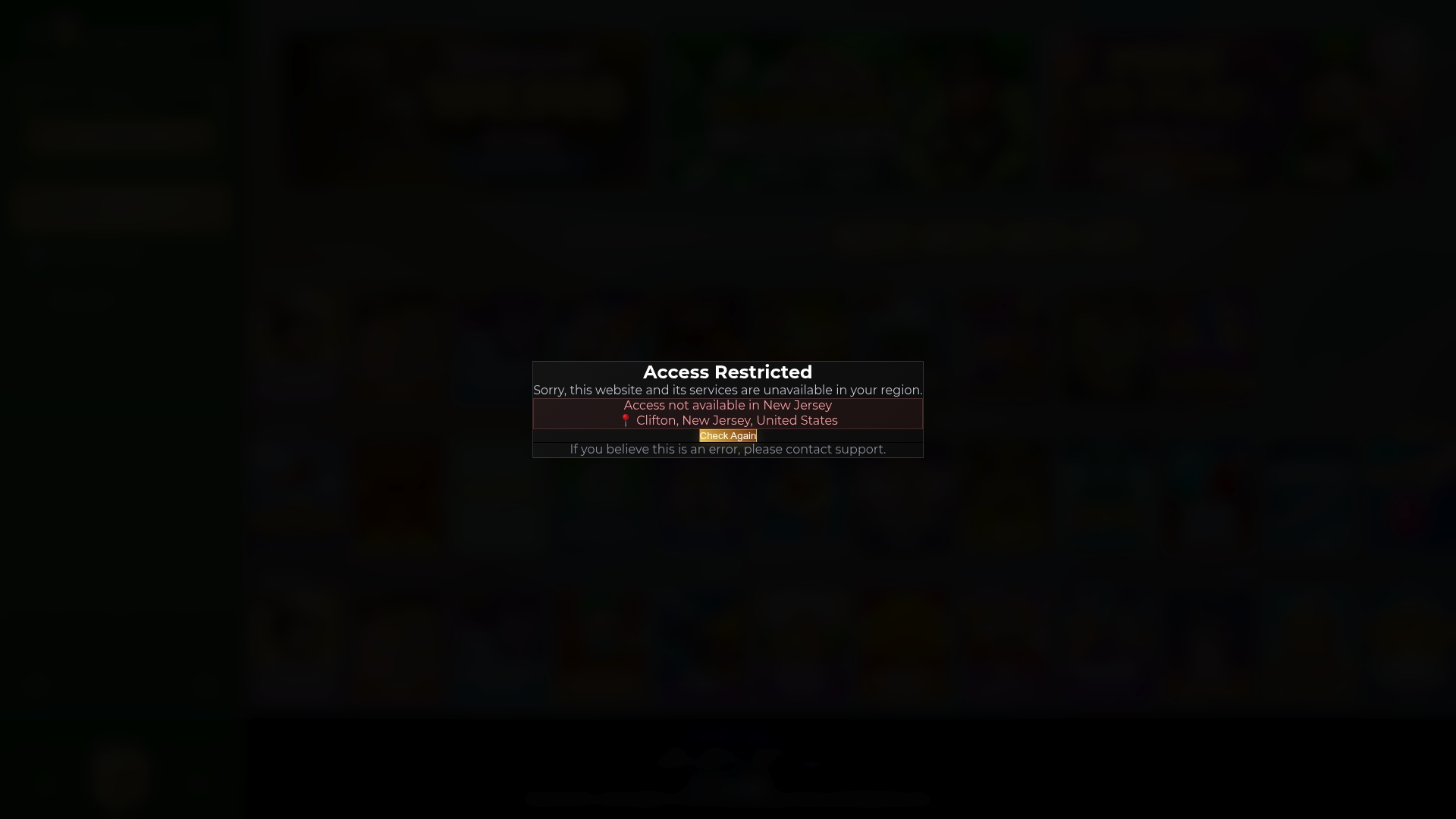
Before you play, confirm your state's eligibility on the Lucky Luxe landing page, where current terms and location restrictions are posted directly. If you want to understand redemption speed before you commit to a purchase, the Sweeps Coin mechanics guide covers typical minimums and processing details, and the social casino compliance checklist walks through five checks worth running on any platform, including Lucky Luxe, before you deposit. Current promotions and eligibility notes are also posted on the player promo page. Check your account's location status today, and read the redemption terms before your first purchase.
Where to Verify Current Sweepstakes Law
State law changes fast enough that any list, including this one, needs periodic rechecking against primary sources.
- State attorney general press releases and Assurance of Discontinuance filings, like New York's
- State legislature bill tracking pages, such as Minnesota's SF 4474 page
- The U.S. Postal Inspection Service's sweepstakes guidance for federal mail-related rules
- The Federal Trade Commission's consumer complaint portal for deceptive marketing reports
This article is general information, not a substitute for advice from a qualified lawyer. Consult a qualified legal professional about your own circumstances before acting on anything here.
Sources
- Attorney General James secures $8 million from leading operator of illegal online sweepstakes casinos
- VGW Holdings Pty. Ltd. - Assurance of Discontinuance (NYAG, 2026)
- Commonwealth of Kentucky v. VGW — Complaint (Kentucky AG, 2026)
- Consumers' guide to sweepstakes and lotteries (U.S. Postal Inspection Service)
- Connecticut general statutes supplement (2026) — Sweepstakes or promotional drawing
FAQ
What are the legal restrictions on sweepstakes in the US?
Federal and state law require that sweepstakes offer a genuine no-purchase-necessary entry method, called AMOE, equal to the paid path. States that treat redeemable virtual currency as consideration, like New York and California under AB 831, classify that structure as illegal gambling instead of a lawful sweepstakes.
Is a sweepstakes casino considered gambling?
It depends on whether all three legal elements exist: prize, chance, and consideration. Regulators in states like New York and Kentucky argue that Sweeps Coin packages priced to match dollar amounts satisfy the consideration element, which is why the Kentucky complaint treats the model as unlicensed gambling.
Can you sue a sweepstakes company?
Players can pursue claims against an operator for deceptive practices, failure to honor redemptions, or misrepresenting AMOE availability, typically through small claims court or by filing a state AG complaint first. Attorneys general have already secured direct relief for consumers, including the $8 million settlement New York obtained from one operator.
Is sweepstakes gaming legal in my state right now?
It depends entirely on your state. Sweepstakes casinos remain legal to operate in most of the United States, but that map is shrinking fast. Roughly a dozen states now have explicit bans or gambling laws that capture the dual-currency model, several more are restricted through active enforcement, and the rest still allow it under promotional sweepstakes law, at least for now. Check the state-by-state table below or an operator's own eligibility page before you deposit.
What happens if an operator exits my state?
Keep your purchase receipts and any redemption notices, then contact player support in writing to request a specific redemption timeline for pending Sweeps Coins. If the operator stalls or refuses a legitimate request, file a complaint with your state attorney general's consumer protection division.
Does Lucky Luxe operate in every state?
No. Lucky Luxe restricts access in states where sweepstakes casino play is banned or legally uncertain, and eligibility is posted on the Lucky Luxe landing page. Always confirm your state's current status there before purchasing Gold Coins.