
Buying Gold Coins is routinely safe on legitimate sweepstakes platforms like Luckyluxe when you check a few trust signals first and use a payment method with dispute protection. Before you enter any card or wallet details, confirm the site shows a valid SSL padlock and works with a recognized payment processor. From there, coin purchase safety comes down to account hygiene and knowing the Gold Coins versus Sweeps Coins model you're buying into.
TL;DR:
- Using a credit card or PayPal provides the strongest recourse in case of fraudulent charges, especially for first-time platform users.
- Ensure the website displays a valid SSL certificate, openly states its payment processors' PCI-DSS compliance, and provides clear sweepstakes rules before purchasing.
- Protect your account with a unique password, enable two-factor authentication, and screenshot purchase confirmations immediately to support dispute claims.
- Avoid third-party resellers, sharing login credentials, or clicking on suspicious links, as most scams target users rather than the platform.
- Check independent reviews and third-party RNG audits to verify the platform’s trustworthiness and reputation.
Table of Contents
- What Is Coin Purchase Safety on a Sweepstakes Platform?
- Quick Safety Checklist for Buying Gold Coins
- How Do Payment Methods Compare for Security and Recourse?
- What Trust Signals Should You Check Before You Buy?
- Common Scams Targeting Coin Buyers and How to Avoid Them
- What to Do If a Purchase Goes Wrong
- How Luckyluxe Protects Players and What We Recommend
- Where Should You Store Coins and Related Credentials After You Buy?
- What Legal and Regulatory Rules Affect Coin Purchases?
- Why Platform Reputation Checks Matter More Than They Seem
- If You Want a Secure Place to Buy Gold Coins
- Author Perspective and Final Takeaways
- Sources
What Is Coin Purchase Safety on a Sweepstakes Platform?
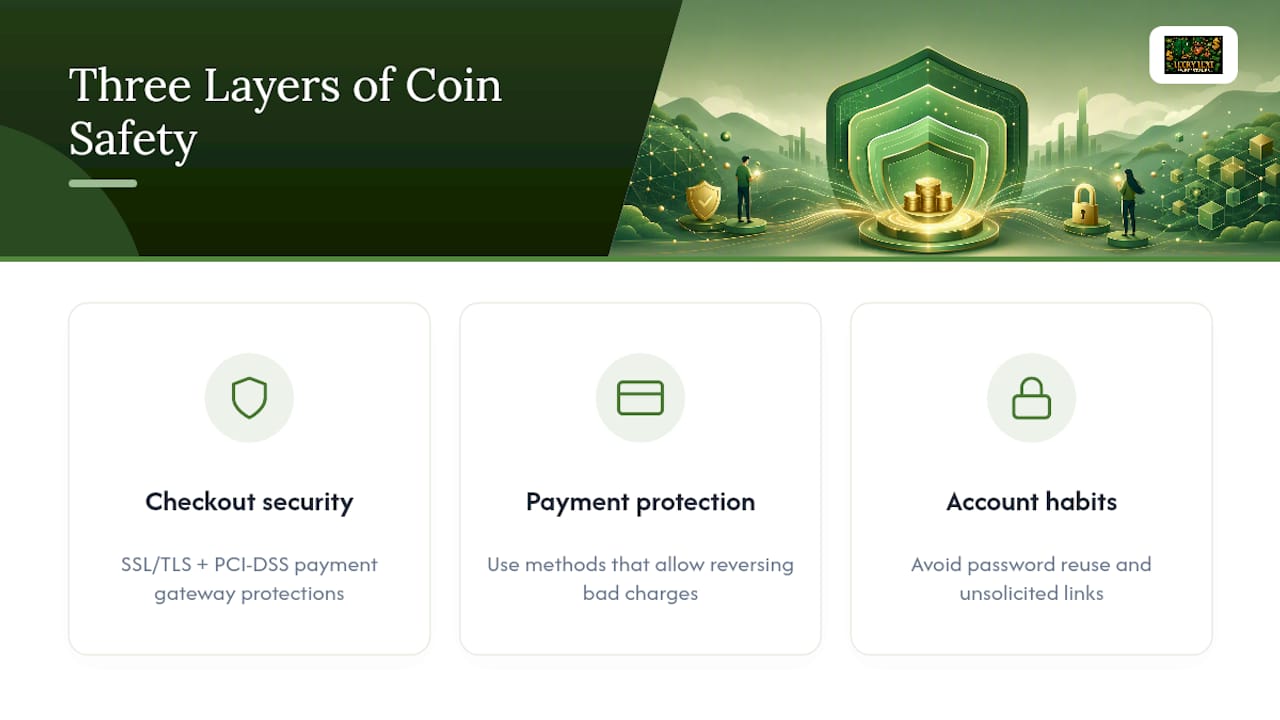
Coin purchase safety refers to the combined set of technical, financial, and behavioral safeguards that protect you when you buy virtual Gold Coins for social casino-style play. It covers three layers at once: whether the platform's checkout is technically secure (SSL/TLS encryption, a PCI-DSS compliant payment gateway), whether your payment method gives you a way to reverse a bad charge, and whether your own account habits (password reuse, clicking unsolicited links) create an opening a scammer can exploit. Miss any one of the three and the other two don't matter much.
This differs from general online shopping safety in one important way: Gold Coins are entertainment currency, while Sweeps Coins, the bonus currency tied to sweepstakes entries, carry redemption value. The CFPB's 2024 analysis of gaming and virtual worlds found that operators in this space often don't offer the same consumer protections banks are required to provide, which puts more weight on the payment method and account security choices you make yourself.
Quick Safety Checklist for Buying Gold Coins
Run through this before you check out, not after:
- Use a unique password for your gaming account and turn on two-factor authentication so a leaked password alone can't unlock your account.
- Look for the HTTPS padlock in your browser bar, plus visible links to a privacy policy, terms of service, and named payment partners.
- Pay with a credit card or PayPal when possible. Both give you a formal path to dispute a charge if something goes wrong.
- Never buy Gold Coins from a third-party reseller, and never give anyone your login credentials in exchange for a "deal" on coins.
- Save your receipt, order confirmation, and a screenshot of any promotion you redeemed. You'll want them if you ever need to dispute a charge.
Security researchers point to unique, non-reused passwords paired with 2FA as the single most effective way to stop a single account compromise from cascading into other accounts tied to the same email or password.
Pro Tip: Take a screenshot of your purchase confirmation the moment you buy. If a dispute comes up weeks later, that timestamp is often the difference between a fast resolution and a drawn-out back-and-forth with your card issuer.
How Do Payment Methods Compare for Security and Recourse?
Not all payment methods protect you equally, and the right one depends on how much you value reversibility versus speed.
- Credit cards. Chargeback rights make this the strongest default for most buyers. If a charge is wrong, unauthorized, or the coins never arrive, your card issuer can reverse it while it investigates.
- Bank transfers or ACH. These carry institutional backing, but they move slower and are harder to reverse once processed. Treat ACH as a "measure twice" payment method, not a first choice for a new platform.
- E-wallets like PayPal. PayPal's own guidance on in-app payments notes that its dispute resolution tools give buyers an added layer of protection beyond what raw card entry offers, plus the convenience of not typing card numbers into every checkout.
- Cryptocurrency. Fast and private, but transactions are final. There's no chargeback if something goes sideways, and you're solely responsible for protecting your wallet keys.
If you're new to a platform, a credit card or PayPal is the pragmatic choice specifically because you're testing trust, not just buying convenience. Save crypto for cases where you already understand wallet security and accept that a mistake is permanent. Compare the deposit methods most sweepstakes sites support before committing to one.
What Trust Signals Should You Check Before You Buy?
A legitimate sweepstakes platform makes its security posture visible, not something you have to dig for. Before entering payment details, check for these:
- A valid SSL/TLS certificate. The padlock icon in your browser confirms your connection to the checkout page is encrypted.
- Named payment processors with PCI-DSS compliance. Legitimate sites state which payment gateway they use and confirm it meets PCI-DSS standards for handling card data.
- RNG certification from an independent auditor. Look for iTech Labs or GLI certification marks, which confirm game outcomes are tested for fairness.
- Clear sweepstakes rules. This includes a published AMOE (Alternative Method of Entry), No Purchase Necessary language, redemption limits, and a stated KYC (know your customer) verification process for cashing out Sweeps Coins.
- Responsive support and a visible privacy policy. A live chat button that goes nowhere, or a privacy policy you can't find, is a red flag worth taking seriously.
Security checklists built for sweepstakes and social casino platforms consistently point to SSL, RNG audits, and KYC transparency as the baseline signals separating a legitimate operator from a fly-by-night one. If a site can't show you at least three of these five items in under a minute of browsing, that's your answer.
Common Scams Targeting Coin Buyers and How to Avoid Them
Most scams aimed at coin buyers don't attack the platform directly. They target you, and they follow a small number of repeatable patterns.
- Free-coin or free-Sweeps-Coin offers that ask for your login. No legitimate promotion needs your password. Norton's research on in-game currency scams documents this as one of the most common vectors for credential theft.
- Phishing links sent through DMs, comments, or video descriptions. Instead of clicking, type the platform's URL from memory or use a bookmark you saved yourself.
- "Coin generator" downloads. These are malware, full stop. There's no software that legitimately generates coins for a platform's server-side currency.
- Impersonator support agents asking you to disable 2FA or hand over recovery codes. Real support never needs you to lower your own security to help you.
- Fake promotions circulating outside official channels. Verify any offer against the platform's own site or its verified social accounts before acting on it.
Security guides for online gamers consistently point to one habit as the single best defense: pause 30 seconds before clicking any unsolicited link, and only log in through a bookmarked page you saved yourself.
Pro Tip: If a message claiming to be from support pressures you to act fast or threatens account suspension, slow down. Urgency is the tell. Legitimate support rarely creates artificial deadlines.
What to Do If a Purchase Goes Wrong
If you suspect fraud or an unauthorized charge, act in this order:
- Contain the damage immediately. Change your password, log out of all active sessions, and confirm 2FA is enabled.
- Check your device login history for sessions you don't recognize, and remove any unfamiliar linked apps or devices.
- Contact platform support with evidence. Include your order ID, timestamps, and screenshots. Documented evidence like this meaningfully improves your odds of a fast resolution.
- Open a dispute with your card issuer or PayPal if the platform can't resolve it directly, supplying the same evidence.
- Run a malware scan on your device, especially if you clicked a suspicious link or downloaded anything unofficial.
- Escalate if needed. Persistent unauthorized charges warrant a formal bank dispute, and in serious cases, a report to your state consumer protection office or the Consumer Financial Protection Bureau.
How Luckyluxe Protects Players and What We Recommend
Luckyluxe is built around fair play and transparency, from a user-friendly interface with high-quality graphics across slots, fishing, and arcade games to promotions that are clearly labeled so you know exactly what you're claiming and why. Referral rewards and support resources exist to make the experience worth trusting, not just worth playing.
Our recommendation mirrors the checklist above: verify the padlock, use a card or PayPal, enable 2FA, and screenshot your confirmations. For a deeper walk-through of the specific technical safeguards behind account and payment security, the Data Security Guide breaks down exactly how encryption and verification work together on a modern sweepstakes platform.
Where Should You Store Coins and Related Credentials After You Buy?
Gold Coins themselves live inside your platform account, not in a separate wallet you manage, so "storage security" here means something different than it does for standalone cryptocurrency. There's no private key to protect for Gold Coins directly. The real exposure is your account credentials and any linked payment methods, which function as the effective "keys" to your balance.
If you also hold cryptocurrency you use to fund purchases, that's where hardware wallets and cold storage matter. A hardware wallet keeps your private keys offline, disconnected from any internet-facing device, which stops remote attackers from reaching them even if your computer is compromised. Cold storage, more broadly, means keeping any significant crypto holdings off exchanges and off hot wallets connected to apps. Only move the amount you plan to spend into a connected wallet right before a purchase.
For your platform account itself, the equivalent of cold storage is minimizing what's linked to it. Don't save your card as the default payment method if you can avoid it. Review which third-party apps or browser extensions have access to your account every few months, and revoke anything you no longer use. A password manager that generates and stores a unique password for your gaming account removes the single biggest point of failure: password reuse across sites, which is how one unrelated data breach elsewhere on the internet ends up draining an account you thought was fine.
What Legal and Regulatory Rules Affect Coin Purchases?
Sweepstakes-model platforms operate under a different legal framework than direct-wager gambling sites, and that distinction is what makes the Gold Coins and Sweeps Coins structure work the way it does. Gold Coins are purchased for entertainment play with no redemption value attached. Sweeps Coins, by contrast, are typically awarded as a bonus with purchase or obtained through free alternative entry methods, and it's the Sweeps Coins that carry redemption value for prizes.
This structure is what lets sweepstakes platforms operate legally in most states without functioning as traditional online gambling. The No Purchase Necessary and AMOE provisions exist specifically to keep the sweepstakes legally distinct from a wager, since you're never required to pay to have a chance at winning. A legitimate platform states these rules clearly and makes the free entry path genuinely accessible, not buried three menus deep.
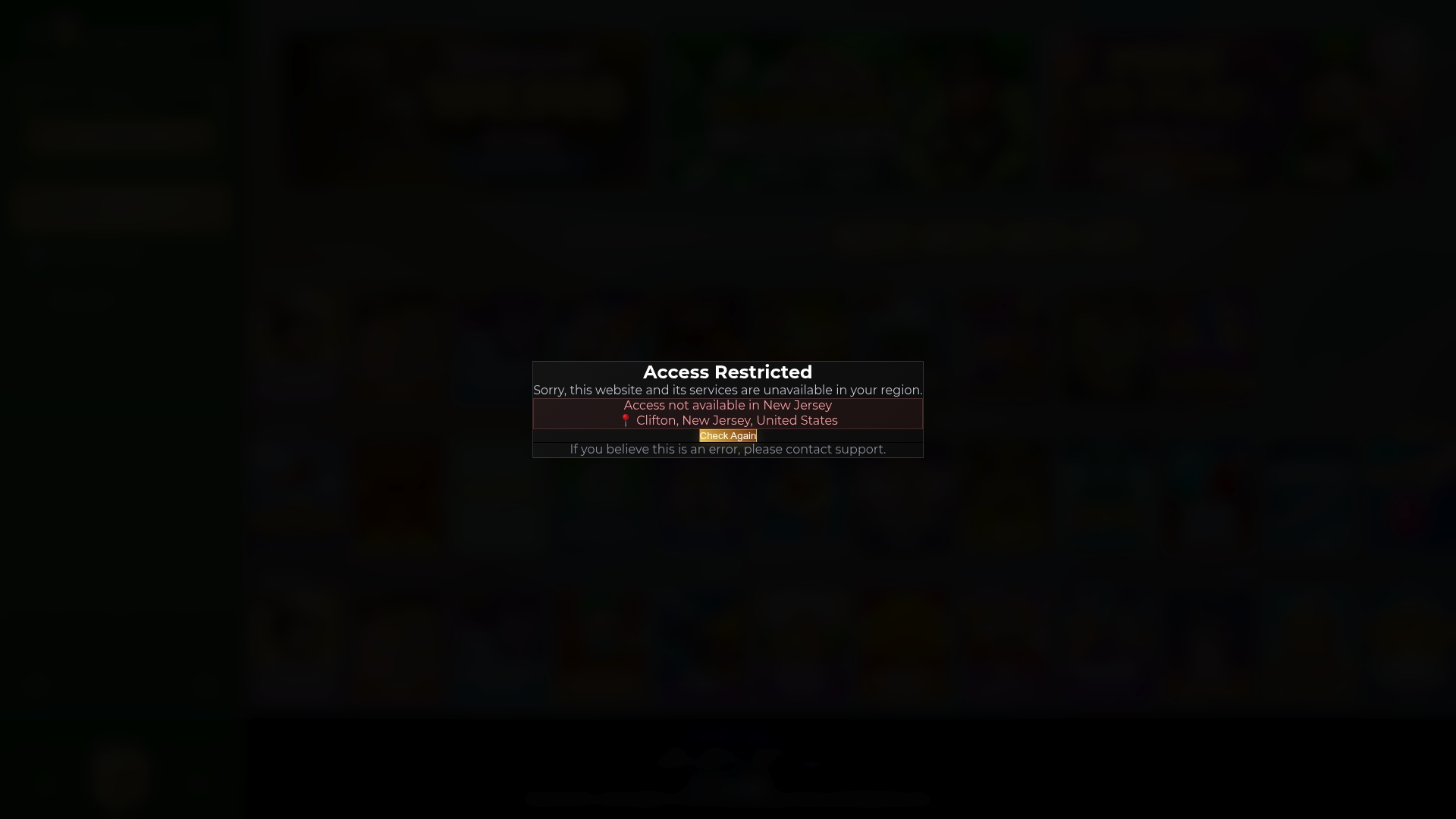
Regulatory attention to virtual currencies in gaming has increased. The CFPB's 2024 review of virtual economies flags that consumer protections common in traditional banking often don't automatically extend to gaming platforms, which is exactly why choosing a payment method with built-in dispute rights matters more here than it might for a typical retail purchase. Rules also vary by state, and a small number of states restrict sweepstakes-model platforms entirely, so checking eligibility in your state before you buy is a real, practical step, not just fine print.
Why Platform Reputation Checks Matter More Than They Seem
A platform's technical security can look flawless on paper and still not tell you the whole story. Reputation checks fill that gap by showing you how the platform behaves when things actually go wrong, not just how it's configured to look on a landing page.
Start with independent reviews outside the platform's own site, on places like Trustpilot or app store reviews, and read the negative ones first. A pattern of complaints about slow support or ignored disputes tells you more than a five-star average ever will. Then check for third-party audits: RNG certification from a named lab like iTech Labs or GLI is verifiable, unlike a vague "certified fair" badge with no auditor attached. The dual-currency model that separates entertainment spend from redeemable balances is itself a reputational signal. Platforms that build clear structural separation between Gold Coins and Sweeps Coins are generally the ones investing in trust as a long-term asset rather than a short-term conversion trick.
Community forums and social media mentions add a layer reviews alone don't capture: how fast a platform responds publicly to a complaint. A brand that engages, explains, and resolves issues in public view is behaving differently than one that stays silent until a chargeback forces its hand.
If You Want a Secure Place to Buy Gold Coins
Between checking SSL certificates, comparing payment processors, and reading reputation signals yourself, you don't need to start from zero. Luckyluxe is built with the trust indicators covered throughout this guide already in place: encrypted checkout, named payment partners, clear sweepstakes rules, and a support team you can actually reach.
If you want a walk-through of exactly how account protections work before you commit to a purchase, the secure login guide covers 2FA setup and password practices in more depth than a checklist alone can. And if you're still deciding how the Gold Coins and Sweeps Coins system fits your goals, the breakdown of how the two currencies work is worth five minutes before you buy your first package. When you're ready, head to the Luckyluxe homepage to browse current Gold Coin packages and start playing with the security basics already handled.
Author Perspective and Final Takeaways
The bottom line hasn't changed since the first paragraph: buying Gold Coins is safe when you verify the platform's trust signals and choose a payment method that gives you recourse. Everything else in this guide is detail in service of that one decision. Three things worth keeping in your back pocket: pay with a card or PayPal when you're new to a platform, treat any free-coin offer that asks for your password as a scam by definition, and screenshot every confirmation the moment you get it. None of these take more than a few extra seconds, and together they cover the overwhelming majority of the ways a coin purchase actually goes wrong.
— Skyline
Sources
- Banking in video games and virtual worlds (CFPB, 2024)
- Free in-game currency scams (Norton)
- Using payment methods securely for in-app purchases (PayPal, 2024)