

Data security on gaming platforms is the practice of protecting your personal information, payment details, and gaming activity from unauthorized access, fraud, and misuse. The role of data security on gaming platforms goes far beyond password protection. Modern platforms deploy TLS 1.3 encryption, the same standard used in online banking, alongside AI threat detection and biometric authentication. Regulations like GDPR and COPPA legally bind platforms to protect your data. Understanding how these systems work gives you real power over your own gaming safety.
How do gaming platforms protect your data?
Gaming platform security measures operate on multiple layers, and each layer addresses a different attack surface. The most visible layer is encryption. Platforms use TLS 1.3 for transit protection, meaning data moving between your device and the server is unreadable to anyone intercepting it. That is the same protection your bank uses when you check your balance.
Privacy by design: built in, not bolted on
Privacy by design means security is built into a platform's architecture from day one, not added as an afterthought. Platforms following this approach collect only the data they actually need, store it with strict access controls, and delete it on schedule. The result is a smaller attack surface. Less stored data means less to steal.
Authentication and access controls
Multi-factor authentication (MFA) is now standard on serious gaming platforms. You confirm your identity through something you know (a password), something you have (a phone), or something you are (a fingerprint or face scan). Biometric security features improve both safety and login speed, which means tighter security does not have to mean a slower experience. If you want to understand how single sign-on fits into this picture, SSO authentication explains the mechanics clearly.

Server-side protections and audits
Beyond your login, platforms protect data at rest through server-side controls. These include offline key storage, data segregation between user accounts, and regular third-party security audits. Licensing bodies like the Malta Gaming Authority and the UK Gambling Commission require platforms to pass these audits and notify users quickly after any breach. That regulatory pressure keeps platforms accountable.
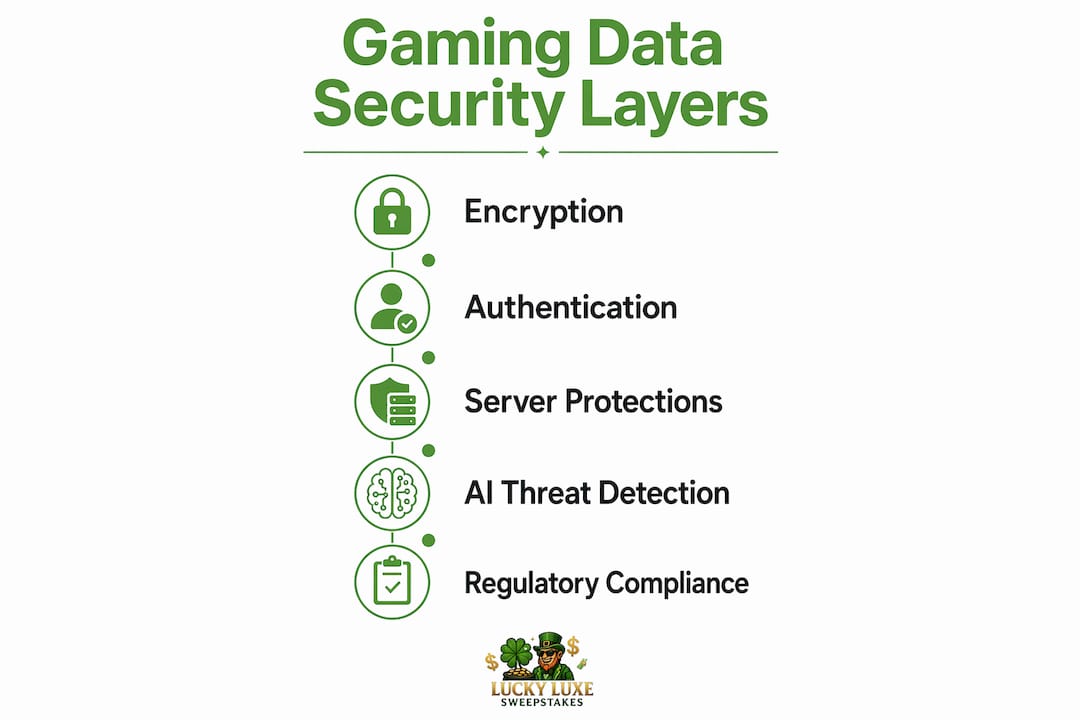
The most advanced platforms now use AI and machine learning to identify threats before they reach players. These systems analyze server logs in real time and block suspicious patterns automatically. Security has shifted from reacting to attacks to predicting them.
Pro Tip: Before creating an account on any gaming platform, check whether it lists its encryption standard, MFA options, and licensing body in its security or privacy documentation. Platforms that publish this information are far more likely to take your data seriously.
Key technical protections to look for on any platform:
- TLS 1.3 encryption for all data in transit
- Multi-factor authentication with biometric options
- Regular third-party security audits
- AI-driven threat monitoring and log analysis
- Offline or hardware-secured encryption key storage
Which regulations shape gaming data privacy?
Data privacy in video games is governed by a growing set of laws that give you concrete rights as a player. These laws vary by region, but their core demands overlap: platforms must get your consent, tell you what they collect, and let you delete your data.
GDPR (General Data Protection Regulation) applies to any platform serving users in the European Union. GDPR fines reach up to 4% of a company's global annual revenue for non-compliance. That financial exposure forces platforms to treat consent and data portability as genuine priorities, not checkbox exercises.
COPPA (Children's Online Privacy Protection Act) applies in the United States to any platform with users under 13. COPPA mandates verifiable parental consent and age-gating, which shapes how platforms design their registration flows and what data they can collect from younger users.
| Regulation | Region | Key Player Right | Platform Obligation |
|---|---|---|---|
| GDPR | European Union | Data erasure and portability | Explicit consent, breach notification |
| COPPA | United States | Parental control over under-13 data | Age-gating, verifiable parental consent |
| LGPD | Brazil | Access and correction of personal data | Lawful basis for processing, DPO appointment |
| PIPL | China | Consent and data localization rights | Local data storage, purpose limitation |
One technical detail worth knowing: platforms often use a soft-delete approach when you request data deletion. Your account data is flagged as deleted rather than immediately wiped, preserving references needed for leaderboards and game logic. Full deletion follows a scheduled purge cycle. This is legal under GDPR as long as the platform discloses it, but you should know your data does not vanish the moment you click delete.
What risks do gamers face from weak data security?
The risks of data breaches in gaming extend well beyond a stolen password. When platforms fail to secure behavioral metadata, the consequences can include identity theft, payment fraud, doxxing, and physical stalking. Aggregated behavioral data from gaming sessions, including your play schedule, location patterns, and social connections, gives bad actors enough information to build a detailed profile of you.
Third-party add-ons and mods are a specific risk that most gamers underestimate. These tools do not typically steal your login credentials directly because sandboxing limits their access. What they can do is collect extensive behavioral metadata that supports social engineering attacks. A bad actor who knows your gaming schedule, your in-game friends, and your communication patterns can craft a convincing phishing message that bypasses your skepticism.
Social engineering is the most underrated threat in gaming security. Technical defenses stop automated attacks. They do not stop a well-researched human pretending to be a platform support agent or a fellow player.
Common risks gamers face from poor platform security:
- Identity theft through exposed personal and payment data
- Payment fraud using stored card details
- Doxxing and stalking enabled by location or behavioral metadata
- Phishing attacks built from aggregated in-game behavior
- Account takeover through credential stuffing on reused passwords
Pro Tip: Use a unique email address and password for every gaming platform. Vet any third-party add-on by checking its permissions before installing. If a mod requests access to your account credentials or network activity, reject it.
How do platforms build trust through transparency?
Digital trust in gaming is earned through clear communication, not just technical strength. Explainable verification means platforms tell you exactly why they are collecting each piece of data and what they do with it. When you understand the purpose behind a security step, you are more likely to complete it and more likely to trust the platform long-term.
Transparency in privacy policies is a specific and measurable practice. Naming actual third-party processors in a privacy policy, rather than using vague language like "trusted partners," is the difference between a policy that builds confidence and one that erodes it. Platforms that list their actual data processors by name are demonstrating accountability. Vague policies create legal exposure and player distrust simultaneously.
Player education is the other half of the trust equation. Platforms that invest in teaching users about password hygiene, phishing recognition, and account security settings reduce their own breach risk. An educated player base is a more secure player base. Here is how leading platforms approach user education:
- Publish plain-language security guides in the help center, not just legal documents
- Send proactive alerts when login attempts come from unrecognized devices
- Offer in-app tutorials on enabling MFA during account setup
- Display real-time notifications when third-party apps request account access
- Run periodic security check prompts reminding players to update passwords
Trust also drives retention. Players who feel confident their data is protected stay on a platform longer and spend more. For platforms, transparency in data practices is not just an ethical obligation. It is a competitive advantage. You can see how this plays out in practice by reviewing secure platform examples that have made transparency a core part of their player experience.
Key takeaways
Strong data security on gaming platforms requires encryption, regulatory compliance, and user education working together. No single layer is sufficient on its own.
| Point | Details |
|---|---|
| Encryption is the baseline | TLS 1.3 protects data in transit; platforms without it expose your payment and personal data. |
| Regulations give you real rights | GDPR and COPPA require consent, data portability, and deletion options from any compliant platform. |
| Behavioral data is the hidden risk | Third-party add-ons can harvest metadata that enables social engineering even without stealing credentials. |
| Transparency builds measurable trust | Platforms that name their data processors and explain security steps retain players and reduce breach risk. |
| AI shifts security from reactive to predictive | Modern platforms use machine learning to block threats before they reach users, not just after an incident. |
Why transparency is the security feature most platforms ignore
I have spent years watching platforms invest heavily in encryption and authentication while completely neglecting the one thing that actually shapes player behavior: clear communication. A platform can have flawless TLS 1.3 implementation and still lose player trust because its privacy policy reads like a legal document designed to obscure rather than explain.
The uncomfortable truth is that most data breaches affecting gamers are not caused by encryption failures. They are caused by players reusing passwords, installing unvetted add-ons, and falling for phishing messages built from publicly available behavioral data. Technical security is necessary but not sufficient. The platforms that will define gaming security in the next five years are the ones investing in player education as seriously as they invest in server infrastructure.
AI-driven predictive defense is genuinely exciting. The shift from reactive to predictive security means platforms can neutralize threats before you ever notice them. But that technology only protects the platform's perimeter. Your habits protect everything inside it.
My honest advice: treat your gaming account like your bank account. Use a unique password, enable MFA, and read the permissions on every add-on before you install it. The platform's job is to protect the infrastructure. Your job is to protect your access to it.
— Skyline
Play with confidence at Luckyluxe
Luckyluxe is built on the security principles covered in this article. The platform uses modern encryption standards, complies with major data protection regulations, and maintains transparent privacy practices that name exactly how your data is handled. Whether you are playing slots, fishing games, or arcade titles, your personal and payment information is protected at every step.
Luckyluxe also offers a referral program, regular promotional highlights, and dedicated support resources so your experience stays rewarding. If you want to game on a platform that takes data protection seriously without sacrificing fun, visit Luckyluxe and see the difference that genuine security commitment makes.
FAQ
What is the role of data security on gaming platforms?
Data security on gaming platforms protects your personal information, payment details, and behavioral data from unauthorized access, fraud, and misuse. Platforms use encryption, authentication, and AI threat detection to keep your data safe.
How does GDPR affect gamers?
GDPR gives players in the EU the right to access, correct, and delete their data, and requires platforms to get explicit consent before collecting it. Non-compliant platforms face fines up to 4% of global annual revenue.
Are third-party gaming add-ons safe to use?
Third-party add-ons are sandboxed from your credentials but can collect behavioral metadata that enables social engineering attacks. Always check an add-on's permissions and only install tools from verified sources.
What is multi-factor authentication in gaming?
Multi-factor authentication requires you to verify your identity through two or more methods, such as a password plus a fingerprint or a one-time code sent to your phone. It is one of the most effective ways to prevent account takeover.
How can i tell if a gaming platform takes security seriously?
Look for platforms that publish their encryption standard, list their licensing body, name actual third-party data processors in their privacy policy, and offer MFA. Platforms that provide this information openly are demonstrating real accountability.