

Fish table odds are set by the game's published RTP, but your aim, weapon choice, and shot discipline determine how close your session comes to that number. RTP is a theoretical ceiling calculated over millions of rounds, not a promise for tonight. Skill won't change that ceiling, but it stops you from leaving money on the table through wasted shots and bad target picks.
TL;DR:
- Skill improves your effective RTP by reducing missed shots and prioritizing realistic targets, increasing your chances of capturing more value within the game's fixed RTP range.
- Published RTPs typically range from 92% to 97%, but actual results can vary wildly due to the game's backend pool adjustments and random number generation elements.
- Firing larger ammo at low-value fish or chasing high multipliers on nearly dead targets can significantly decrease your overall session efficiency.
- Using rules such as pre-set shot caps, managing bankroll, and practicing in demo mode helps maximize your long-term winnings and prevent losses.
- Always verify the game's RTP, paytable transparency, and platform fairness before risking real money, and prefer sites with trusted independent testing and clear redemption terms.
Table of Contents
- What Are Fish Table Games and How Do They Work?
- How Do Odds, RTP, and Backend Math Set Your Payouts?
- Skill vs. Luck: Which Actions Actually Change Your Odds?
- Practical Shot Tactics to Improve Your Effective Odds
- How Should You Manage Your Bankroll for a Session?
- What Should You Check Before Playing on a Platform?
- Skyline's Take: Where the Real Edge Actually Comes From
- Try Fish Tables on Lucky Luxe
- Sources
- FAQ
What Are Fish Table Games and How Do They Work?
It looks like an arcade shooter, but every shot is really a probability roll behind the graphics. The visual moment your bullet hits a fish is separate from the backend calculation deciding whether that fish "dies" and pays.
Most fish table platforms run on the same basic loop. Pick a weapon, load ammo, aim at moving targets, and cash in captures. Arena structures vary a lot between titles.
- Standard wave play: smaller fish swim in patterns, paying modest fixed amounts.
- Boss events: a large, high-value target appears with a shared health bar players chip away at together.
- Bonus rounds: triggered by specific captures, often multiplying payouts for a short window.
The mode you play in matters just as much as the mechanics. Sweepstakes-style sites typically separate Gold Coins, used for social, practice-style play with no cash value, from Sweeps Coins, which carry redemption value and are the currency that actually matters for real prizes. Some platforms also offer straight cash-mode fish tables. Knowing which currency you're firing with changes what "winning" even means in that session.
How Do Odds, RTP, and Backend Math Set Your Payouts?
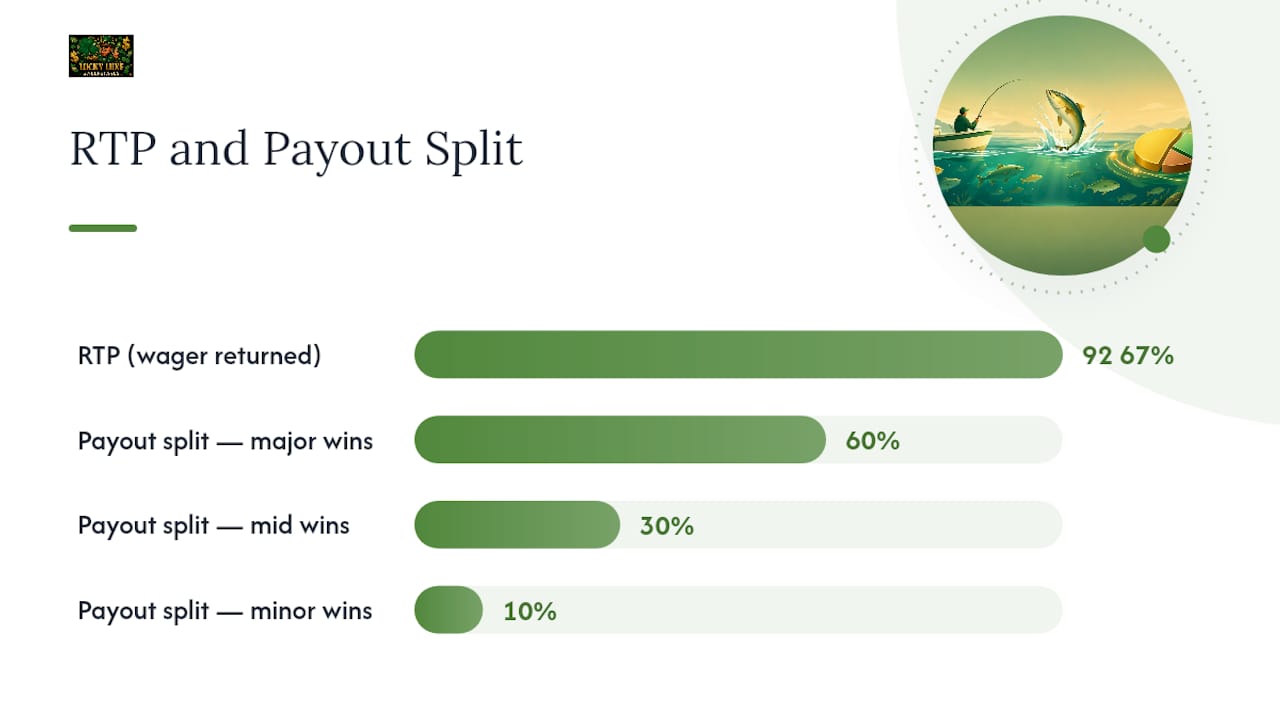
RTP, or Return to Player, is the percentage of all money wagered on a game that theoretically comes back to players over a long enough run. It says nothing about what happens in your 20-minute session tonight, where variance can swing results wildly in either direction.
Published RTP for fish table titles commonly falls between the low 90s and high 90s, with many studios citing ranges around 92% to 97%.
By the Numbers: Fish table RTPs generally land between 92% and 97%, and the specific figure should be published or accessible in the game's paytable before you wager a cent.
Behind that number sits math most players never see. Commercial fish-game engines often run on dynamic water-table or accumulation-pool systems, where the probability of a high-value target actually "dying" shifts based on how much has already been paid out from that pool. When the pool is flush, big fish and bosses die more easily. When it's been drained by a run of lucky captures, the system tightens up to protect operator margins and volatility targets. Some engines even trigger "frenzy" style events once a pool crosses a threshold, temporarily loosening odds to redistribute accumulated value back to players.
This is why two players firing the same weapon at the same boss can have wildly different results in the same five minutes. The visible gameplay is identical; the invisible pool state is not. It's also why chasing a "hot" table based on someone else's recent win is mostly superstition. You have no way to see where the pool sits.
Skill vs. Luck: Which Actions Actually Change Your Odds?
Here's the split that matters most: some parts of fish table odds are pure random number generation, and some are entirely under your control. Mixing these up is the single biggest reason casual players underperform the game's own RTP.
RNG-controlled elements (you can't influence these):
- Whether a specific bullet registers as a kill on a given fish
- Spawn timing and which fish appear on-screen
- The long-run RTP baked into the game's math
Skill-controlled elements (you influence these directly):
- How often your shots actually connect with a target instead of missing
- Matching bullet size and cost to a fish's actual payout value
- Choosing which targets to prioritize based on realistic kill odds, not flashy multipliers
- Timing special weapons or bonus triggers for maximum effect
The gap between these two categories is where real money gets won or lost. Analysis of skilled versus unskilled play shows effective RTP can climb from the low 90s toward the mid-to-high 90s purely by cutting down wasted shots and firing with intention instead of spraying bullets at anything that moves. The RTP number itself never budges. What changes is how much of that theoretical return you actually capture instead of burning on missed or poorly matched shots.
Pro Tip: Track your own shot-to-kill ratio for a session. If you're firing five bullets for every fish you actually capture, you're bleeding efficiency that has nothing to do with bad luck and everything to do with aim and target selection.

Practical Shot Tactics to Improve Your Effective Odds
Closing the gap between theoretical and realized fish table odds comes down to a handful of habits you can apply on your very next session.
- Match bullet size to target value. Firing your biggest, most expensive ammo at a small fish worth a few cents is the fastest way to torch your balance. Save heavy ammo for targets whose payout actually justifies the cost.
- Prioritize by conversion likelihood, not displayed multiplier. A boss flashing a huge multiplier is worthless to you if its health pool is nowhere near dying. Watch shared damage bars and go after targets that are realistically close to capture.
- Set shot caps before engaging a boss. Decide your maximum spend on any single boss attempt before you start firing, and walk away if you hit it, regardless of how close the kill looks.
- Watch other players' contribution on shared targets. On multiplayer boss fights, someone else's damage counts toward the kill. Timing your entry after heavy damage is already logged can mean a cheap capture instead of an expensive one.
- Choose stable, low-lag rooms. A laggy connection means your shots register late or not at all, which quietly tanks your effective RTP no matter how good your aim is.
- Read the paytable and check the RTP before betting real currency. Every title should list this. If it's hidden or missing, that's a red flag worth taking seriously.
- Demo the game first. Playing in Gold Coin or free-practice mode lets you learn a title's spawn patterns and boss behavior with zero risk before you touch Sweeps Coins or cash.
Pro Tip: Spend your first five minutes on any new fish table just watching. Note which fish types die fastest to small ammo before you spend a single Sweeps Coin chasing the wrong targets.
How Should You Manage Your Bankroll for a Session?
Odds and tactics only matter if you still have funds left to use them.
Concrete rules make this workable in practice:
- Set a per-boss shot cap before you engage, based on your 30% allocation, not your total balance.
- Decide your stop-loss point before you start playing, not after you're already down.
- Set a profit target too. Walking away up 20% beats grinding that gain back to zero out of stubbornness.
- Treat Gold Coin sessions as practice runs for pattern recognition, since there's no financial downside to testing tactics there first.
If you notice yourself increasing bet size to chase a loss or ignoring your own stop-loss rule, that's the moment to close the session, not push through it. Lucky Luxe's own 60/30/10 bankroll plan breaks this down further for protecting Sweeps Coins specifically, and general bankroll management techniques built for slots translate well to fish tables too.
What Should You Check Before Playing on a Platform?
Not every fish table platform treats fairness and transparency the same way, and the differences matter more than the graphics do. Before you commit real currency, run through a short checklist.
- Published RTP and accessible paytables. If a platform won't show you the numbers, assume they're worse than average.
- Independent testing or certification. Bodies like eCOGRA exist specifically to verify that a platform's games run fair, audited math.
- Clear currency and mode rules. You should know exactly what separates Gold Coins from Sweeps Coins, and what triggers redemption eligibility, before you deposit anything.
- Transparent redemption terms. Vague or buried rules about cashing out Sweeps Coins are a warning sign worth taking seriously.
- Responsible-play tools. Deposit limits, session timers, and self-exclusion options signal a platform that takes player protection seriously rather than treating it as an afterthought.
Sweepstakes-model sites separate social Gold Coin play from redeemable Sweeps Coins, and reading the fine print on how Sweeps Coins convert to prizes matters more than almost anything else on the page. A wide, well-labeled game library with posted RTP tends to signal a platform actually built for players rather than one hoping you won't check.
Skyline's Take: Where the Real Edge Actually Comes From
Most fish table content treats odds as a mystery box. It isn't. The math is knowable, the RTP ranges are published, and the skill gap between players who fire with intention and players who spray bullets is measurable, not theoretical. That gap is where sessions actually get won.
The players who do best treat every shot like a small bet with its own expected value, not like an arcade reflex test. Lucky Luxe's own 60/30/10 bankroll framework exists because bankroll discipline, not luck, is what lets efficient play compound over a session instead of getting erased by one bad boss chase. Play for entertainment first, respect the limits you set for yourself, and let the math do the rest.
— Skyline
Try Fish Tables on Lucky Luxe
Lucky Luxe gives you a direct way to put these tactics to work instead of just reading about them. The platform runs premium fish tables alongside slots and arcade games, with Gold Coin play for practice and Sweeps Coin modes for a shot at redeemable prizes, plus regular promotions and a referral program for existing players.
If you've been following along with the shot discipline and bankroll rules above, the smartest next move is low-risk: try a title in demo or Gold Coin mode first, get a feel for its spawn patterns and boss timing, and only shift to Sweeps Coins once you've confirmed the RTP and paytable line up with what you expect. Read the fish table strategy breakdown for the full 60/30/10 plan, then head to the Lucky Luxe homepage to see the current fish table lineup and check what's running in promotions this week.
Sources
For fairness verification, see eCOGRA. For help with problem gambling, visit the National Council on Problem Gambling.
- Fish Table Games Online 2026: Win Real Money Prizes
- RTP Math Engine Architecture and Odds Volatility Calibration for Commercial Fish Games – Arcade Manufacturer
- eCOGRA
FAQ
What Are Some Tips for Winning at Fish Table Games?
Match your bullet size to the target's actual payout value, prioritize fish or bosses you can realistically capture, and set a shot cap before engaging anything big. Reducing wasted shots is the single biggest lever you control, since it's what separates a low-90s effective RTP from a mid-to-high-90s one in practice.
What Is the Smartest Bet at a Casino?
In fish tables specifically, the smartest "bet" is choosing a title with a transparent, published RTP, ideally in the 92% to 97% range, and sizing your shots to match target value rather than firing indiscriminately. Outside fish tables, games with fixed, verifiable RTP and low house edges generally offer better long-run odds than novelty side bets.
How Much Does a Fish Table Cost?
Cost depends entirely on the platform and mode you're playing. On sweepstakes-style sites like Lucky Luxe, you can start with Gold Coin practice play at no cost, while Sweeps Coin sessions depend on promotional entries or coin packages, with current pricing listed directly on the Lucky Luxe site.
Can Skill Really Change Fish Table Odds?
Skill can't change a game's underlying RTP, since that figure is fixed by the math engine. It can substantially improve your effective results by cutting wasted shots, which is why disciplined players tend to outperform casual ones over the same number of sessions.
What's the Difference Between Gold Coins and Sweeps Coins?
Gold Coins are used for social, practice-style play with no cash redemption value, while Sweeps Coins carry redemption value and are the currency tied to actual prize eligibility on sweepstakes platforms. Always confirm which currency you're wagering with before you start firing, since the two modes serve completely different purposes.