

Transparency in referral systems means openly disclosing how referrals work, what rewards are offered, and how outcomes are tracked, so users can participate with full confidence. For gamers and online platform users, this clarity is the difference between a program you trust and one you ignore. Platforms like Luckyluxe have built referral programs around this principle, recognizing that players who understand the rules engage more authentically. Research confirms that 88% of users demand disclosure of referral arrangements before they act on them. The role of transparency referral systems is not cosmetic. It is the structural foundation that determines whether a referral program grows or collapses under skepticism.
How transparency in referral systems builds trust and reduces skepticism
Transparent referral systems eliminate the information gap that makes users suspicious of incentive programs. When a platform clearly states what a referrer earns, what the new user receives, and how both parties can track progress, there is no room for doubt. That clarity converts passive observers into active participants.
The numbers behind this are striking. 86% of Americans are more likely to engage with a professional or platform that discloses referral arrangements upfront, and 72% believe hiding referral fees should be illegal. For gaming platforms, this translates directly: players who see a clear breakdown of referral rewards are far more likely to share links with friends than those who encounter vague promises.
Real-time visibility is equally important. Digital referral dashboards reduce manual delays to 5 to 10 minutes and increase trust through live status updates. When you can log in and see exactly where your referral stands, whether a friend signed up, whether the reward is pending or confirmed, the system feels fair. That feeling of fairness is what keeps users engaged long term.
Key behaviors that transparent referral systems prevent:
- Hidden reward conditions that only appear after a user has already referred friends
- Delayed or missing confirmations that leave referrers wondering if their effort counted
- Unclear opt-out paths that make users feel trapped in a program they no longer want
- Vague reward timelines that erode confidence when payouts take longer than expected
Pro Tip: Before joining any referral program on a gaming platform, check whether the platform shows a live referral tracker. If you cannot see the status of your referrals in real time, treat that as a red flag.
What are the benefits of referral transparency for engagement and rewards?
Transparent referral programs produce better outcomes for everyone involved, not just the platform. When users understand exactly what they are sharing and why, their recommendations carry genuine weight. A friend's referral from a player who clearly explains the reward structure is far more persuasive than a generic invite link with no context.

Referral programs that prioritize ethical design over pressure tactics create sustainable trust and long-term growth. This matters in gaming because the community is vocal. Players talk to each other, compare experiences, and quickly identify platforms that manipulate rather than reward. Transparent systems protect a platform's reputation while giving users a reason to keep referring.
Reward structure is where transparency has the most direct impact on fairness. Referral systems that reward based on quality and sustained engagement build stronger trust than those that reward pure volume. A program that pays you more for referring a player who stays active for 30 days is more honest than one that pays the same for any signup, regardless of whether that person ever plays again.
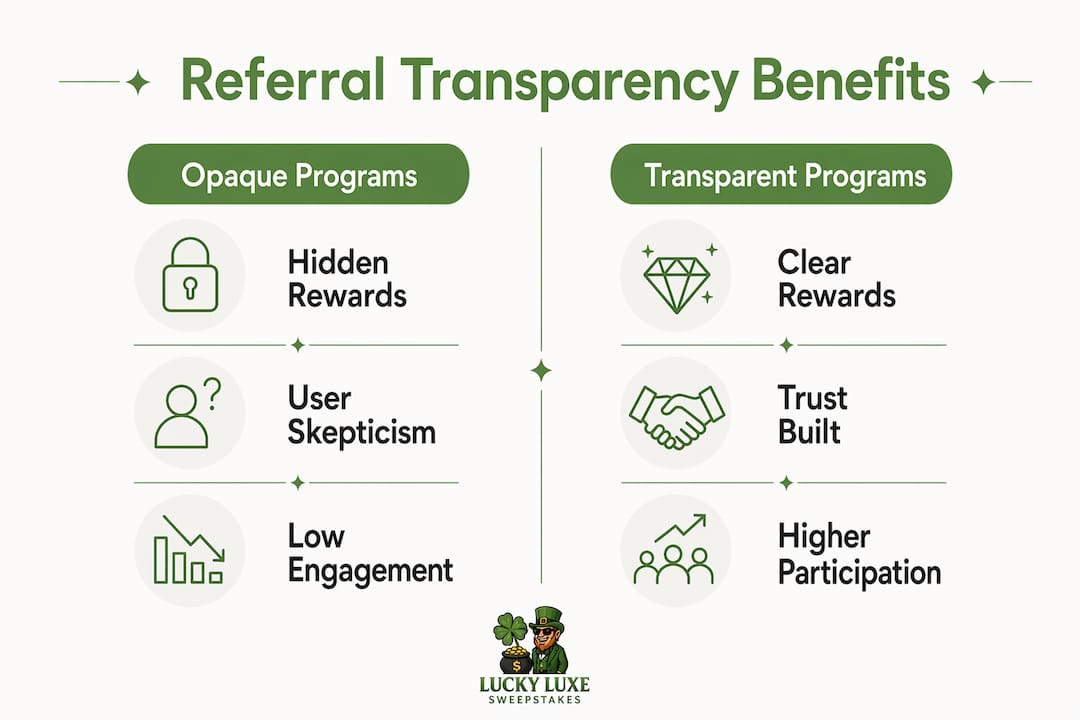
The table below shows how opaque and transparent referral programs compare across the factors that matter most to gamers:
| Factor | Opaque referral program | Transparent referral program |
|---|---|---|
| Reward visibility | Hidden until after signup | Clearly stated before participation |
| Tracking | No real-time updates | Live dashboard with status updates |
| Reward conditions | Buried in fine print | Explained upfront in plain language |
| User trust level | Low, skepticism is common | High, users feel informed and respected |
| Long-term engagement | Drops off after initial signup | Sustained by ongoing clarity and fairness |
Pro Tip: When evaluating a gaming platform's referral program, look for programs that reward engagement milestones rather than just signups. That structure signals the platform values quality over quantity.
What are the common transparency challenges in referral systems?
Even well-intentioned referral programs run into transparency problems. The most common issues are not deliberate deception. They are the result of poorly designed systems that lack the infrastructure to communicate clearly at scale.
The biggest structural problem is the manual handoff. Most users do not realize that manual, opaque referral processes cause the majority of lost referrals. When a referral is tracked through spreadsheets or disconnected systems, confirmations get delayed, rewards go uncredited, and users lose faith. Automated closed-loop tracking eliminates this entirely by giving every party real-time visibility into the referral's status.
Privacy compliance adds another layer of complexity. Users are more likely to participate in referral programs when they trust how their data is handled through clear privacy compliance. Regulations like GDPR and CCPA are not obstacles to transparency. They are tools that, when implemented correctly, signal to users that the platform takes their data seriously. Platforms that display clear data-use policies alongside referral terms see higher opt-in rates.
Here is a breakdown of the most common transparency failures and how modern platforms address them:
| Challenge | Impact on users | Modern solution |
|---|---|---|
| Hidden referral fees | Erodes trust after the fact | Upfront written disclosure before signup |
| No real-time tracking | Users assume referrals were lost | Automated dashboards with live status |
| Unclear reward conditions | Frustration when rewards differ from expectations | Plain-language reward summaries |
| Data privacy ambiguity | Users avoid sharing personal referral links | GDPR/CCPA-compliant data handling policies |
| Manual confirmation delays | Referrers stop participating | Closed-loop automated confirmation systems |
Secure gaming platforms for 2026 are increasingly adopting centralized referral dashboards that combine tracking, reward status, and privacy controls in one interface. This approach removes the guesswork that kills participation.
It is also worth noting that transparent disclosures alone are not sufficient to eliminate conflicts of interest. Strong platform policies must accompany disclosures for the system to maintain integrity. Disclosure without enforcement is just paperwork.
How can gamers use transparent referral systems effectively?
Understanding how to read and use a transparent referral program gives you a real advantage as a player. Most users scan the reward headline and miss the conditions that determine whether they actually earn anything. Knowing what to look for changes that.
Follow these steps to get the most from any referral program on a gaming platform:
- Read the full reward conditions before sharing. Check whether the reward triggers on signup, first deposit, or first active session. Each condition changes your strategy for who you invite.
- Use the platform's referral dashboard from day one. Platforms like Luckyluxe provide real-time tracking so you can see exactly when a referral converts. If a platform does not offer this, ask customer support how referrals are confirmed.
- Share referral links through channels where you have genuine credibility. A recommendation to a friend who trusts your gaming opinions converts at a far higher rate than a mass post to strangers.
- Check the opt-out process before you opt in. A transparent program makes it easy to stop participating. If the exit path is unclear, that tells you something about how the platform treats users.
- Align your referrals with the platform's reward structure. If the program rewards sustained engagement, refer players who are likely to stay active. That approach earns you more and keeps the program healthy.
Pro Tip: Learn how to share referral links securely on gaming platforms before you start. Sharing through the platform's official tools protects both you and your referred friends from fraud.
Customer support quality is also a strong signal of referral program integrity. Platforms that respond quickly to referral disputes and reward questions demonstrate that transparency is a real commitment, not just marketing language.
Key takeaways
Transparent referral systems succeed because they replace guesswork with clarity, turning passive users into confident, long-term participants.
| Point | Details |
|---|---|
| Disclosure drives participation | 86% of users are more likely to engage when referral arrangements are openly disclosed. |
| Real-time tracking builds confidence | Live dashboards reduce delays to minutes and eliminate the uncertainty that kills referral programs. |
| Quality rewards outperform volume rewards | Programs tied to sustained engagement produce stronger trust than those rewarding raw signup numbers. |
| Privacy compliance increases opt-ins | GDPR and CCPA compliance signals data respect, which directly raises referral program participation rates. |
| Disclosure alone is not enough | Strong platform policies must accompany transparent disclosures to prevent conflicts of interest. |
Why I think most gaming referral programs get transparency backwards
Most platforms treat transparency as a legal checkbox. They bury the reward conditions in a terms page, slap a "refer a friend" banner on the homepage, and call it done. That approach does not build trust. It manufactures the appearance of transparency while preserving every information advantage for the platform.
What I have seen work, consistently, is when transparency is treated as a product feature rather than a compliance task. When a platform invests in a real-time referral dashboard, writes reward conditions in plain language, and makes the opt-out process as easy as the opt-in, users notice. They talk about it. That word-of-mouth is worth more than any referral bonus.
The gaming community is particularly unforgiving of opacity. Players who feel misled do not just leave. They warn others. A single thread on a gaming forum about a confusing or unfair referral program can undo months of acquisition work. The platforms that understand this treat every referral interaction as a trust transaction, not a conversion event.
The future of referral systems in gaming points toward reputation-layered models, where a referrer's track record of bringing in quality, engaged players earns them better rewards over time. That structure rewards honesty and filters out low-effort spam referrals. It is the logical endpoint of taking transparency seriously, and the platforms building toward it now will have a significant advantage in two to three years.
— Skyline
Explore Luckyluxe's referral program built on real transparency
Luckyluxe operates a referral program designed around the principles covered in this article. Reward conditions are stated clearly before you participate, referral status is visible in real time through your player dashboard, and the platform's commitment to fair play extends directly into how it handles referral payouts. You are never left wondering whether your referral counted or when your reward will arrive. If you want to experience what a genuinely transparent referral program looks like in practice, visit Luckyluxe and explore the referral features alongside the platform's full game catalog, from slots to arcade titles.
FAQ
What is the role of transparency in referral systems?
Transparency in referral systems means clearly disclosing how referrals work, what rewards are offered, and how outcomes are tracked. This clarity reduces user skepticism and increases participation by giving users the information they need to make confident decisions.
How does transparency affect referral program trust?
Research shows that 86% of users are more likely to engage with platforms that openly disclose referral arrangements. When users can see reward conditions and track their referrals in real time, trust increases significantly.
What makes a referral system effective for gaming platforms?
Effective referral systems combine upfront reward disclosure, real-time tracking dashboards, quality-based reward structures, and clear privacy policies. Platforms that reward sustained engagement rather than raw signups produce better long-term results for both users and the platform.
Why do referral programs fail without transparency?
Manual, opaque referral processes cause the majority of referral failures because users receive no confirmation and assume their referrals were lost. Automated closed-loop tracking with real-time visibility is the most effective solution to this problem.
Does privacy compliance matter for referral programs?
Yes. Clear GDPR and CCPA compliance directly increases user willingness to participate in referral programs because it signals that the platform handles personal data responsibly. Privacy compliance is a trust-building tool, not just a legal requirement.