
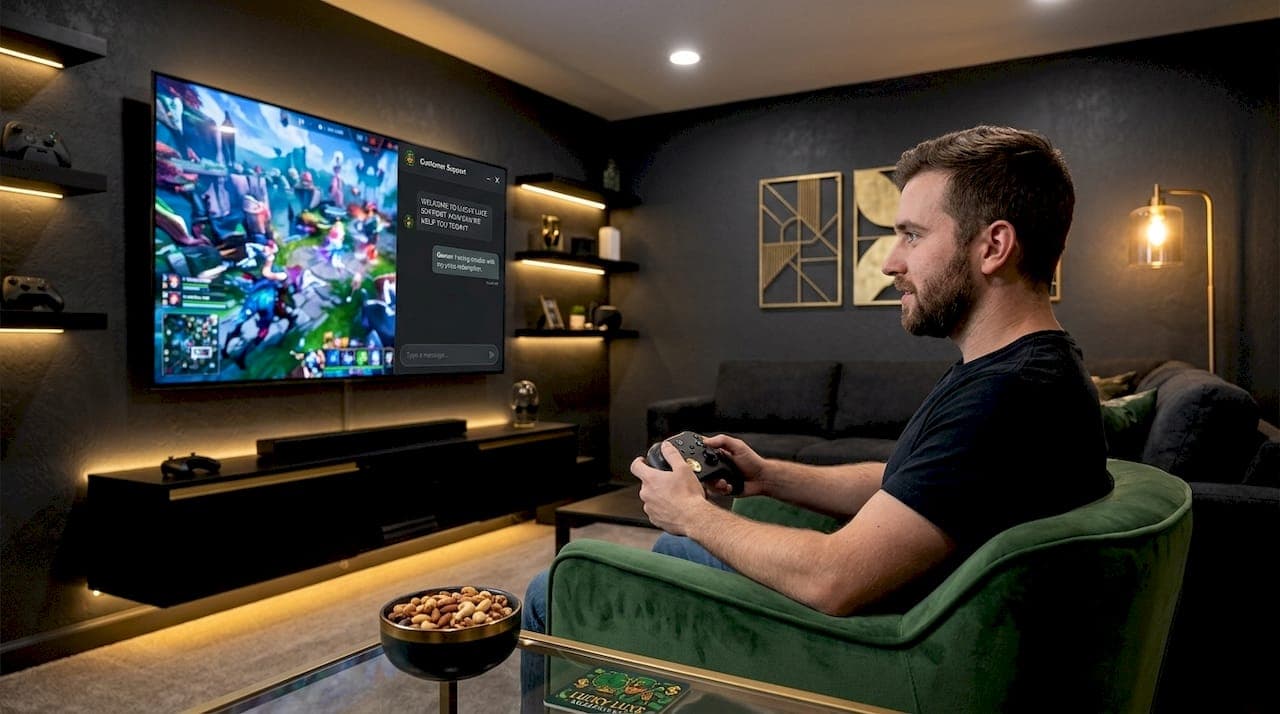
Customer support in gaming is defined as the full system of player assistance covering account recovery, payment disputes, technical troubleshooting, in-game guidance, and community moderation. The role of customer support in gaming trust is not peripheral. It sits at the center of whether a player stays, spends, and recommends a game to others. Platforms like Helpshift and service providers like iQor have demonstrated that support quality drives trust directly, especially during the emotionally charged moments that define a player's relationship with a game. When your account gets locked the night of a major event, or a payment fails mid-session, how fast and how well a platform responds determines everything.
The role of customer support in gaming trust: why it matters most
Trust in gaming is not built through marketing. It is built through what happens when something goes wrong. Support quality directly drives loyalty in high-stakes moments like account recovery and payment disputes. That is the clearest statement you can make about the importance of gaming support.
Gaming companies handle five core support touchpoints that shape player trust: account recovery, purchase and payment disputes, technical glitches, in-game guidance, and community moderation. Each one carries emotional weight. Losing access to an account you have spent years building is not a minor inconvenience. It is a crisis. How a platform responds to that crisis tells you more about its values than any promotional offer ever could.

Helpshift and iQor both operate at the intersection of gaming and customer experience, and their data consistently shows the same pattern. Players who receive fast, knowledgeable support during critical moments are significantly more likely to continue playing and spending. Players who hit a wall of slow responses or confusing ticket systems quietly uninstall and never return. The damage is invisible until it shows up in retention numbers.
Community moderation is the often-overlooked dimension of gaming support. Agents who engage authentically on Discord, Reddit, and social media maintain community trust in ways that no FAQ page can replicate. Cultural fluency matters here. A moderator who understands gaming culture, memes, and community norms builds credibility. One who does not erodes it fast.
Which support metrics most strongly predict player trust and retention?
Five KPIs define the health of gaming customer support: Customer Satisfaction Score (CSAT), Human Time to First Response (HTTFR), Time to Resolution (TTR), First Contact Resolution (FCR), and deflection rate. Each one connects operational performance to the player experience you actually feel.
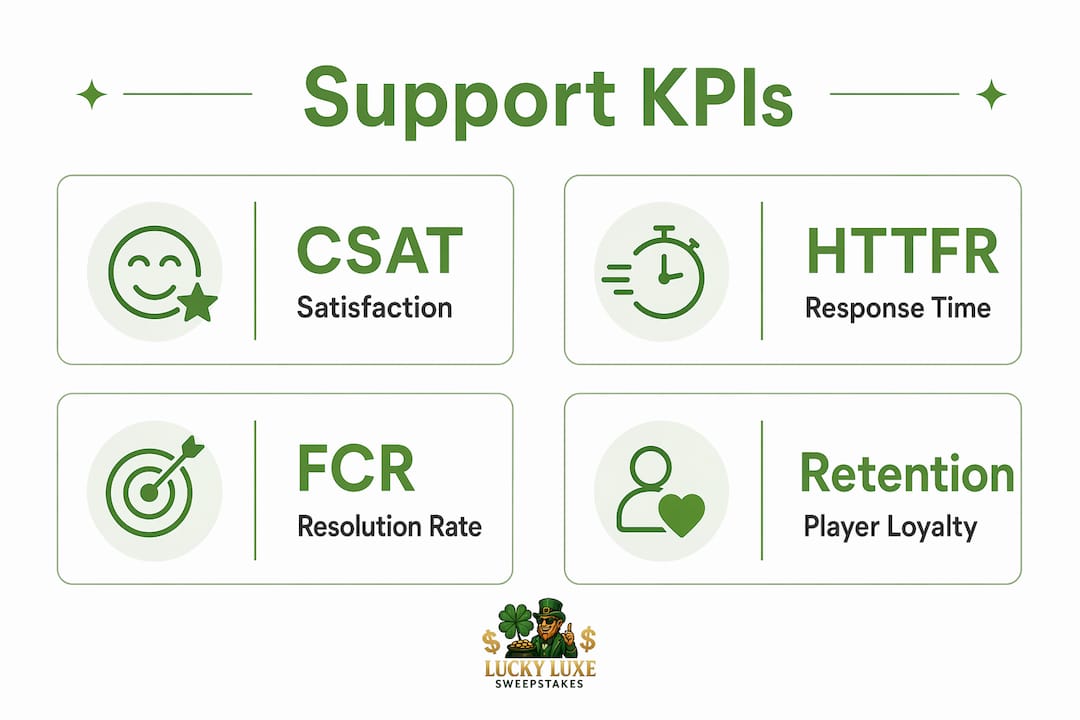
CSAT is the most direct trust signal. In-app support achieves a CSAT of 3.8 compared to 2.7 for web or email channels. That gap is not small. It means players who get help without leaving the game are meaningfully more satisfied than those forced to open a browser and submit a ticket. The format of support delivery changes the emotional outcome.
Here is how each metric connects to your experience as a player:
- CSAT measures how satisfied you feel after a support interaction. Higher scores correlate with repeat play and spending.
- HTTFR tracks how quickly a human responds after you first reach out. Faster acknowledgment reduces anxiety in high-stakes moments.
- TTR measures total time from first contact to full resolution. Long TTR signals that a platform does not prioritize your problem.
- FCR tracks whether your issue was resolved in a single interaction. Low FCR means you will be bounced between agents or asked to resubmit.
- Deflection rate measures how often automated tools resolve issues without human intervention. Rovio achieved a 91% deflection rate after shifting to in-game support, while raising CSAT from 3.4 to 4.3.
| KPI | What it signals to players |
|---|---|
| CSAT | Overall satisfaction and likelihood to return |
| HTTFR | How quickly the platform acknowledges your problem |
| TTR | How long you wait for a full fix |
| FCR | Whether your issue gets solved in one interaction |
| Deflection rate | Efficiency of self-service tools before human contact |
One critical mistake gaming companies make is focusing only on HTTFR. Fast acknowledgments without resolution cause trust loss. A quick "we received your ticket" message followed by three days of silence is worse than a slower but complete response. Managing the full support lifecycle, not just the opening move, is what builds lasting trust.
Pro Tip: When evaluating a gaming platform, test their support before you invest heavily. Submit a low-stakes question and measure how fast you get a real human response and whether it actually solves your problem. That test tells you how they will treat you when the stakes are high.
How does support accessibility and response time affect gamers' trust?
Accessibility is the first filter of trust. If you cannot reach support easily, you will never experience how good or bad it actually is. Almost 9 in 10 players would contact support more if it were easier to access. That statistic reveals a massive gap between what players need and what most platforms deliver.
The emotional stakes of gaming support are higher than in most other industries. Consider the scenario: you are locked out of your account during a limited-time event that ends in two hours. Every minute of delay is a direct loss. Slow or inaccessible support in that moment does not just frustrate you. It breaks trust in a way that is very hard to repair.
"Resolving issues within the current gaming session increases loyalty. Delays trigger uninstalls and refund requests." — Gaming Support and Retention Insights
The consequences of poor accessibility are specific and measurable:
- Silent churn: Players do not complain. They stop playing. You never know why they left.
- Negative reviews: Players who cannot get help go to app stores and forums to warn others.
- Lost spending: A player who hits a payment issue and cannot resolve it fast will not attempt another purchase.
- Refund escalations: Unresolved issues become chargebacks, which cost platforms far more than the original transaction.
Live chat and in-game ticketing systems are the two formats that most effectively prevent these outcomes. They meet players where they are, inside the experience, without forcing a context switch to email or a support portal. Platforms that still rely primarily on email-based support are operating with a structural disadvantage in player trust.
Pro Tip: As a player, you have every right to expect in-game or live chat support from any platform you pay to use. If a platform only offers email support with 48-hour response windows, factor that into your decision about where to spend your time and money.
What strategies do gaming companies use to build and restore trust?
The most effective trust-building strategy in gaming is speed combined with visibility. When something goes wrong, players do not just want a fix. They want to see that the people behind the game acknowledge the problem and are working on it in real time.
NC's producer appeared on camera 15 hours after a launch failure and then conducted weekly live updates to keep players informed. Pearl Abyss issued a fast public apology after an AI content controversy. Both companies understood that early visible communication is more effective at retaining players than any compensation package. Players forgive mistakes. They do not forgive silence.
| Strategy | Player impact |
|---|---|
| Early public apology | Reduces immediate churn and negative reviews |
| Live developer communication | Rebuilds credibility and shows accountability |
| In-game compensation | Addresses material loss but does not replace trust |
| Community manager engagement | Maintains ongoing dialogue and defuses tension |
| Transparent update timelines | Sets expectations and reduces repeat contact volume |
Community management is the ongoing version of trust restoration. Agents who understand gaming culture and engage authentically on platforms like Discord and Reddit do not just handle complaints. They signal that the company sees its players as a community, not a ticket queue. That distinction matters enormously to players who spend hundreds of hours in a game.
The contrast with traditional delayed responses is stark. A company that waits 72 hours to post a generic statement after a server outage loses far more players than one that posts an honest update within the first hour, even if the update contains no solution yet. Transparency at speed is the modern standard for gaming customer service strategies.
Pro Tip: Follow the official Discord or social channels of any game you play seriously. Companies that communicate proactively during problems are demonstrating a support culture worth trusting. Silence during crises is a red flag.
How does support shape the overall gaming experience and player immersion?
Support is not a back-office function in gaming. It is part of the product. iQor states directly that player support done right keeps players coming back by preserving immersion. That framing changes how you should think about customer experience in gaming entirely.
When you have to exit a game, open a browser, find a support portal, create an account, and submit a ticket, the game experience is broken. You are no longer a player. You are a customer filing a complaint. That shift in context changes your emotional state and your relationship with the game. In-game support that resolves issues within the session preserves immersion and improves CSAT scores simultaneously.
The qualities that define excellent gaming support agents are specific:
- Gaming expertise: Agents who understand the game can diagnose problems faster and communicate solutions in terms players recognize.
- Emotional intelligence: Players in distress need acknowledgment before solutions. An agent who skips empathy and goes straight to troubleshooting steps misses the emotional moment.
- Cultural fluency: Gaming communities have their own language, humor, and norms. Agents who speak that language build rapport instantly.
- Session awareness: Understanding that a player is mid-event or mid-raid changes the urgency calculation entirely.
The support lifecycle management approach, covering HTTFR, TTR, and FCR together, reflects this reality. A player who gets a fast first response, a knowledgeable agent, and a resolution within the same session walks away with their trust intact. A player who gets any one of those three without the others does not. You can learn more about accessing support resources while gaming to understand what good in-session help actually looks like.
Key takeaways
Effective customer support in gaming builds trust by resolving issues fast, within the session, through agents who understand both the game and the player.
| Point | Details |
|---|---|
| In-app support outperforms email | CSAT scores are significantly higher when support is delivered inside the game rather than through web or email channels. |
| Full lifecycle KPIs matter | Fast first responses without resolution cause trust loss; HTTFR, TTR, and FCR must all be managed together. |
| Accessibility drives contact rates | Nearly 9 in 10 players would use support more if it were easier to reach, revealing a major gap in most platforms. |
| Transparency restores trust faster than compensation | NC and Pearl Abyss both showed that early, visible communication outperforms delayed generic responses after launch failures. |
| Immersion-preserving support increases loyalty | Resolving issues within the current session keeps players emotionally engaged and more likely to return. |
Why I think most gamers underestimate the support question
I have spent years watching players evaluate gaming platforms almost entirely on game variety, graphics, and bonuses. Support quality rarely enters the conversation until something goes wrong. That is exactly backwards.
The moment that defines your relationship with any gaming platform is not when everything works. It is when your account gets flagged incorrectly, a payment fails, or a technical issue costs you progress during a high-stakes session. In those moments, the quality of support is the quality of the platform. There is no separation.
What I find most overlooked is the fraud and account security dimension. Trust-sensitive issues like unauthorized access and payment fraud require escalated support workflows with different KPIs and faster human escalation paths. Most players do not know to ask whether a platform has these tracks in place. They find out the hard way.
The platforms worth your loyalty are the ones that treat support as part of the product, not a cost center to minimize. You can spot them by how they communicate during problems, how fast they respond to your first contact, and whether their agents actually understand what you are playing. Check out secure gaming platforms that take both fair play and player support seriously. Those two things go together more often than people realize.
— Skyline
How Luckyluxe supports players and builds real trust
Luckyluxe is built on the understanding that great games and great support are not separate offerings. They are the same promise.
At Luckyluxe, players get access to a platform that combines slots, fishing games, and arcade titles with a support structure designed around the moments that matter most. Support resources are available when you need them, staffed by people who understand gaming, not just ticketing systems. The referral program, promotional offers, and fair play commitment all mean nothing if a player cannot get help fast when something goes wrong. Luckyluxe treats support as part of the experience. Visit Luckyluxe to see how a platform built around player trust actually operates.
FAQ
What is the role of customer support in gaming trust?
Customer support in gaming builds trust by resolving account, payment, and technical issues fast and empathetically, especially during high-stakes moments. Platforms that deliver in-game, session-based support consistently achieve higher player satisfaction and retention.
Which support channel delivers the highest player satisfaction?
In-app support achieves a CSAT of 3.8 compared to 2.7 for web or email, according to Helpshift data. Keeping players inside the game while resolving their issue preserves immersion and produces better emotional outcomes.
How does slow support affect player loyalty?
Delayed responses trigger uninstalls and refund requests, and poor support leads to silent churn where players leave without explanation. Nearly 9 in 10 players would contact support more if it were easier to access, meaning accessibility directly affects retention.
What do gaming companies do to restore trust after a failure?
The most effective approach is early, visible communication. NC's producer appeared on camera 15 hours after a launch failure and ran weekly live updates, which reduced player attrition more effectively than compensation alone.
What should gamers look for in a trustworthy gaming platform's support?
Look for live chat or in-game ticketing, fast human response times, and agents who understand the game you are playing. Platforms that communicate proactively during outages and resolve issues within a single interaction demonstrate a support culture worth trusting.