

Fishing games are defined as active, skill-based arcade titles where players aim, shoot, and time their shots to catch moving targets for rewards. Slot games, by contrast, are passive entertainment where a random number generator (RNG) determines every outcome after you place a bet. The core difference fishing vs slot games comes down to one thing: player control. Fishing games put a targeting cannon in your hands. Slot games put the result entirely in the hands of math. Understanding which style fits your preferences makes every gaming session more satisfying.
How do gameplay mechanics differ between fishing and slot games?
Fishing game mechanics require continuous, active input from the player. You aim a cannon at moving fish, time your shots, and manage your ammunition cost against the value of each target. That loop of aim, shoot, and collect creates a rhythm that slot games simply do not replicate.
Slot games work on a fundamentally different model. You set your bet, press spin, and the RNG produces a result. The outcome is entirely random, with no influence from timing, patterns, or previous spins. Your only real decision is how much to bet and which game to play.

Fishing games also layer in a progression system that slots rarely match. Research shows fishing games combine variable, goal-driven, and collection rewards, including fish-dex completion and upgrade paths. That structure keeps players engaged across longer sessions because there is always a next target to chase.
One underappreciated detail: fishing games actually punish aggressive play. Many titles feature catch discharge triggers that penalize rapid, spamming shots. The game rewards steady, rhythmic targeting over frantic button mashing. That mechanic alone separates fishing games from every slot machine ever made.
- Fishing games require aiming, timing, and shot cost management on every action.
- Slot games require only bet selection before each spin.
- Fishing games use skill checks and progression loops alongside randomness.
- Slots rely purely on RNG with no player skill influencing the result.
- Multiplayer fishing titles add a competitive layer where players race to land the final shot on high-value targets.
Pro Tip: In fishing games, focus on mid-value fish with high movement predictability rather than chasing the biggest boss fish on every shot. Your hit rate and cost efficiency will improve noticeably.
What are the differences in pace, session length, and player experience?
Fishing games deliver roughly 300 shots per hour, with frequent small rewards punctuated by large boss-kill payouts ranging from 30x to 500x your bet. That constant feedback loop keeps energy high throughout a session. There is no waiting for a reel to stop or a bonus round to trigger.
Slot games operate on discrete spin cycles. You spin, wait for the result, and spin again. High-volatility slots can produce long stretches without a meaningful win, which is a feature of the math model, not a malfunction. That downtime is part of the design, building tension before a big payout.
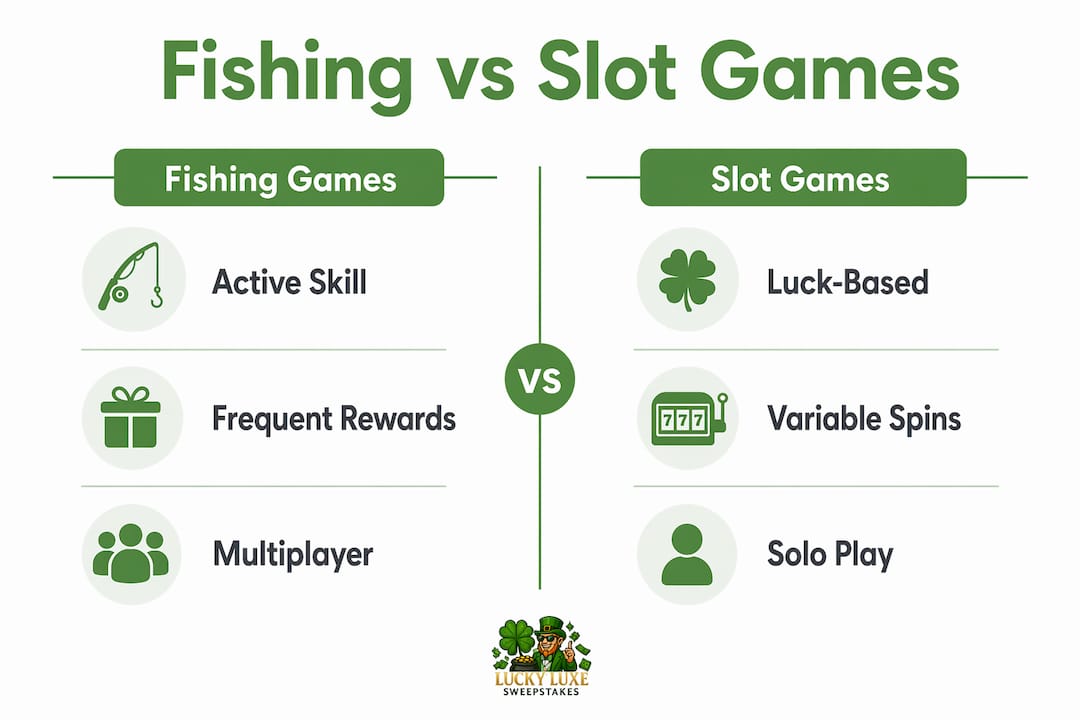
The table below compares the two formats across the dimensions that matter most to casual players.
| Category | Fishing games | Slot games |
|---|---|---|
| Actions per hour | ~300 shots | ~300–600 spins |
| Reward frequency | Frequent small wins, occasional large payouts | Variable; depends on volatility setting |
| Player input per action | High (aim, shoot, time) | Low (bet and spin) |
| Dry spell risk | Low due to continuous small rewards | High in high-volatility titles |
| Session energy | Consistently active | Peaks at bonus rounds and jackpots |
Fishing games avoid the long dry spells that frustrate players on high-volatility slots. The frequent small kills in the 1x to 10x range keep your bankroll stable between big catches. Slot games compensate for dry spells with bonus rounds and jackpot potential, which is a trade-off that suits players who enjoy suspense over sustained action.
Pro Tip: Set a shot-count goal rather than a time limit in fishing games. Tracking 200 shots gives you a clearer picture of your hit rate and cost efficiency than watching a clock.
How does risk management and betting strategy vary between the two?
Slot game strategies center entirely on bankroll control and game selection, not on predicting outcomes. The standard guidance is to stake 1–2% of your session budget per spin and to choose games with an RTP of 96% or higher. No pattern, timing trick, or betting system changes what the RNG produces.
Fishing games introduce a layer of decision-making that slots do not offer. Every shot costs ammunition, and every target has a different value and hit probability. You actively decide whether a boss fish is worth a high-cost shot or whether you should pick off smaller, more predictable targets to preserve your balance.
- Slots: Choose high-RTP games (96%+), set a per-spin stake of 1–2% of your budget, and accept that no strategy influences the RNG.
- Fishing games: Match your shot cost to the target's value. High-cost shots on low-probability boss fish drain your balance fast.
- Both formats: Set a hard session budget before you start and stop when you reach it. The bankroll management principles that apply to slots translate directly to fishing games.
- Fishing games only: Watch for multiplayer dynamics. When other players are targeting the same boss fish, your effective hit probability changes because someone else may land the kill shot.
The key distinction is predictability. Slots are purely luck-based after you select your game and stake. Fishing games blend luck with real-time decisions, so your choices during a session genuinely affect your results. That does not mean fishing games are beatable through skill alone, but your decisions carry more weight than they ever do at a slot machine.
What role does social interaction play in fishing games versus slot games?
Fishing games are built for shared screens and multiplayer competition. Multiple players compete on the same screen, racing to land the final shot on high-value boss fish. That competitive dynamic creates real-time social energy that no slot machine replicates inside the game itself.
Slot games are almost entirely solo experiences. You may find chat rooms or community forums around slot titles, but the gameplay itself involves no interaction with other players. Every spin is a private transaction between you and the RNG.
The social layer in fishing games does more than add fun. It changes strategy. When you know another player is targeting the same boss fish, you must decide whether to commit a high-cost shot or let them absorb the risk. That competitive multiplayer dynamic adds a layer of real-time thinking that keeps sessions engaging well beyond what a solo spin cycle can offer.
- Fishing games: live multiplayer on shared screens, competitive boss-kill racing, cooperative target management.
- Slot games: solo play with community engagement limited to external forums and chat features.
- Social excitement in fishing games sustains player interest across longer sessions.
- Players who value community and competition consistently prefer fishing game formats over solo slot play.
How do visual and thematic design differences impact player appeal?
Fishing games feature vibrant underwater graphics and lively animations of aquatic life moving across the screen. The visual style supports the continuous action loop. Every shot produces immediate visual feedback, from the cannon blast to the fish reaction, which reinforces the active gameplay feel.
Slot games take a different approach to visuals. They offer wide thematic variety, including ancient civilizations, fantasy worlds, movie tie-ins, and cinematic 3D bonus sequences. That thematic range means you can find a slot that matches almost any mood or interest. The visual payoff in slots is concentrated in bonus rounds, where animations and sound design peak to signal a significant win.
| Design element | Fishing games | Slot games |
|---|---|---|
| Primary theme | Underwater, aquatic, arcade | Diverse: fantasy, history, pop culture, and more |
| Animation style | Continuous movement, real-time feedback | Reel spins with peak animation in bonus rounds |
| Sound design | Arcade energy, shot effects, catch sounds | Thematic soundtracks, escalating win sounds |
| Visual feedback timing | Immediate, every shot | Concentrated at spin result and bonus triggers |
The practical implication is straightforward. If you want constant visual stimulation tied to your actions, fishing games deliver that on every shot. If you prefer a calmer base experience with dramatic peaks at bonus moments, slots match that preference well. Neither format is visually superior. They serve different moods.
Key Takeaways
Fishing games reward active skill and continuous play, while slot games are best suited to players who prefer luck-driven, low-input entertainment with high jackpot potential.
| Point | Details |
|---|---|
| Core gameplay difference | Fishing games require active aiming and timing; slots rely entirely on RNG after bet placement. |
| Pace and reward frequency | Fishing games produce ~300 shots per hour with frequent small wins; slots vary by volatility. |
| Strategy and risk | Slots reward smart game selection and bankroll control; fishing games add real-time shot decisions. |
| Social engagement | Fishing games offer live multiplayer competition; slot games are primarily solo experiences. |
| Visual experience | Fishing games give constant animated feedback; slots deliver peak visuals during bonus rounds. |
Why I think casual players underestimate fishing games
Most casual players assume fishing games are just slots with a different skin. That assumption costs them hours of genuinely engaging gameplay. After spending considerable time across both formats, I can say the gap in interactivity is much larger than it looks from the outside.
Fishing games demand real attention. You track moving targets, weigh shot costs, and react to what other players are doing in real time. That mental engagement is closer to an arcade game than a slot machine. For players who find slot sessions mentally passive, fishing games solve that problem without requiring deep strategy knowledge.
Slots have their place. The tension before a bonus round, the possibility of a life-changing jackpot, and the sheer variety of themes make them compelling for players who want low-effort entertainment with high upside. The slot game fairness indicators you choose matter more than any in-session tactic.
My honest observation is this: players who burn out on slots often find fishing games extend their enjoyment significantly. The continuous feedback loop prevents the frustration of long dry spells. If you have only played slots, try a fishing title for 20 minutes. The difference in energy is immediate and obvious.
— Skyline
Luckyluxe: where fishing games and slots meet
Luckyluxe offers both fishing games and slot titles in one place, so you can move between formats based on your mood without switching platforms.
The platform highlights hot games regularly, helping you find high-RTP slots and well-rated fishing titles without digging through a catalog. Luckyluxe also provides guides on responsible gaming practices to help you set budgets and play within your means. Whether you want the active challenge of a fishing game or the quick thrill of a slot spin, Luckyluxe gives you the tools and game selection to make an informed choice every session.
FAQ
What is the main difference between fishing and slot games?
Fishing games require active aiming and shooting at moving targets, while slot games produce results through a random number generator with no player skill involved. The core distinction is interactivity: fishing games are skill-influenced, and slots are purely luck-based.
Are fishing games better for beginners than slots?
Fishing games have a short learning curve for aiming and shot management, but slots require almost no learning at all. Beginners who enjoy active gameplay tend to prefer fishing games, while those wanting instant, low-input entertainment usually start with slots.
Can you use strategy in fishing games but not in slots?
Fishing games allow real-time decisions on target selection and shot cost that genuinely affect your results. Slot strategies focus only on bankroll control and RTP selection because no in-session tactic influences the RNG.
Do fishing games have multiplayer features that slots lack?
Fishing games commonly place multiple players on a shared screen competing for boss-kill shots, creating live social competition. Slot games are solo by design, with no in-game interaction between players.
Which game type is better for longer sessions?
Fishing games suit longer sessions better because frequent small rewards prevent the long dry spells common in high-volatility slots. The continuous action loop in fishing games maintains engagement across extended play in a way that passive slot spins do not.