

Referral signup verification is the process platforms use to confirm that a new user account is genuine before releasing any reward to the referring player. Gaming platforms rely on multi-signal authentication, including device fingerprinting, IP address analysis, and email validation, to catch fraud at the point of registration. Rewards are then gated behind qualifying actions like KYC verification or a first deposit, with hold periods of 7–30 days giving platforms time to confirm authenticity. Understanding how platforms verify referral signups helps you know exactly what to expect when you join a program and why some rewards take time to land.
How platforms verify referral signups: the core signals
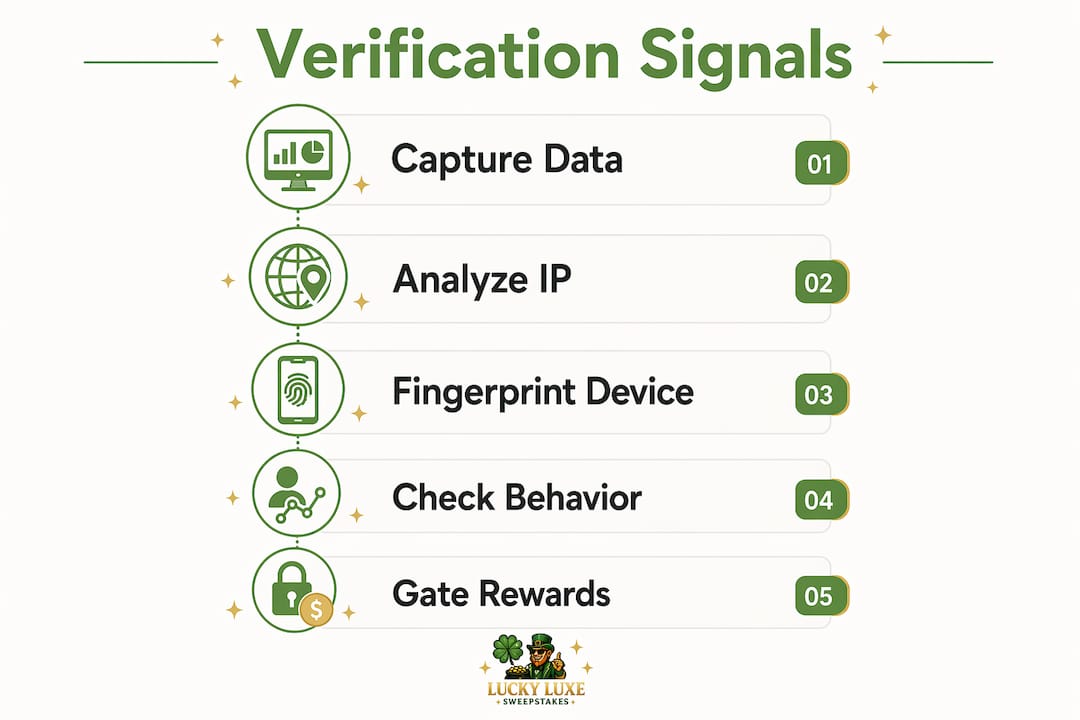
Verification begins the moment a new user hits the registration page. Platforms capture a bundle of technical signals before a single field is filled in, and those signals form the foundation of the entire referral signup verification process.
Device fingerprinting
Device fingerprinting collects browser type, operating system, screen resolution, installed fonts, and hardware identifiers to build a unique profile of the device. This profile persists across sessions and even after cookies are cleared, making it the most durable identifier available to a platform. When two accounts share an identical fingerprint, the system flags them as likely duplicates. Fingerprinting works best when combined with IP and account-level hashing, because shared networks like corporate NAT or university Wi-Fi can otherwise produce false positives.

IP address and email analysis
IP analysis goes well beyond checking a geographic location. Platforms cross-reference each signup IP against known datacenter ranges from cloud providers like AWS and Google Cloud, because genuine users almost exclusively connect through residential ISP addresses. A signup arriving from a datacenter IP is treated as suspicious by default. On the email side, platforms block addresses from disposable email services and check email age via SMTP headers, flagging accounts where the email address was created minutes before the referral attempt.
Account metadata and behavioral patterns
Rapid-fire registrations from a single IP, identical profile data across multiple accounts, and accounts that never log in after signup are all strong fraud signals. Platforms track post-signup behavior too: a real user browses games, updates a profile, and returns on separate days. An account that registers, claims a bonus, and goes silent fits the pattern of a reward farmer. These behavioral signals feed into a confidence score rather than a simple block, which reduces the chance of rejecting a legitimate player.
Pro Tip: If you register through a referral link and use a VPN, your signup may be flagged automatically. Disable your VPN before registering to avoid delays in reward processing.
How do platforms gate referral rewards to prevent abuse?
Gating rewards is the single most effective defense against referral fraud. The logic is straightforward: a fraudster who creates a fake account gains nothing if the reward never releases.
The standard gating sequence works like this:
- Registration confirmed. The platform logs the referral attribution and assigns the new account a pending status. No reward is issued at this stage.
- Email or phone verification completed. Requiring email verification eliminates disposable email abuse and confirms the user controls a real inbox. Phone verification adds a second layer but can reduce conversions, so many platforms treat it as optional.
- KYC or profile completion. For gaming platforms that handle real-money transactions, identity verification is mandatory. The new user submits a government ID or completes a profile to a set threshold.
- Qualifying action performed. A first deposit, first game session, or first purchase triggers the reward evaluation. This step filters out accounts that register purely to collect a bonus without engaging.
- Hold period expires. The platform reviews the account during a window that typically runs 7–30 days. If no fraud signals appear, the reward releases to both the referrer and the new user.
The 78% of referral programs that use double-sided rewards do so deliberately. When both parties receive a benefit, the referring player has a strong incentive to recruit real friends rather than create fake accounts. Soft verification methods, like checking whether the new user logs in consistently over the hold period or updates their profile, add another layer without creating friction at signup.
Pro Tip: Check the referral withdrawal conditions for any program before you share your link. Knowing the qualifying actions upfront saves confusion when your reward takes longer than expected to appear.
Understanding referral withdrawal conditions in detail helps you plan your referral activity around the platform's timeline rather than guessing.
What referral tracking methods ensure accurate attribution?
Attribution is the technical problem that sits underneath verification. A platform cannot verify a referral it cannot track, and tracking breaks down more often than most players realize.
The core methods platforms use to maintain accurate attribution include:
- Deferred deep linking. When a user taps a referral link on mobile, the app store redirect strips URL parameters. Deferred deep linking stores the referral code in a temporary session so it survives the redirect and reattaches after the app installs. Mobile-heavy gaming platforms rely on this technique as their primary attribution method.
- Manual referral code entry. When deep linking fails due to browser restrictions or ad blockers, platforms offer a code entry field during onboarding. This fallback captures referrals that would otherwise be lost entirely.
- Server-to-server (S2S) tracking. Client-side cookies break across app store redirects and during KYC delays that can last days. S2S tracking ties conversion events directly to user accounts on the server, providing reliable attribution that cookies alone cannot deliver.
The table below compares these three methods across the dimensions that matter most for gaming platforms.
| Tracking method | Works across app installs | Survives KYC delays | Requires user action |
|---|---|---|---|
| Deferred deep linking | Yes | No | No |
| Manual referral code | Yes | Yes | Yes |
| Server-to-server (S2S) | Yes | Yes | No |
S2S tracking is the most reliable option for platforms where users switch devices or complete lengthy verification steps. Platforms that rely only on client-side cookies risk reward leakage, where a legitimate referral goes unattributed and neither party receives their reward.
For a practical walkthrough of how attribution works from the player's side, the guide on sharing referral links covers the full process step by step.
What fraud detection strategies complement referral verification?
Automated signals catch most fraud, but sophisticated bad actors build accounts that pass every automated check. That gap is where complementary fraud detection strategies come in.
- Manual review of promotion strategy. Asking new affiliates or high-volume referrers to explain how they promote the platform, or to link their social profiles, catches synthetic identities that automated systems miss entirely. A real promoter can answer these questions. A fraud ring cannot.
- Self-referral and linked account detection. Platforms run logic checks to find accounts that share identity nodes: the same phone number, the same payment method, or the same device fingerprint appearing on both the referrer and the referred account. This pattern is the clearest signal of self-referral abuse.
- Datacenter IP flagging. Monitoring datacenter IP ranges is a low-effort, high-return tactic. Fraud rings running mass fake signups almost always operate from cloud infrastructure, not home internet connections.
- Confidence scoring over binary blocking. Treating fraud detection as a spectrum rather than a yes-or-no decision reduces false positives. An account that scores medium risk gets placed in a manual review queue rather than blocked outright.
- Retroactive abuse analysis. Platforms run periodic audits of completed referral payouts, looking for patterns that only become visible at scale. A referrer who consistently brings in users that churn within 48 hours is a red flag even if each individual signup passed verification.
"The combination of automated signals and manual review is the most effective fraud prevention approach. Automated systems handle volume; manual review handles sophistication. Neither works as well alone."
Platforms that publish their trust indicators and verification methods give players a clearer picture of how their referrals are protected, which builds confidence in the program overall.
Key takeaways
Platforms verify referral signups by combining device fingerprinting, IP analysis, email validation, behavioral gating, and server-to-server tracking to confirm legitimacy before any reward is released.
| Point | Details |
|---|---|
| Multi-signal verification | Platforms use device fingerprints, IP data, and email checks together, not in isolation. |
| Reward gating is the core defense | Rewards release only after qualifying actions like KYC or first deposit are completed. |
| Hold periods protect both parties | A 7–30 day review window gives platforms time to catch fraud before paying out. |
| S2S tracking prevents attribution loss | Server-to-server tracking maintains referral credit across app installs and KYC delays. |
| Manual review fills the automation gap | High-volume referrers may face manual checks that automated systems cannot replicate. |
The verification balance most platforms get wrong
The instinct when fraud appears is to add more friction at signup. Block the VPN. Require a phone number. Add a CAPTCHA. Every one of those steps also blocks a real player who just wants to try a game a friend recommended.
What I've found actually works is shifting the friction point. Gate the reward, not the registration. Let the user in, watch what they do, and release the reward only when their behavior confirms they are genuine. This approach keeps conversion rates healthy while still catching the vast majority of fraud attempts.
Gaming platforms face a specific challenge that fintech apps do not. Players switch devices constantly, use shared Wi-Fi at gaming cafes, and sometimes register on a friend's phone. A fingerprint match or a shared IP that would be a clear fraud signal in banking is genuinely ambiguous in gaming. That is why confidence scoring matters more than binary blocking in this context.
The programs I trust most are the ones that are transparent about their verification process. When a platform tells you upfront that rewards take up to 30 days and explains why, you know they have thought carefully about both fraud prevention and player experience. Opacity is usually a sign that the system is either broken or designed to avoid paying out.
The next evolution in referral verification will likely involve behavioral biometrics: how a user moves a mouse, taps a screen, or types. These signals are nearly impossible to fake at scale and add almost no friction for real players. Platforms that adopt these methods early will have a significant advantage in both fraud prevention and player trust.
— Skyline
Luckyluxe and verified referral programs
Luckyluxe builds its referral program around the same multi-layer verification principles covered here, combining device data, behavioral gating, and transparent reward timelines so players know exactly where they stand.
Players who refer friends through Luckyluxe benefit from a program designed to protect legitimate referrals from fraud, meaning your rewards are not diluted by fake accounts. The platform's commitment to fair play extends directly into how it authenticates referred signups. If you want to see how a verified referral program works in practice, visit Luckyluxe and review the referral program details. For tips on getting the most from your referral activity, the guide on referral link best practices is a strong starting point.
FAQ
How do platforms verify referral signups automatically?
Platforms capture device fingerprints, IP addresses, and email metadata at registration, then compare these signals against known fraud patterns. Accounts that pass automated checks move into a behavioral monitoring period before rewards release.
Why do referral rewards take so long to appear?
Most programs hold rewards for 7–30 days while the platform monitors new account behavior and waits for qualifying actions like a first deposit or KYC completion. This window exists to catch fraud before any payout is made.
What is device fingerprinting in referral verification?
Device fingerprinting collects browser, OS, and hardware data to create a unique identifier for each device. It is more persistent than cookies and helps platforms detect duplicate accounts across multiple signups.
Can using a VPN affect my referral signup?
Yes. Signups from VPN or datacenter IP addresses are flagged as suspicious because genuine users almost always connect through residential ISP addresses. Disabling your VPN before registering reduces the risk of your account being held for review.
What is server-to-server tracking and why does it matter?
Server-to-server tracking ties referral attribution directly to user accounts on the backend, bypassing the limitations of client-side cookies. It maintains accurate referral credit even when users switch devices or complete lengthy KYC processes.