

Referral withdrawal conditions are the eligibility criteria and rules that determine when and how you can cash out earnings from a referral program on an online gaming platform. These conditions cover everything from minimum balance thresholds and account standing to processing timelines and tax obligations. Platforms like Selectel and Pehanoge publish specific referral withdrawal rules that many users miss until a payout gets denied. Understanding what are referral withdrawal conditions before you try to cash out saves you from frustrating delays and forfeited earnings.
What are referral withdrawal conditions on gaming platforms?
Referral withdrawal conditions are the complete set of requirements your account and earnings must satisfy before a platform releases your referral bonus as real money or transferable credit. The term "referral payout eligibility" is the standard industry phrase for this concept, and it covers both financial thresholds and behavioral compliance. Most gaming platforms split these conditions into two categories: quantitative rules (how much you need) and qualitative rules (how you behaved to earn it).
The quantitative side is straightforward. You must accumulate a minimum balance before you can request a withdrawal. The qualitative side is where most users get caught off guard. Your account must remain in good standing, your referred users must complete qualifying actions, and you must not have violated any program terms at any point during the earning period.

Referral earnings eligibility is also tied to your referee's behavior. Only after a referred user signs up, makes a purchase, or maintains an active account are your referral rewards credited and eligible for withdrawal. This means your payout timeline is partly outside your control, which is why reading the full program terms before you start referring anyone is worth your time.
Pro Tip: Save a copy of the referral program terms on the day you join. Platforms can update policies at any time, and having the original version protects you if a dispute arises later.
What financial thresholds and minimum balances are required?
Minimum balance requirements for referral withdrawals vary significantly across platforms, and the withdrawal method you choose often changes the threshold. Minimum withdrawal thresholds commonly range between ₹100 (roughly $1 to $2 USD) and 10,000 ₽ (roughly $100 USD), depending on the platform and the payment channel selected. That range is wide enough to matter: a platform that requires 10,000 ₽ for a bank transfer but only 100 ₽ for an in-platform credit transfer is effectively pushing you toward one option over another.
Here is a comparison of how thresholds typically break down by method:
| Withdrawal method | Typical minimum | Notes |
|---|---|---|
| In-platform credit transfer | ₹100 to ₹500 | Fastest option, lowest barrier |
| Direct bank transfer | 10,000 ₽ or equivalent | Higher threshold, longer processing |
| Gift card or voucher | Varies by denomination | Often fixed amounts, not flexible |
| Crypto or digital wallet | Platform-specific | May require identity verification |
The logic behind higher bank transfer minimums is that platforms absorb transaction fees on each payout. Setting a higher floor for bank transfers protects their margins while still offering flexibility through lower-cost in-platform options. For you as a player, this means accumulating more referral earnings before requesting a bank transfer is the practical path to avoiding rejected withdrawal requests.
Pro Tip: If your referral balance is close to but below the bank transfer minimum, check whether an in-platform credit option is available. Using credits toward gameplay or in-app purchases is often faster than waiting to hit the higher cash-out threshold.
How does account standing affect referral withdrawal eligibility?
Good standing is not a one-time checkpoint. It is a continuous status that platforms verify throughout the entire referral earning and payout process. Good standing requirements are continuous, and any violation of terms like fraud or self-referral leads to disqualification and forfeiture of all accrued earnings. That means an account that was in good standing when you made your referrals can still lose its payout rights if a violation is discovered later.
Behaviors that typically disqualify you from referral payouts include:
- Self-referrals: Creating secondary accounts to refer yourself is the most common violation and is explicitly banned on virtually every platform.
- Fake or incentivized referrals: Paying or pressuring others to sign up without genuine intent to use the platform.
- Trademark misuse: Using the platform's brand name in paid ads or unauthorized promotional materials.
- Dispute abuse: Filing false chargebacks or disputes to manipulate account balances.
- Account sharing: Allowing multiple people to operate a single account to inflate referral counts.
The phrase "dynamic good standing" describes the fact that your eligibility status can change even after earnings are credited to your account. Platforms reserve the right to audit referral activity retroactively, and if a referred user cancels their account or is flagged for fraud, your associated earnings may be reversed. This is not a hypothetical. Payments can be reversed or offsets applied if infractions or cancellations occur after the initial payout.
Pro Tip: Review your referral dashboard monthly. If any referred accounts show unusual activity or sudden inactivity, contact platform support before your next withdrawal request to avoid a surprise reversal.
What are the typical processing times and payout methods?
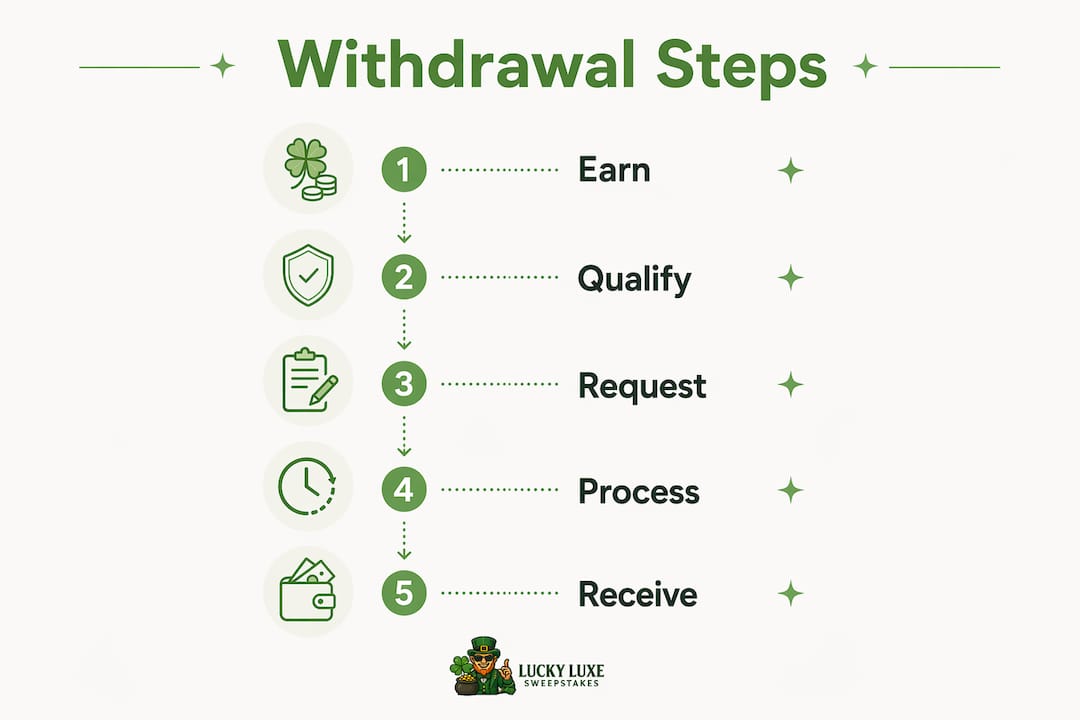
Once you submit a withdrawal request and meet all referral bonus conditions, the waiting period begins. Processing times are not instant, and understanding the timeline helps you plan around it rather than assume something went wrong.
Here is the standard sequence most gaming platforms follow:
- Funding period completion: The platform confirms that all referred users have completed their qualifying actions and that no pending disputes exist on the account.
- Internal review: The platform's compliance team verifies account standing and checks for any flagged activity. This step is often invisible to the user.
- Payment initiation: The platform sends the payment to your chosen method. Processing times typically range from 5 to 7 banking days, with some platforms like Wealthsimple extending up to 14 business days for direct transfers.
- Clearance window: Bank transfers require additional clearance time on the receiving end, which is separate from the platform's processing period.
- Funds available: The money appears in your account or wallet.
Payment methods across gaming referral programs generally include direct bank transfers, in-platform credits, gift cards, and digital wallets. Tax obligations add another layer to this process. Referral earnings paid to bank accounts may be taxable income, and some platforms deduct taxes at the source before releasing the payout. The amount withheld depends on your jurisdiction and the platform's reporting obligations, so checking your local tax rules before your first withdrawal is a practical step that most users skip.
How do platform discretion and legal policies impact withdrawal rules?
Most referral program agreements include language that gives the platform broad authority to change, suspend, or cancel the program at any time. Sole discretion clauses allow platforms to modify or cancel programs and deny payments without notice. This is standard legal practice across the industry, and it means your referral earnings are not guaranteed until they are actually in your bank account.
"Platforms reserve the right to modify, suspend, or terminate the referral program at any time and for any reason, including the right to deny or claw back payments if terms are violated." This type of clause appears in nearly every referral program agreement and gives the platform final authority over all payout decisions.
The dispute window is the most time-sensitive legal condition most users overlook. Users must submit disputes about unpaid or incorrect referral earnings within limited time windows, often 60 days, or permanently lose their right to contest the decision. Sixty days sounds generous until you realize that many users check their referral dashboards infrequently and miss the window entirely.
Program termination is another real risk. If a platform shuts down its referral program, accrued but unpaid rewards may be forfeited depending on the terms. Some platforms honor outstanding balances for a defined period after termination. Others do not. The only way to know which category your platform falls into is to read the termination clause in the program agreement before you accumulate significant earnings.
What practical steps should you follow to withdraw referral earnings?
Meeting referral withdrawal conditions reliably requires a proactive approach rather than a reactive one. Most payout failures are preventable if you address potential issues before submitting a withdrawal request.
- Verify account standing first. Log into your account settings and confirm there are no flags, warnings, or pending violations. Resolve any open issues with platform support before initiating a withdrawal.
- Check your balance against the correct threshold. Confirm you have met the minimum for your chosen withdrawal method, not just the lowest threshold listed on the platform.
- Confirm referee activity. Review your referral dashboard to verify that your referred users have completed all required qualifying actions. Incomplete referee activity is a common reason for delayed credits.
- Choose your withdrawal method deliberately. Bank transfers take longer and require higher minimums. In-platform credits process faster. Match your choice to your timeline and balance.
- Account for tax withholding. If your platform deducts taxes at the source, your net payout will be lower than your gross referral balance. Factor this into your expectations.
- Set a calendar reminder for the dispute window. If your payout does not arrive within the stated processing period, submit a written dispute immediately. Do not wait past the 60-day window.
- Use platform resources proactively. Most gaming platforms provide a referral dashboard, FAQ section, and support channel. Learning how to share your referral link correctly from the start also reduces the risk of earning disqualified referrals.
Key takeaways
Referral withdrawal conditions require continuous account compliance, minimum balance thresholds, and timely dispute action to guarantee a successful payout.
| Point | Details |
|---|---|
| Minimum balance thresholds | Bank transfers require higher minimums than in-platform credits; know the difference before requesting. |
| Continuous good standing | Account compliance is verified throughout earning and payout periods, not just at withdrawal time. |
| Processing timelines | Expect 5 to 14 business days after funding confirmation; tax withholding may reduce your net payout. |
| Dispute windows | Submit written disputes within 60 days of a missed or incorrect payout or lose your claim permanently. |
| Platform discretion | Sole discretion clauses allow platforms to modify or cancel programs without notice at any time. |
Why most players get blindsided by referral withdrawal rules
I have reviewed referral program terms across dozens of gaming and fintech platforms, and the pattern is consistent. Players focus entirely on earning referrals and almost never read the withdrawal conditions until a payout fails. By then, they have often already missed a dispute window or triggered a clawback without realizing it.
The detail that surprises most people is the dynamic nature of good standing. Players assume that once earnings are credited to their account, the money is theirs. It is not. A referred user who cancels their account three weeks after signing up can trigger a reversal on your already-credited earnings. I have seen this catch experienced players off guard because the reversal happens quietly, with no notification.
My strongest recommendation is to treat your referral dashboard like a financial account. Check it regularly, document your referred users' activity, and submit disputes in writing the moment something looks wrong. Platforms are not obligated to remind you that your 60-day window is closing. That responsibility sits entirely with you.
The other underrated risk is program termination. Platforms that shut down referral programs rarely give users enough time to cash out accumulated balances. If you have a significant referral balance on any platform, withdraw it as soon as you hit the minimum threshold. Waiting for a larger balance is a gamble that does not pay off often enough to justify the risk.
— Skyline
Manage your referral earnings with Luckyluxe
Luckyluxe makes the referral withdrawal process transparent from day one. The platform's referral dashboard gives you a real-time view of your earnings, referred user activity, and withdrawal eligibility status, so you always know exactly where you stand. Minimum withdrawal thresholds at Luckyluxe are designed to be accessible, and the payout policies are written in plain language rather than buried in legal fine print. If a withdrawal issue comes up, the Luckyluxe support team is available to walk you through compliance requirements and dispute procedures. For players who want to earn referral rewards without the guesswork, Luckyluxe is built for exactly that.
FAQ
What are referral withdrawal conditions?
Referral withdrawal conditions are the eligibility rules that govern when and how you can cash out referral earnings, including minimum balance thresholds, account standing requirements, and referee activity criteria.
How long does a referral payout take to process?
Processing times typically range from 5 to 7 banking days up to 14 business days after the funding period is confirmed, depending on the platform and withdrawal method selected.
Can referral bonuses be withdrawn as cash?
Yes, most platforms allow cash withdrawal of referral bonuses via bank transfer or digital wallet, provided you meet the minimum balance requirement and your account is in good standing.
What happens if I miss the dispute window for a referral payout?
If you do not submit a written dispute within the platform's stated window, often 60 days, you permanently lose the right to contest the unpaid or incorrect amount.
Can a platform take back referral earnings after paying them?
Yes. Platforms can claw back referral bonuses if fraud is discovered after payment or if a referred user cancels their account within a defined period, as good standing is verified throughout the entire payout process.