

Casual online gaming is defined as video gaming designed for short, accessible play sessions that require no prior gaming experience. Sessions typically run 5–30 minutes, making casual games a natural fit for commutes, lunch breaks, or a few minutes between tasks. Unlike hardcore gaming, casual play demands no specialized hardware, no steep learning curve, and no long-term commitment. Brands like PopCap Games and Big Fish Games built entire businesses on this model, distributing titles through mobile app stores and browser portals to audiences who had never considered themselves gamers. The result is the largest player base in the history of video games.
What is casual online gaming, exactly?
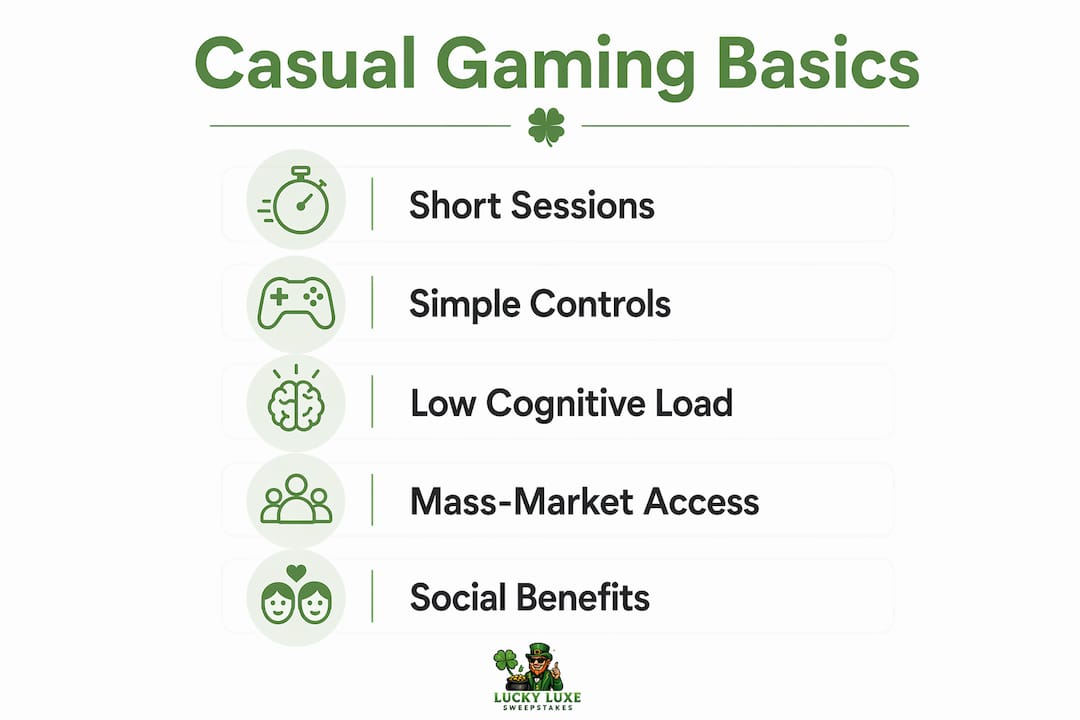
Casual online gaming is the practice of playing video games designed for simplicity, low cognitive load, and mass-market appeal. The casual gaming definition centers on three qualities: short sessions, intuitive controls, and zero onboarding friction. A player should be able to pick up a casual game with a single tap or a simple mouse click and understand the goal within seconds.
This stands apart from traditional gaming, where titles like The Witcher 3 or Dark Souls require hours of investment before the experience becomes rewarding. Casual games front-load the fun. Candy Crush Saga, for example, teaches its core mechanic in under 60 seconds. That design philosophy is what separates casual gaming from every other category.
The audience for casual games is genuinely broad. Retirees, commuters, parents, and office workers all play casual games regularly. Casual games bypass language and skill barriers, giving them global appeal that most traditional titles cannot match.
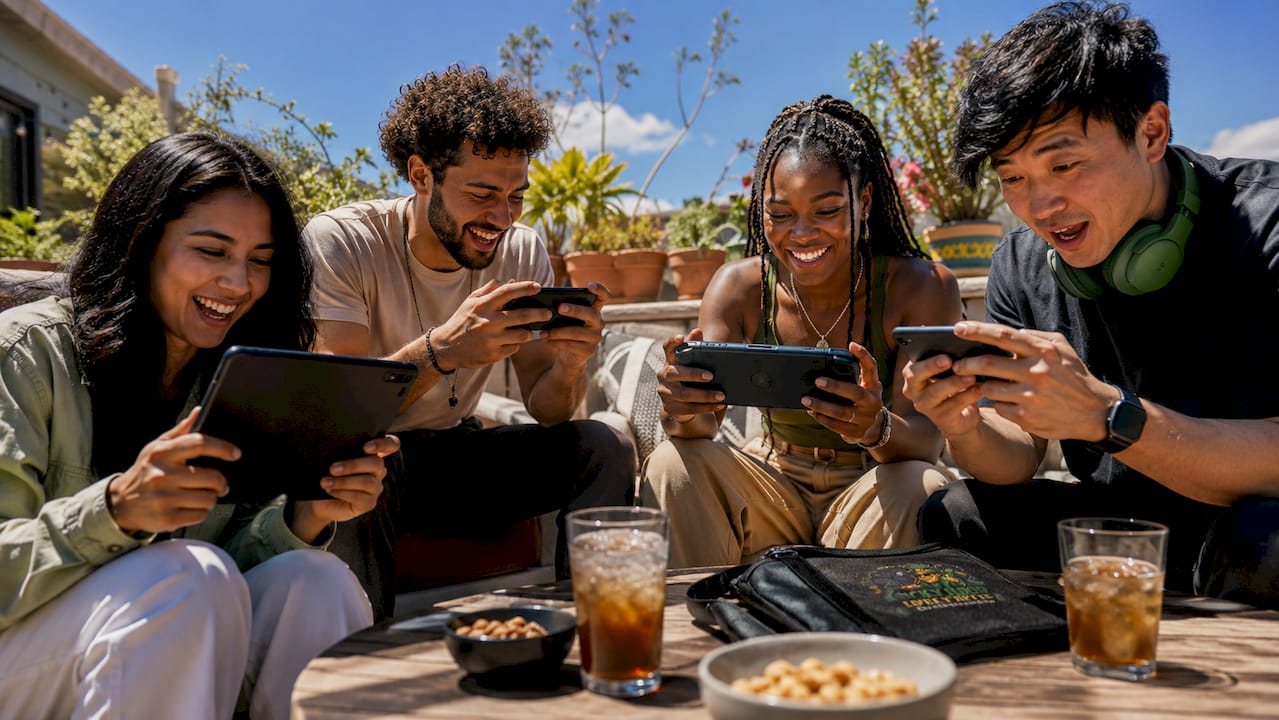
How does casual online gaming differ from traditional gaming?
The clearest difference is session length and cognitive demand. Traditional gaming sessions often run two to four hours, with players managing complex inventories, skill trees, or multiplayer team strategies. Casual gaming sessions are built around interruption. You can stop mid-game without losing progress or letting a team down.
Here are the key contrasts:
- Session length: Casual games run 5–30 minutes. Traditional games often require 60-plus minutes per session to make meaningful progress.
- Learning curve: Casual games teach mechanics in the first 60 seconds. Traditional games may include hours of tutorials.
- Save systems: Casual games auto-save constantly or have no save requirement. Traditional games often use manual save points.
- Player base: Casual gaming targets mass-market audiences. Traditional gaming targets dedicated hobbyists willing to invest time and money.
- Hardware requirements: Casual games run on any smartphone or basic browser. Traditional games often need high-end PCs or current-generation consoles.
The cognitive load difference matters most. Casual gaming success is defined by session length and cognitive load rather than genre. A complex puzzle game played in five-minute bursts without save commitments qualifies as casual. A simple game requiring two-hour daily sessions does not.
Pro Tip: If a game makes you feel anxious about stopping or falling behind, it has crossed out of casual territory. True casual play should feel optional, not obligatory.
What are the main types of casual online games?
Common casual game types include match-3 puzzles, word games, trivia, hidden object games, and endless runners. Each genre uses a different mechanic, but all share the same design goal: instant engagement with no prior knowledge required.
Here is a breakdown of the most popular casual online games by genre:
- Match-3 puzzles (e.g., Candy Crush Saga, Bejeweled): Swap adjacent tiles to form groups of three or more. Sessions last 2–5 minutes per level.
- Word games (e.g., Wordle, Scrabble GO): Form words from letter sets. Strong cognitive engagement with low pressure.
- Trivia games (e.g., Trivia Crack): Answer multiple-choice questions across categories. Social and competitive without requiring skill.
- Hidden object games (e.g., Big Fish Games titles): Find listed items within a detailed scene. Relaxing, low-stakes, and visually engaging.
- Endless runners (e.g., Temple Run, Subway Surfers): Tap or swipe to avoid obstacles in an infinitely scrolling environment. High replayability with zero narrative commitment.
| Genre | Core mechanic | Avg. session length | Primary platform |
|---|---|---|---|
| Match-3 puzzle | Tile swapping | 3–5 minutes | Mobile |
| Word game | Letter arrangement | 5–10 minutes | Mobile and browser |
| Trivia | Multiple choice | 5–15 minutes | Mobile and browser |
| Hidden object | Visual search | 10–20 minutes | Browser and PC |
| Endless runner | Swipe and tap | 2–5 minutes | Mobile |
Most of these titles use a free-to-play model supported by ads or optional microtransactions. That model keeps the entry barrier at zero, which is central to the casual gaming definition. Players can explore online gaming categories without spending a dollar.
What are the psychological and social benefits of casual gaming?
Casual gaming delivers measurable mental health benefits, and the research is specific. A study of 2,252 adults found that playing accessible casual games reduced loneliness and increased emotional resilience among players. That is not a trivial finding. Loneliness is a recognized health risk, and casual games address it through low-barrier social interaction and shared play.
The psychological mechanism behind this is flow. Casual gaming induces a flow state by balancing challenge and accessibility, reducing stress more effectively than high-stakes gaming. Flow is the mental state where a task is engaging enough to hold attention but not so difficult that it triggers anxiety. Casual games are engineered to hit that balance consistently.
"Casual games create a stress-relieving environment by focusing on enjoyment, not performance." — Psychreg, Why the Psychology of Play Shows Casual Gaming Supports Mental Well-Being
Beyond flow, casual games use predictable structures like daily challenges and simple progress metrics. These structures act as emotional regulation tools, helping players manage anxiety in a way that passive media like TV cannot replicate. Completing a daily puzzle gives a small but real sense of accomplishment. That feeling compounds over time.
The social dimension is underrated. Trivia games, word games, and leaderboard-based titles create low-pressure competition that connects players without requiring voice chat or team coordination. Casual gaming is genuinely inclusive in a way that traditional multiplayer gaming is not.
Pro Tip: Choose games with daily challenge features rather than open-ended grind mechanics. Daily challenges give you a natural stopping point and a built-in sense of completion, which maximizes the stress-relief benefit.
How accessible are casual online games across platforms?
Casual games are the most accessible category in gaming, by design. Minimal onboarding, simple UI, and short sessions make them playable regardless of device, language, or prior experience. A player in rural Thailand and a retiree in Ohio can both open the same browser-based word game and understand it within seconds.
Platform options in 2026 break down clearly:
- Smartphones and tablets: The dominant platform for casual gaming. App stores on iOS and Android offer thousands of free titles with one-tap downloads.
- Web browsers: Browser-based casual games offer zero-friction access with no download required. The tradeoff is more frequent ad interruptions.
- PC via Steam: Steam offers a growing casual library with fewer ads and better save management, but requires a download and account setup.
For players new to casual gaming, smartphones are the easiest starting point. The app store model handles updates automatically, and touch controls match the single-tap mechanic that most casual games use.
One caution for beginners: monetization. Many casual games use aggressive ads and microtransactions designed to extend play time and trigger spending. Awareness is the best defense. Set a spending limit before you start, avoid games that lock core progress behind paywalls, and treat optional purchases as genuinely optional. Learning to navigate online gaming platforms confidently takes one or two sessions.
Key Takeaways
Casual online gaming is defined by short sessions, low cognitive load, and zero-barrier access, making it the most widely played gaming category across all demographics.
| Point | Details |
|---|---|
| Core definition | Casual games run 5–30 minutes per session with intuitive, single-action controls. |
| Key difference from traditional gaming | Casual play requires no prior skill, no long sessions, and no save commitment. |
| Most popular genres | Match-3 puzzles, word games, trivia, hidden object, and endless runners dominate the category. |
| Proven mental health benefits | Research links casual gaming to lower loneliness, reduced anxiety, and stronger emotional resilience. |
| Monetization awareness | Free-to-play models are common; set spending limits early to keep the experience low-pressure. |
Why casual gaming deserves more credit than it gets
Most gaming discourse focuses on blockbuster titles and competitive esports. Casual gaming gets dismissed as shallow. That framing misses the point entirely.
The research on emotional regulation and loneliness reduction is real and specific. A study of over 2,000 adults showing measurable resilience gains from casual play is not a minor footnote. It reframes casual gaming as a genuine mental health tool, not a guilty pleasure. The responsible gaming practices that apply to all gaming apply here too, but the baseline risk profile of casual games is lower than most people assume.
What I find most interesting is the accessibility argument. Casual games cross cultural and language barriers in a way that almost no other entertainment medium does. A match-3 puzzle needs no translation. That universality is a design achievement worth recognizing.
My honest advice for anyone starting out: ignore the monetization noise in the first week. Pick one genre, play it for a few days, and notice how you feel after a session. If you feel calmer and more focused, you have found your category. If you feel frustrated or compelled to spend money, move on. The right casual game should feel like a short break, not a second job.
— Skyline
Casual gaming at Luckyluxe
Luckyluxe offers a curated selection of accessible games built for players who want real entertainment without complexity or long time commitments.
The platform includes slots, fishing games, and arcade titles, all designed with clear mechanics and fair play at the core. Luckyluxe runs regular promotions and highlights popular titles so you can find something worth playing without sorting through hundreds of mediocre options. A referral program and dedicated support resources make the experience straightforward from day one. If you are ready to put the casual gaming definition into practice, visit Luckyluxe and see what fits your style.
FAQ
What is the casual gaming definition?
Casual gaming refers to video games designed for short sessions of 5–30 minutes, simple controls, and mass-market accessibility. No prior gaming experience is required to start playing.
What are the most popular casual online games?
Match-3 puzzles like Candy Crush Saga, word games like Wordle, trivia titles like Trivia Crack, and endless runners like Subway Surfers are among the most widely played casual games globally.
What are the benefits of casual gaming for mental health?
Research on 2,252 adults found that playing accessible casual games reduced loneliness and increased emotional resilience. Casual games also induce a flow state that lowers anxiety and supports emotional regulation.
Is casual gaming for beginners on mobile or browser?
Mobile is the easiest starting point for casual gaming beginners. App stores offer free downloads, automatic updates, and touch controls that match the single-tap mechanics most casual games use.
How do I avoid overspending on casual games?
Set a firm spending limit before you start and avoid games that lock core progress behind paywalls. Most casual games are fully playable for free if you treat microtransactions as optional from the beginning.