

Passive income gaming referrals are a performance-based earning model where gamers receive recurring commissions by inviting others to join gaming platforms through unique referral links. Unlike a one-time bonus, this model rewards you every time a referred player stays active and generates platform revenue. What is passive income gaming referrals, exactly? It is the industry's term for affiliate-style programs built specifically around gaming audiences. Referral commissions range from 10% to 47.5%, making this one of the highest-paying passive income strategies available to gamers today.
What is passive income gaming referrals and how does it work?
Gaming referral programs operate on three primary commission models: revenue share, cost-per-acquisition (CPA), and hybrid structures. Revenue share offers long-term passive income; CPA focuses on one-time acquisition payouts; hybrid models balance both immediate and ongoing rewards. Revenue share is the strongest model for building sustainable passive income because your earnings grow as your referred players keep playing.
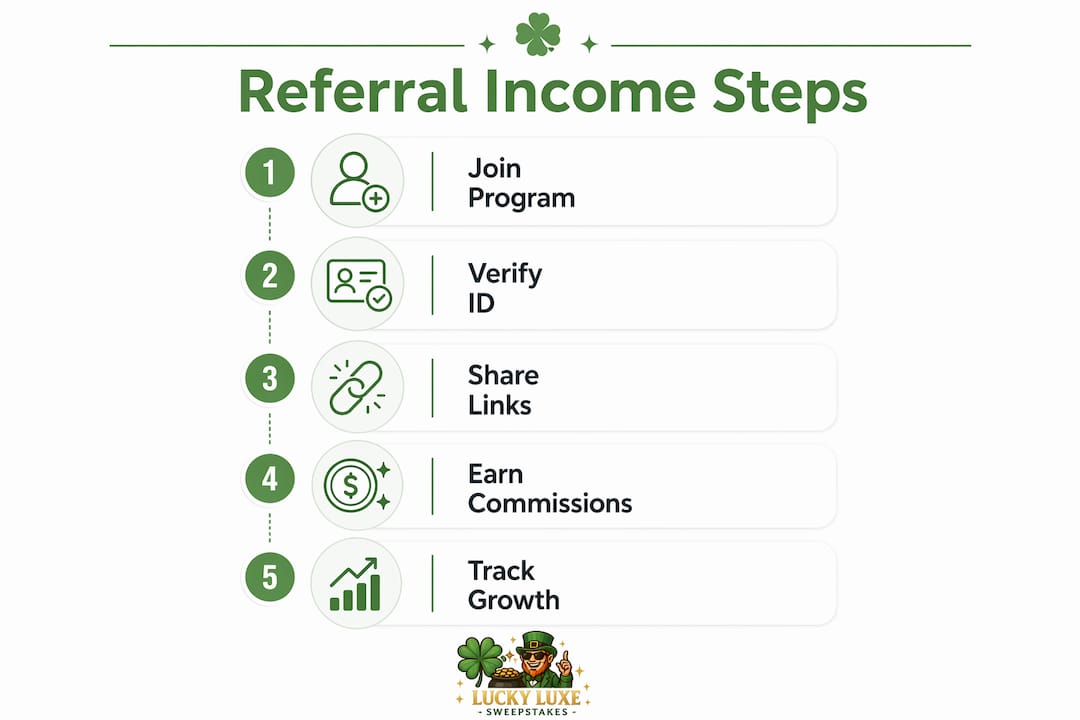
The mechanics are straightforward. You sign up for a gaming referral program, complete identity verification, and receive a unique referral link. Most gaming affiliate programs have 0% entry cost, and payouts are triggered once you hit a minimum threshold through PayPal, ACH transfer, or crypto wallets. That low barrier to entry makes gaming referrals accessible to creators at any level.

Here is what the typical referral income structure looks like across common model types:
| Commission model | How you earn | Income type |
|---|---|---|
| Revenue share | % of referred player's platform fees | Recurring |
| CPA (cost per acquisition) | Fixed fee per new signup | One-time |
| Hybrid | CPA upfront + ongoing revenue share | Mixed |
| Lifetime commission | % of all future activity from referral | Recurring |
| Multi-level (sub-affiliate) | % from your referrals' referrals | Recurring |
The key difference between CPA and revenue share is time horizon. CPA pays fast but stops. Revenue share builds slowly and compounds. Gamers who want true passive income should prioritize programs offering lifetime commissions or recurring revenue share.
Standard identity checks (eKYC) are the industry norm for referral signups. They protect against fraud and confirm that payouts go to verified partners. Think of eKYC as the platform's way of ensuring the income you earn is real and protected.
How to build and grow your gaming referral income
Building referral income that actually compounds requires a content strategy, not just a link. The most effective approach follows a clear sequence:
-
Choose programs with recurring commissions. Revenue share and lifetime commission models reward you for the long term. Avoid programs that only pay CPA if your goal is passive income.
-
Create evergreen content around your referral links. YouTube tutorials, gear setup guides, and comparison posts attract traffic for months or years without additional work. A single well-optimized post can produce most of a creator's recurring commissions, requiring only occasional maintenance.
-
Embed referral links in high-intent locations. YouTube video descriptions, pinned Discord posts, and gaming blog sidebars outperform social media feeds because readers are already in a decision-making mindset.
-
Build trust before you pitch. Gamers convert on referrals from creators they trust. Recommendations without authenticity fail to convert, regardless of how many times you post the link. Write honest reviews and share genuine gameplay experiences first.
-
Diversify across multiple programs. Affiliates recommend maintaining multiple referral streams to protect income against sudden policy or commission changes from any single program. Treat your referral portfolio the way an investor treats a stock portfolio.
-
Explore multi-level referral structures. Some platforms offer up to three tiers of commission payouts, meaning you earn from your referrals' referrals. Multi-level referral structures amplify earning potential but require selecting platforms that explicitly allow and reward sub-affiliate networks.
Pro Tip: Place your referral link in the first line of every YouTube video description. Most viewers never scroll past the fold, so front-loading your link captures clicks from casual viewers who would otherwise miss it.
Learning how to share referral links on specific platforms is a skill worth developing early. The placement and framing of your link affects conversion rates more than the size of your audience.
Common pitfalls that kill gaming referral income
Passive income from gaming referrals is not zero-effort income. The biggest misconception is that you set up a link once and money flows forever. Passive income is better understood as "build once, maintain occasionally" rather than a completely hands-off system. Ignoring that reality is the fastest way to watch your earnings stall.
The most common mistakes gamers make with referral programs include:
- Relying on a single program. Commission rates change. Programs shut down. Gamers who depend on one referral source lose income overnight when policies shift.
- Link dumping. Posting referral links without context in comment sections, Discord servers, or social feeds destroys credibility. Audiences recognize spam, and it permanently damages trust.
- Ignoring program updates. Effective referral income systems require regular monitoring for commission changes and program updates. A program that paid 30% last year may pay 15% today.
- Chasing one-time bonuses over recurring commissions. A $50 signup bonus feels good once. A 20% lifetime revenue share from an active player pays that amount repeatedly.
- Skipping transparency disclosures. Most jurisdictions require affiliate disclosure. Skipping it risks account bans and erodes audience trust simultaneously.
Pro Tip: Set a calendar reminder every 60 days to review your active referral programs. Check commission rates, payout thresholds, and any terms-of-service updates. Thirty minutes of maintenance every two months protects months of earned income.
The role of transparency in referral systems is not just ethical. It is a conversion strategy. Gamers who disclose their referral relationships and explain why they recommend a platform consistently outperform those who hide the relationship.
Real examples of passive income through gaming referrals
The earnings potential from gaming referral programs is concrete and well-documented. Creators with audiences between 10,000 and 50,000 subscribers earn between $200 and $2,000 per month through affiliate programs. That range reflects the difference between creators who post links occasionally and those who build content systems around their referral programs.
The timeline to sustainable passive income follows a predictable pattern. Active publishing over 90 days leads to a "snowball effect", where early content begins ranking and driving traffic while new content compounds on top of it. Creators who commit to consistent output for three months can reach $100 per day in passive earnings by month four.
Here is a realistic breakdown of what different content approaches produce:
| Content type | Effort level | Income timeline | Income type |
|---|---|---|---|
| Evergreen comparison post | High upfront, low ongoing | 3–6 months | Recurring |
| YouTube gear review with referral link | Medium | 1–3 months | Recurring |
| Discord pinned referral post | Low | Immediate, limited | One-time spikes |
| Live stream referral mention | Low | Immediate | One-time spikes |
| Email newsletter with referral link | Medium | 1–2 months | Recurring |
Evergreen content like "X vs. Y" comparison posts consistently attract traffic and referral conversions for months or years. That content type minimizes ongoing workload while maximizing long-term returns. A single well-ranked comparison article can generate more recurring commission than dozens of social media posts combined.
High-LTV referrals that yield recurring revenue create sustainable long-term passive income rather than one-off payments. The math is simple: one active player who stays on a platform for two years generates far more commission than ten players who sign up and quit within a week. Quality of referral matters more than volume.
Key Takeaways
Passive income gaming referrals work best when built on recurring commission models, evergreen content, and a diversified program portfolio rather than one-time bonuses or single-platform dependency.
| Point | Details |
|---|---|
| Choose recurring commission models | Revenue share and lifetime commissions compound over time; CPA pays once and stops. |
| Build evergreen content first | A single optimized post or video can generate referral income for months with minimal upkeep. |
| Diversify your referral programs | Maintaining multiple referral streams protects income when any one program cuts commissions. |
| Expect a 90-day ramp-up | Consistent content creation for three months triggers the snowball effect that leads to daily passive earnings. |
| Transparency converts audiences | Honest disclosures and genuine recommendations outperform aggressive link promotion every time. |
Why the "set and forget" myth costs gamers real money
Most articles on gaming referral income oversell the passive part and undersell the build part. I have watched creators with strong audiences earn almost nothing from referrals because they treated link placement as an afterthought. They posted a link once, saw modest results, and concluded the program was not worth their time.
The creators who earn $1,000 or more per month from referrals share one habit: they treat their referral content like a product. They update comparison posts when platform features change. They respond to comments asking about the platforms they recommend. They check their analytics monthly and double down on content that converts.
The network effect in gaming referral income is real, but it requires patience. Your first 90 days will feel like you are working for free. By month four, the content you created in month one starts paying you while you sleep. That is the actual definition of passive income in this space. It is not zero effort. It is deferred effort.
My honest advice: pick two programs with strong recurring commissions, create five pieces of evergreen content, and commit to 90 days before evaluating results. Most gamers quit in week six. The ones who stay past the 90-day mark are the ones who end up with real passive income.
— Skyline
Luckyluxe: a platform built for gamers who want more
Gamers looking to put referral income strategies into practice need a platform that supports them at every step. Luckyluxe offers a referral program designed around recurring rewards, giving players a real opportunity to earn passive rewards by inviting others to a platform they already enjoy.

Luckyluxe features slots, fishing games, and arcade titles with high-quality graphics and fair play standards. The platform's referral program is built for transparency, with clear commission terms and accessible payout conditions. Gamers who want to understand the full picture before signing up can review referral withdrawal conditions to see exactly how earnings are structured. Luckyluxe gives you the games and the earning structure in one place.
FAQ
What is a gaming referral program?
A gaming referral program is a performance-based system where players earn commissions by inviting others to join a gaming platform through a unique referral link. Commissions can be one-time or recurring, depending on the program's model.
How much can you earn from gaming referrals?
Creators with audiences between 10,000 and 50,000 subscribers earn between $200 and $2,000 per month through gaming affiliate programs. Earnings depend on commission model, audience engagement, and content quality.
How long does it take to earn passive income from gaming referrals?
Most creators reach sustainable passive income after approximately 90 days of consistent content creation. The snowball effect from early content ranking and compounding traffic typically kicks in around month three or four.
What commission models do gaming referral programs use?
Gaming referral programs primarily use revenue share, CPA, lifetime commission, and hybrid models. Revenue share and lifetime commission models are best for building recurring passive income over time.
Do gaming referral programs require identity verification?
Most gaming affiliate programs require eKYC identity verification before activating payouts. This process is standard across the industry and protects both the platform and the affiliate from fraud.