
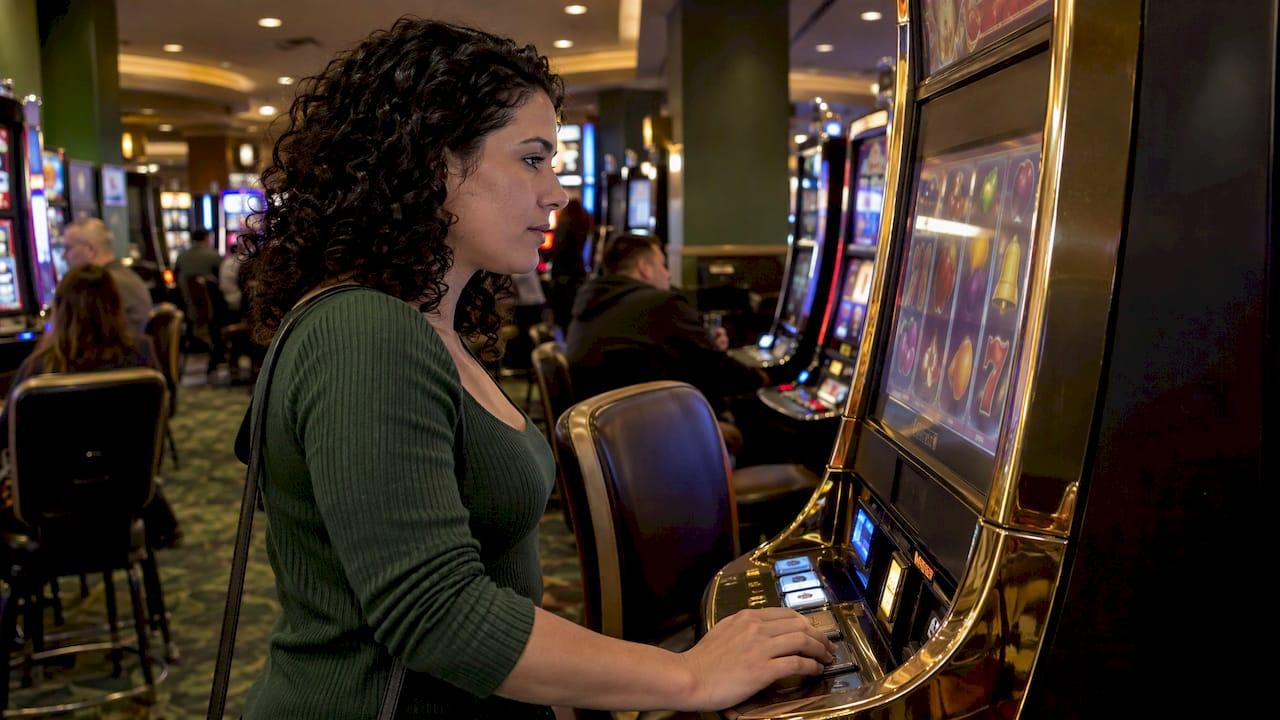
An RNG, or random number generator, is the software that decides the result of every slot spin. The moment you press the button, it settles the outcome. The reels, sounds and animations only show you a result that has already been chosen. That is why spins do not "owe" you anything, why speed does not change your luck, and why the only things you control are how you play and how much you spend.
This guide walks through how that works, what the common terms mean, and how to read a slot's behavior without falling for myths. It is written for casual players, slot fans and fishing-game players who want to enjoy the games with a clear head.
TL;DR
- RNG stands for random number generator, a program that produces number sequences and maps them to reel symbols. Government gaming regulators describe it as the computer that determines where the reels stop.
- Each spin is independent. A slot that has not paid recently is not "due", and a slot that just paid is not "cooling off".
- RNG decides each outcome, RTP is a long-run average, and volatility describes how bumpy the ride is. They answer different questions.
- Independent labs and state regulators check RNG code and results in regulated markets, so fairness is something that can be audited, not just promised.
- Play for entertainment, set your own limits, and judge a slot by its paytable and your budget rather than by streaks.
Table of Contents
- What RNG means in slots
- How the RNG picks the result of a spin
- Every spin is independent
- Luck or skill?
- RNG, RTP and volatility: three different ideas
- How RNGs are tested
- What RNG means when you play sweepstakes-style slots
- Fishing and arcade games
- Quick glossary
- Play slots, fish tables and arcade games at Lucky Luxe
- Our perspective
- FAQ
- Sources
What RNG means in slots
RNG means random number generator. Wisconsin's Department of Administration, in its player brochure Taking the Mystery Out of the Machine, describes it as a computer that determines where the reels stop. Every modern slot, whether in a casino building or on your phone, works this way. The spinning reels are a visual layer.
There are a few kinds of random number generators. A standard from the testing industry, GLI-19 (version 3.0, published by the state of Maine), separates software-based RNGs from hardware RNGs, which rely on physical events, and mechanical RNGs, which rely on physical mechanisms. Online slots use the software kind. A software RNG is an algorithm: a mathematical routine that produces a long stream of numbers that behave randomly and cannot be predicted from the outside.
Two plain-language points help here:
- "Random" does not mean "even." Random results come in clumps and gaps. Three small wins in a row or twenty dry spins both happen in a properly random game.
- "Random" does not mean "unfair." A game can have a very uneven prize structure, with many small outcomes and a few big ones, and still be fully random. The unevenness is designed into the game, and the randomness decides where you land inside it.
How the RNG picks the result of a spin
Here is the sequence, step by step.
- The generator is always running. The Missouri Gaming Commission's guide The Truth About Slot Machines says the RNG cycles whether or not anyone is at the machine. Wisconsin's brochure likewise explains that it keeps cycling through number combinations before you begin a spin.
- Your spin picks a moment. When you commit the bet, the game takes the number the generator is on at that instant. According to the Missouri guide, the outcome is selected when the wager is committed.
- The number is mapped to symbols. Each number corresponds to a reel position. Wisconsin's brochure explains that several numbers can map to the same symbol, which are often called virtual stops. So the symbols you can see on a reel do not tell you how often each one appears in the underlying math.
- The animation plays. The reels spin, slow and land on the pre-selected result. Pressing stop, tapping to speed up or using a quick-spin mode changes how long the animation lasts, not what the answer is.
Why virtual stops matter
Imagine a reel with 20 visible symbols. If the game assigns 200 numbers to that reel, a top-paying symbol might be linked to just 2 of them while a low-paying symbol is linked to 30. Visually the two symbols each occupy one slot on the strip, but their chances are very different. This mapping is where a game's designer sets the odds. Good design requires that the mapping is faithful: GLI-19 requires that mapping preserve the intended distribution and that scaling, mapping and shuffling algorithms be unbiased, which a lab verifies through source-code review.

This is also why you cannot work out a slot's odds by counting symbols on screen or watching a few dozen spins.
Every spin is independent
The most useful single fact about RNG slots is that each spin stands alone. Wisconsin's brochure states that each play repeats independently of earlier plays and that a machine that has not paid recently is no more likely to pay next. The testing standard says the same thing in technical terms: GLI-19 says knowledge of one draw must not give information about future draws, apart from specific game-design cases such as without-replacement features, where the design itself removes items as they are drawn.
What this means in practice:
- No "due" slots. A long dry spell does not build up a payout. The next spin has the same chances as the first.
- No "hot" slots. A run of wins does not mean the game is warm and about to keep paying. Our piece on hot and cold slots explains why streaks feel meaningful even when they are just normal randomness.
- No pattern to read. You cannot predict the RNG by timing your taps, switching bet sizes at certain moments or watching other players. The number in play changes far faster than a human can react to, and your input only decides the moment of the draw.
- Fast spinning changes your pace, not your odds. Speed settings change how many spins you get through in a session, which can change how quickly a balance moves. They do not change the probability of any single result.
If you want to go deeper on common beliefs, Slot Myths Busted covers nine of the most common ones.
Luck or skill?
On a standard slot, the result is pure chance. Wisconsin's brochure says slot machines operate randomly regardless of past wins or losses. Your decisions are real but they sit around the outcome, not inside it:
- which game you choose and how its paytable is laid out
- how large each bet is
- how long you play
- when you stop
That is good news in a way. Because no technique can beat the RNG, you do not have to learn tricks or track patterns. You can pick games that look fun, set a budget before you start, and treat the result of each spin as entertainment.
RNG, RTP and volatility: three different ideas
Players often mix these up, so here is a clean split.
| Term | What it is | Question it answers | Scale |
|---|---|---|---|
| RNG | The software that picks each outcome | "What happens on this spin?" | One spin |
| RTP (return to player) | The long-run share of wagers a game is designed to return, shown as a percentage | "Over a very large number of spins, how much comes back?" | Millions of spins |
| Volatility (variance) | How widely results swing around that average | "Will wins be small and frequent or rare and large?" | Sessions |
RTP is an average over a huge number of plays, not a promise for your evening. A 96% RTP does not mean you will get back 96 cents of each dollar in a session. Regulators treat RTP as something to calculate carefully: Michigan's rule, Mich. Admin. Code R. 432.632a, requires RTP calculations to cover base games, bonus features, free games, progressives and other features included in the calculation. For a closer look at reading it, see our guide to slot RTP and the one on sweepstakes RTP.
Volatility describes the shape of the results. A low-volatility game tends to give smaller wins more often. A high-volatility game tends to give fewer wins, with a chance at larger ones. Missouri's regulation 11 CSR 45-5.193, effective July 31, 2025, requires probability-accounting reports to include a volatility index and RTP information for applicable electronic gaming devices, which shows how seriously regulators take both numbers. Our explainer on slot variance shows how it affects how long a set amount of play lasts.
A simple way to hold all three in your head: the RNG rolls the dice, the RTP is the average of all the rolls ever made, and the volatility is how jumpy the rolls feel along the way.
A worked example
Say you play a slot with a 96% designed RTP, betting a fixed amount per spin for 100 spins. Over millions of spins, the game is built to return about 96% of what is wagered. In your 100 spins, though, you might finish well above or well below that. A high-volatility game could leave you with nothing for 60 spins and then a single big hit, while a low-volatility game could keep returning small amounts all along. Neither outcome means the RNG is broken. Both are what randomness looks like in a short window.
How RNGs are tested
A fair RNG is something labs and regulators examine, not something taken on faith. In U.S. regulated gaming, the details depend on the state, and the cited rules show what those checks look like.
- Source-code review. GLI-19 version 3.0 requires an independent test laboratory to review RNG-related source code, including randomness, scaling and shuffling algorithms, looking for bias, implementation errors, malicious code and undisclosed controls.
- Submission materials. Michigan's rule R. 432.632a requires detailed RNG information and an RTP calculation sheet in game submissions.
- Independent verification of results. Missouri's 11 CSR 45-5.193 requires independent testing laboratories to verify volatility index and RTP percentages and to detail their findings in a certification letter. It calls for standard confidence intervals at a 99% confidence level, with specified game-count intervals from 10,000 through 100,000,000 games.
Two takeaways for players. First, requirements are set state by state, so the exact paperwork differs depending on where a rule applies. Second, the common thread is the same: independent review of the code, statistical checks of the output, and documented results.
When you want a practical way to look at fairness yourself, our fairness indicators checklist and our guide to fair play certified slots go through what to look for, and four quick checks for Gold Coin players is a short read on the "is it rigged?" question.
What RNG means when you play sweepstakes-style slots
Social and sweepstakes platforms such as ours let you play slots with virtual currency. On Lucky Luxe, Gold Coins are for entertainment play, and Sweeps Coins, which come through promotions or with Gold Coin purchases, let you take part in sweepstakes games for a chance at redeemable prizes. The idea you have just read applies to how you should think about any slot spin: the result is chosen at the moment of the spin, and past results do not change it.
A few habits help you enjoy that kind of play:
- Choose by paytable, not by streak. Read how symbols pay and what the bonus features do before you start. Our guide to the slot paytable explains every line.
- Match volatility to your mood. If you want a long, relaxed session, steadier games suit you. If you like the chance of a big moment, a higher-swing game fits.
- Set a limit first. Decide how much you are willing to spend on entertainment before you begin and stop when you reach it. Never play with money you need for bills or essentials.
- Compare games on more than one number. Our look at how to identify high payout slot games shows how RTP, volatility and features fit together.
Play is for adults only. Lucky Luxe serves adults in the United States, excluding certain states. If gaming ever stops feeling like fun, take a break, and if you feel it is becoming a problem, the National Problem Gambling Helpline (1-800-GAMBLER) is a free, confidential place to get support.
Fishing and arcade games
If you came for fish tables or arcade titles rather than reels, the same lesson carries over: a game's visuals show you the action, but you should not read a pattern into a run of results. Treat each round as its own event, pick the game by how much you enjoy the pace and format, and keep your budget in view. Fish tables and arcade games are a big part of what we offer, and the variety is one of the reasons players come back.
Quick glossary
- Paytable: the list of symbols, combinations and features and what each pays.
- Paylines / ways: the patterns across the reels that count as wins.
- Virtual stop: one of many numbers mapped to a symbol position, which sets how often a symbol really appears.
- Bonus round: a feature triggered by specific symbols, still decided by the same random draw.
- Return to player (RTP): the designed long-run payback percentage.
- Volatility: how widely results spread around the average.
Play slots, fish tables and arcade games at Lucky Luxe
Now that you know what is happening behind each spin, you can pick games by what you enjoy. Lucky Luxe offers premium slots, fish tables and arcade games, with regular promotions, hot game highlights, a referral program and support resources, all in an interface built to be easy to use.
Browse the full lineup on the Lucky Luxe game lobby and pick a game that suits your style.
Our perspective
We think the best way to enjoy a slot is to understand it. Once you know that a random number generator picks the result and that every spin is its own event, a lot of stress goes away. You are no longer chasing a pattern that does not exist, and you can focus on what makes a game worth your time: the graphics, the theme, the features and the pace.
That belief shapes what we offer. Our library covers slots, fishing and arcade games, including rare fishing table games, so you can switch formats when you want a change. We highlight hot games and promotions regularly so you can choose with information in front of you, and our referral program lets you share the fun with friends. We state our commitment to high-quality graphics and fair play, and we publish plain-language guides on RTP, volatility and paytables so the numbers are never a mystery.
Our advice: pick the game that makes you smile, keep your session within a budget you set beforehand, and let the RNG do what it does.
Skyline
FAQ
Do slot machines use random number generators?
Yes. Modern slots, in casinos and online, use an RNG to decide each outcome. Wisconsin's gaming brochure describes it as the computer that determines where the reels stop. The spinning reels you see are a visual display of a result that was already selected.
What does RNG stand for in gaming?
It stands for random number generator. In slots, it produces numbers that the game maps to symbols or reel positions. In other kinds of games it can decide things like drops or dice rolls, but the idea is the same: a program supplies unpredictable numbers.
Are slot machines luck or skill?
Standard slots are luck. Regulators state that machines operate randomly regardless of past wins or losses, so no timing or betting pattern can predict a result. Your choices are about which game to play, how much to bet and when to stop.
Does fast spinning change the outcome?
No. The result is selected when you commit the spin, and quick-spin or stop buttons only change how fast the animation plays. Faster play means more spins per minute, which can make a balance move faster, so set your budget with that in mind.
Can a slot be "due" for a win?
No. Each play is independent of earlier ones, so a machine that has not paid recently is not more likely to pay next. Long dry spells and quick wins both occur naturally in random games.
Sources
- Taking the Mystery Out of the Machine, Wisconsin Department of Administration
- GLI-19 Standards for Interactive Gaming Systems, version 3.0
- The Truth About Slot Machines, Missouri Gaming Commission
- Mich. Admin. Code R. 432.632a
- 11 CSR 45-5.193, Missouri Code of State Regulations