

Simple play is defined as any gameplay or activity built around minimal setup, clear rules, and low-stress mechanics that anyone can enjoy without prior skill or special equipment. It is the opposite of complex, high-stakes gaming. Casual gamers and anyone craving effortless fun gravitate toward it because the barrier to entry is nearly zero. Luckyluxe recognizes this appeal and builds its platform around the same core idea: entertainment should feel easy from the first moment you engage with it.
What makes simple play effective for casual enjoyment?
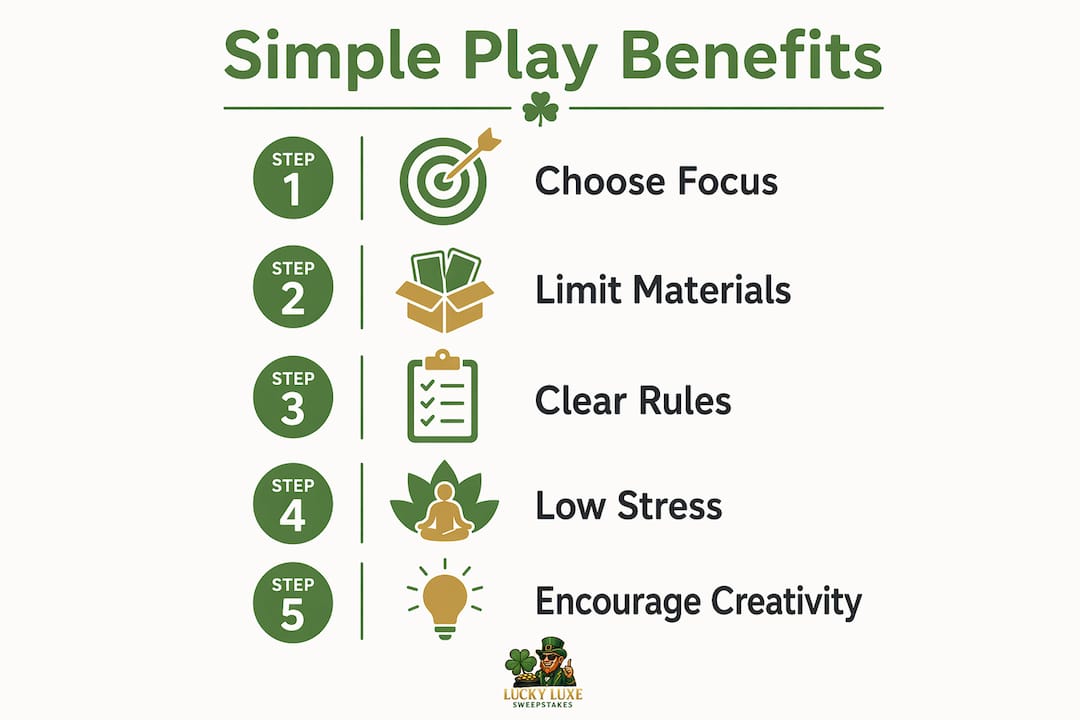
Simple play works because it removes friction. The Invitation to Play formula defines this precisely: choose one focus, use 2–3 materials at most, and present them in a clearly defined, uncluttered space. That structure prevents sensory overload and keeps attention where it belongs, on the fun itself.
Open-ended activities outperform rigid ones every time. Open-endedness and simplicity directly increase how long players stay engaged and how much they enjoy the experience. When a game has one obvious goal and flexible ways to reach it, players feel capable rather than confused.
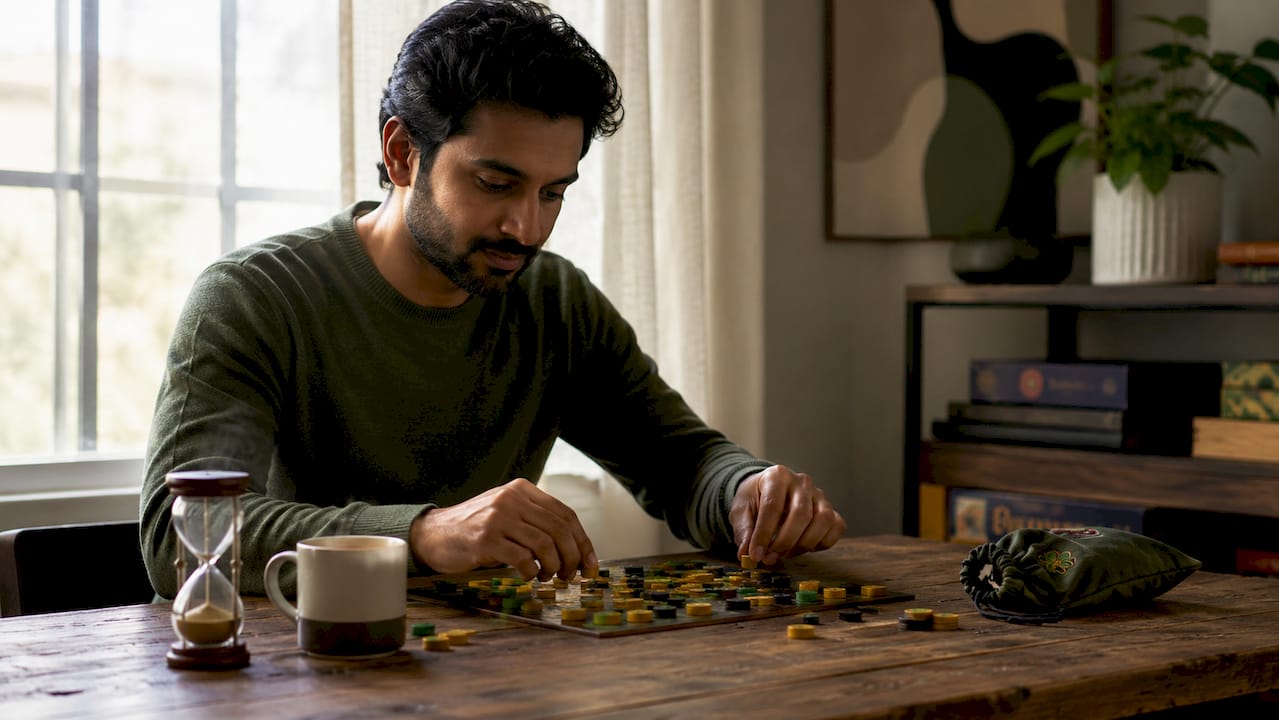
The materials matter as much as the rules. Familiar objects lower the learning curve and invite natural exploration without explicit instructions. Experts confirm that simple, familiar materials foster natural exploration without any need for a rulebook. That principle applies equally to a card game on a kitchen table and an arcade title on a gaming platform.
Four qualities define a well-designed low-stress activity:
- One clear focus. A single objective keeps players from second-guessing themselves.
- Minimal materials. Two or three items are enough. More creates clutter, not depth.
- Visual simplicity. A clean, uncluttered play space signals that the activity is approachable.
- Flexibility. Players should feel free to adapt the rules without breaking the experience.
Pro Tip: Before starting any activity, remove everything from the play space that is not directly needed. A clear surface signals "this is easy" before a single move is made.
How does simple play benefit your mind and mood?
Low-stress play does more than pass the time. Simple play supports brain growth and emotional regulation, aligning with guidance from the American Academy of Pediatrics for daily physical and mental engagement. That is not just a benefit for children. Adults who engage in low-stakes, playful activities report lower stress and sharper focus.
Memory, problem-solving, and spatial awareness all get a workout during basic play activities. Memory-based games can be scaled from 1–5 cards for beginners up to 1–20 cards for advanced players, which means the same activity grows with the player. That scalability is what keeps simple games from feeling boring after the first session.
Healthy risk-taking is another underrated benefit. Indoor obstacle courses and furniture-based challenges build confidence and spatial awareness in safe, familiar environments. The same principle applies to casual gaming: trying a new game format with low stakes builds comfort and confidence over time.
Simple play is not a lesser version of complex play. It is a different category entirely, one where the goal is enjoyment, not mastery. Removing pressure from an activity does not reduce its value. It often increases it.
Unstructured time within a play session also matters. Allowing brief moments of boredom pushes players toward creative problem-solving. The balance between structured and unstructured play produces the strongest cognitive and emotional outcomes.
What are practical examples of fun simple games to try?
Many effective activities can be set up in under 5 minutes using common household items with no specialized skills required. That setup speed is the whole point. Here are five ready-to-use ideas:
- Scooping and pouring station. Fill two bowls with dry rice or pasta. Add a spoon and a cup. The activity is open-ended by design, and players can invent their own rules around it.
- Memory card match. Lay pairs of cards face-down on a flat surface. Flip two at a time and try to find matches. Start with 5 pairs and add more as confidence grows.
- Tape shape game. Use painter's tape on the floor to create shapes, lines, or a simple course. Players hop between shapes, balance on lines, or race through the course.
- Living room obstacle course. Arrange cushions, chairs, and pillows into a path. Household items like cushions and chairs create developmental play environments at zero cost.
- Simple outdoor target toss. Set up three containers at different distances. Toss a rolled sock or small ball into each one. Score one point per successful toss and play to ten.
| Activity | Setup time | Materials needed | Complexity level |
|---|---|---|---|
| Scooping and pouring | Under 2 minutes | Two bowls, spoon, dry pasta | Beginner |
| Memory card match | Under 3 minutes | Playing cards or printed pairs | Beginner to intermediate |
| Tape shape game | Under 5 minutes | Painter's tape | Beginner |
| Living room obstacle course | Under 5 minutes | Cushions, chairs, pillows | Beginner |
| Outdoor target toss | Under 2 minutes | Containers, rolled socks | Beginner |
Pro Tip: Scale any of these activities by adding one rule at a time, not three at once. A single new rule keeps the challenge fresh without making the experience feel complicated.
A resource updated in june 2026 lists 75 distinct low-stress activities for independent play, usable indoors or outdoors with minimal equipment. That breadth proves that simple playtime activities never run out of variety.
How do you sustain interest without adding complexity?
Keeping players engaged over time does not require harder rules or more equipment. It requires smarter facilitation. The goal is to stay present without hovering, and to guide without controlling.
These strategies extend engagement without raising stress:
- Use neutral language. Instead of "you did that wrong," say "what happens if you try it this way?" Neutral prompts keep the mood light and curiosity alive.
- Start together, then step back. Join the activity for the first minute or two, then allow the player to take over. Autonomy drives longer engagement than supervision does.
- Let boredom breathe. A few minutes of "I don't know what to do" often precede the most creative play. Resist the urge to fill every quiet moment with a new suggestion.
- Avoid corrections. Lack of interest often stems from activities that feel too complex or unclear. Corrections add complexity and signal that there is a wrong way to play.
- Rotate activities slowly. Swap one element of an activity rather than replacing the whole thing. Changing the container in a scooping game feels fresh without starting over.
The same logic applies to casual online gaming. Rotating between game types, rather than grinding the same title, keeps the experience feeling light and enjoyable. Variety within simplicity is the formula that sustains long-term interest.
Key Takeaways
Simple play delivers the most enjoyment when it uses minimal materials, one clear focus, and flexible rules that players can adapt without pressure.
| Point | Details |
|---|---|
| Minimal setup wins | Activities set up in under 5 minutes using household items produce strong engagement. |
| One focus beats many | The Invitation to Play formula limits materials to 2–3 items in a defined space. |
| Scalability extends fun | Memory games and similar activities scale from beginner to advanced by adjusting one variable. |
| Autonomy sustains interest | Starting together then stepping back produces longer, more creative play sessions. |
| Zero cost is possible | Cushions, tape, and household items create full play environments at no expense. |
Why I think we overcomplicate play more than we realize
Most people assume that better play means more complex play. I have watched casual gamers abandon activities not because they were bored, but because the setup felt like homework. The moment a game requires a tutorial longer than the game itself, it has already lost the plot.
The activities that stick are almost always the ones with the shortest explanation. A scooping station needs no instructions. A card match needs one sentence. That brevity is not a sign of low quality. It is a sign of good design. The best casual gaming experiences share this quality: you understand what to do within seconds, and the enjoyment starts immediately.
What surprises most people is that simpler activities often produce more creative outcomes. When there is no "correct" way to play, players invent their own rules, their own scoring, and their own goals. That creative ownership is what makes the experience memorable. Complexity, by contrast, hands you a script and asks you to follow it.
My honest recommendation: resist the urge to add one more rule, one more level, or one more piece of equipment. The version of the activity you already have is probably enough. Play it as-is for a full session before changing anything. You will likely find it was already working.
— Skyline
Luckyluxe: where effortless entertainment is always one click away
Luckyluxe is built for players who want great entertainment without a steep learning curve. The platform offers slots, fishing games, and arcade titles that load fast, play clean, and never demand hours of study before the fun begins.

Every game on Luckyluxe is chosen with casual players in mind. The interface puts the most popular titles front and center, so you spend your time playing rather than searching. Luckyluxe also highlights easy games to browse through regular promotions and curated picks, making it straightforward to find something new that fits your mood. If you want entertainment that respects your time and keeps things light, Luckyluxe is the right place to start.
FAQ
What is simple play?
Simple play is any activity or game built around minimal setup, clear objectives, and low-stress mechanics that require no specialized skills. It prioritizes enjoyment and accessibility over complexity.
How long does it take to set up a simple play activity?
Most effective low-stress activities take under 5 minutes to set up using common household items. No special purchases or preparation are required.
Can simple games actually be challenging?
Yes. Memory-based games scale difficulty by adjusting the number of cards from a small beginner set up to a larger advanced set. One variable change is enough to raise the challenge without adding complexity.
What is the Invitation to Play formula?
The Invitation to Play formula means choosing one focus, limiting materials to 2–3 items, and presenting them in a clearly defined, uncluttered space. This structure increases engagement and reduces overthinking.
How do I keep players interested in the same simple activity?
Rotate one element at a time rather than replacing the whole activity. Neutral language, brief autonomy, and allowing short periods of boredom all extend engagement without raising stress or complexity.