
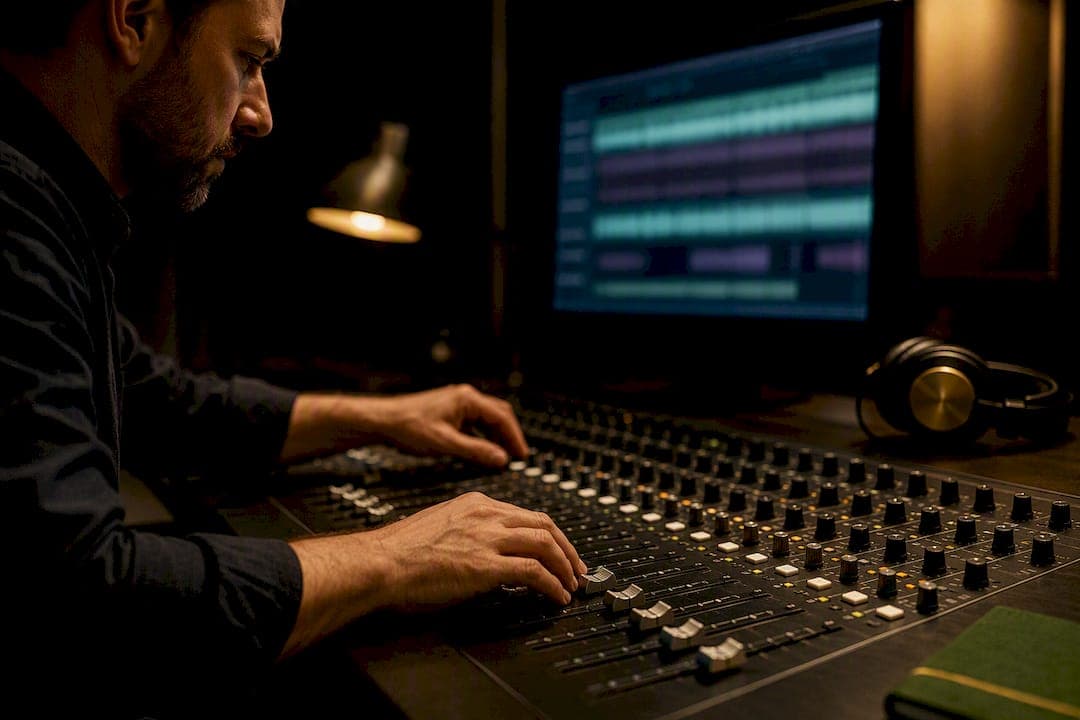
Slot music and sound effects raise arousal, make wins feel bigger, and, when used as celebratory cues on losses, can trick players into thinking they won more often than they did. Sound design in slots is engineered to intensify emotion at exactly the moments that matter to a game's math model. The fix is simple: know your audio settings, learn to spot a loss dressed up as a win, and check your net returns instead of trusting how a spin felt.
TL;DR:
- Sound effects significantly influence player arousal and can lead to overestimating win frequency, especially when paired with losses disguised as wins.
- Celebratory audio cues on small wins or near-misses are designed to enhance excitement but often mislead players about their actual chances of winning.
- Using adjustable sound controls and monitoring net returns helps players detach feelings from the game's emotional cues and make smarter decisions.
- Regulatory efforts aim to curb aggressive celebratory sounds on losses and LDWs, but many games still pair positive sounds with unfavorable outcomes.
- Responsible gaming involves turning down or muting celebratory sounds, setting session limits, and verifying payout information instead of relying on emotional audio cues.
Table of Contents
- What Does Sound Design Do in Slot Games?
- Does Slot Sound Change How You Perceive Wins?
- How Can Players Control Slot Audio to Play Smarter?
- What Should Responsible Slot Design Actually Fix?
- How Lucky Luxe Approaches Fair Play and Audio Transparency
- Where Did Slot Sound Design Come From?
- How Are Slot Sounds Actually Built and Delivered?
- Why Does Sound Influence Gambling Behavior So Strongly?
- How Does Slot Sound Design Differ Across Brands and Regions?
- Does Sound Design Actually Keep Players Coming Back?
- A Closing Take on Listening While You Play
- Play With Adjustable Audio and Fairness Tools You Can Actually Check
- Sources
- FAQ
What Does Sound Design Do in Slot Games?
Every audio element in a slot machine has a job. None of it is decoration.
Background soundtracks set the theme and control pacing without a player noticing. A slower, ambient loop on a classic fruit machine invites longer, calmer sessions. A driving, percussive track on a high-volatility video slot pushes urgency, subtly encouraging faster spins.
Win jingles work as secondary reinforcers. They're short, bright, and memorable on purpose, so your brain tags the moment as a win and files it away more vividly than a silent result would be. Near-miss sounds do something trickier: a rising tone that cuts off just short of a jackpot symbol creates tension and an itch to spin again, even though a near miss has zero bearing on the next spin's outcome.
Then there's the absence of sound. Silence or neutral tones after a loss remove the celebratory framing entirely, which lowers the odds a player overestimates how often they're winning.
The core audio toolkit breaks down into five categories:
- Theme soundtracks — set mood, genre identity, and session tempo
- Win jingles — short musical stings tied to any payout, big or small
- Near-miss cues — tension-building sounds tied to close-but-no-win spins
- Bonus-triggered audio — swelling music and effects signaling a feature round
- Silence or neutral tones — used, or deliberately withheld, after a loss
Understanding hit frequency versus perceived wins helps explain why audio can inflate your sense of how often you're actually winning. A game with a modest hit rate can sound far more generous than it plays.
Does Slot Sound Change How You Perceive Wins?
Yes, and the effect shows up in the body, not just in self-reported mood. A study of 96 gamblers found that sound-on sessions produced larger physiological arousal responses, including higher skin conductance and heart rate, compared to sound-off sessions on the same machine.
72.5% of participants in that study preferred playing with sound on, even though sound-on sessions also led them to overestimate how many times they'd won.
That preference matters. It's not that players are being fooled against their will. They genuinely enjoy the sound more, which is exactly why celebratory audio persists even as it distorts perception.
The behavioral pattern breaks down into a few consistent findings:
- Sound-on sessions increase measurable arousal (skin conductance, heart rate) versus sound-off sessions.
- Players overestimate their win count more often when audio accompanies outcomes.
- Losses disguised as wins, or LDWs, become especially misleading when paired with celebratory jingles. A PMC review of LDWs and sound found these audio cues directly drive overestimation of wins and greater persistence at the machine.
- Richer sensory feedback shortens the gap between spins. Faster spin latency raises bets per minute, and over a long session that translates into higher losses. A 2025 preprint on sensory feedback links enhanced audio and visual feedback directly to increased speed of play.
- Regulators have taken notice. UK gambling reforms have pushed to curb celebratory audio tied to losing outcomes, and the underlying research on LDWs supports the concern driving that policy.
None of this means sound is inherently a trap. It means the same jingle that makes a $2 win feel like a jackpot is doing exactly what it was designed to do.
How Can Players Control Slot Audio to Play Smarter?
You don't need to swear off sound entirely. You need to use the controls that are already sitting in the settings menu.
- Use the mute, music, and sound-effects toggles separately. Most games let you kill win jingles while keeping ambient music, or vice versa. Turning down just the celebratory stings removes a lot of the emotional inflation without making the game feel dead.
- Reserve full audio for bonus rounds. Muting base-game sound and only switching it on for feature triggers keeps the excitement where it belongs, tied to genuinely bigger moments.
- Learn to spot an LDW. Compare your wager to the actual return on the spin. If a $1 bet returns $0.40 across active paylines and the game still plays a triumphant chime, that's a loss wearing a win's costume.
- Set session time and spend limits before you start, take breaks on a timer, and track net return across a session rather than how often the screen lit up. Bankroll guidance built for this exact habit is covered in how to manage bankroll playing online slots.
Pro Tip: Play one session in silence, or with just background music and no win jingles. Pay attention to whether you feel less pulled to spin again after a small win. Most players notice the urge to keep going drops noticeably once the celebratory sound is gone.
What Should Responsible Slot Design Actually Fix?
The research points to specific, testable design changes, not vague calls for "moderation."
Analysis of 26 online slot titles found that despite regulatory pressure, a large share still pair celebratory audio with LDWs, meaning bans on paper haven't translated into consistent practice. The fixes researchers recommend are concrete:
- Stop pairing celebratory sound with any spin that returns less than the wager.
- Use neutral or mildly negative sounds on losses, including LDWs, rather than defaulting to silence.
- Display a clear net-return figure per spin so players aren't relying on audio cues to gauge results.
Silence alone isn't a complete fix. Research on LDWs suggests that pairing the same neutral or negative sound across both straightforward losses and LDWs does more to correct misperception than simply removing celebratory audio and leaving a blank gap. Combined audio and visual transparency, showing the actual number alongside a non-celebratory tone, closes the gap that silence by itself leaves open. Players who want a head start on spotting these patterns can work through the Slot Game Fairness Indicators Checklist before choosing which titles to spend time on.
How Lucky Luxe Approaches Fair Play and Audio Transparency
The platform offers slots, fish tables, and arcade games with a focus on quality graphics and fair play, with attention to how audio is presented as part of the user experience. Adjustable sound settings and clear result displays are part of giving players the information they need without relying on a jingle to tell the story.
If you want to put the advice in this article into practice, two internal guides do the heavy lifting. The Slot Game Fairness Indicators Checklist walks through what to look for before you trust a title's payout behavior. The Slot Bonus Feature Checklist breaks down how bonus rounds are signaled, audio included, so you can tell a genuine feature trigger from ordinary base-game noise. Pairing those checklists with the audio habits covered above gives you a practical framework: control the sound, verify the number, then decide if a game is worth your time.
Where Did Slot Sound Design Come From?
Mechanical slot machines from the early twentieth century made noise by accident, not design. The clatter of a lever, the mechanical spin of reels, and the physical clink of coins dropping into a tray were simply the sounds of moving metal parts. Players associated that coin clatter with winning because it was the win, a literal payout hitting a metal tray.
Electromechanical machines in the 1960s and 1970s started adding electronic bells and buzzers, giving designers their first real control over what a win sounded like independent of the physical payout mechanism. That's the origin of the bell sound still baked into slot iconography today, long after actual bells stopped ringing on most machines.
Video slots in the 1990s and 2000s changed everything. Once sound became a fully programmable software layer instead of a mechanical byproduct, designers could script exact tones for exact outcomes, tension-building near-miss stingers, layered bonus-round swells, and jingles calibrated to specific payout sizes. Mobile and online slots pushed this further. With no physical coin tray to simulate, every audio cue became a deliberate choice, tested and tuned the way a soundtrack for a film gets scored to specific moments. The shift from incidental machine noise to fully engineered audio experience explains why modern slot sound feels so much more emotionally precise than anything a 1960s bell could manage.
How Are Slot Sounds Actually Built and Delivered?
Modern slot audio production looks a lot more like game development than like recording a jukebox loop. Sound designers build layered systems: a base ambient track, a library of short win stings scaled to payout size, near-miss cues, bonus-trigger swells, and transition sounds between game states, all composed or recorded separately and assembled dynamically during play.
Implementation runs through a game engine's audio middleware, which decides in real time which sound clip fires based on the outcome of a spin. That's why a $5 win and a $500 win on the same machine trigger noticeably different musical stings. The system is reading the payout size and selecting from a tiered library.
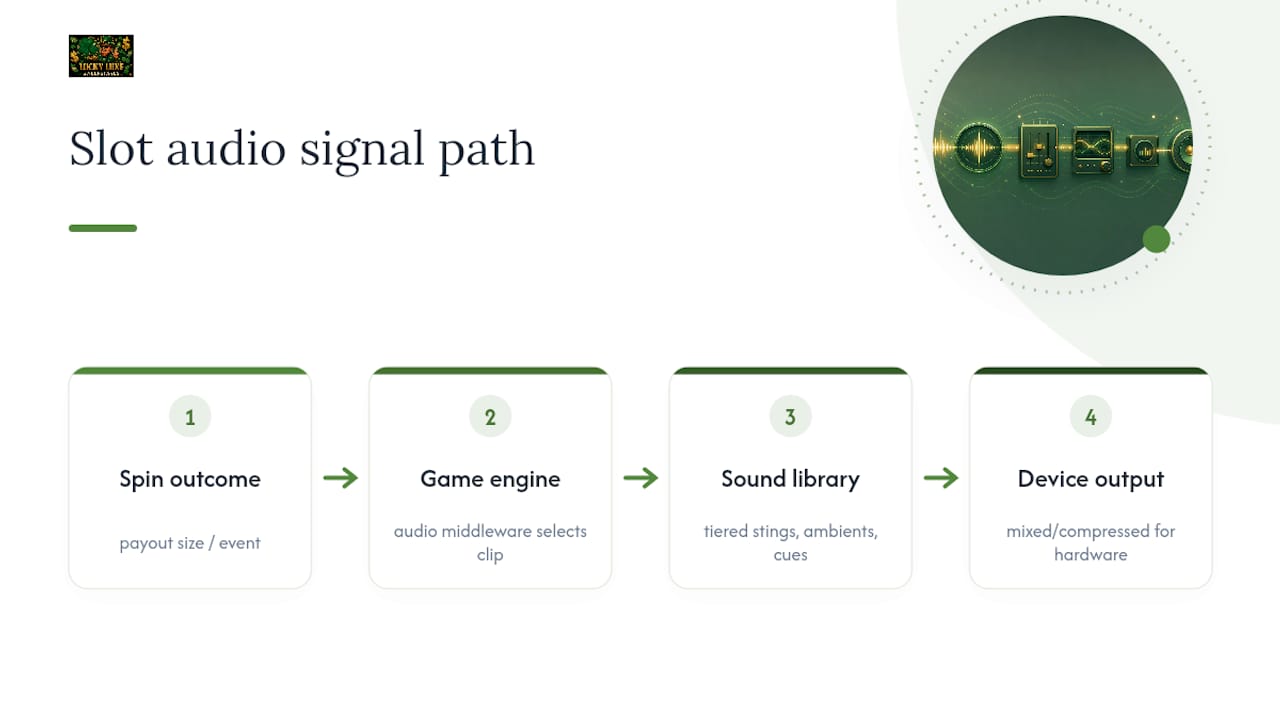
Hardware matters more than most players realize. A game tuned on a studio-quality speaker setup can sound thin or tinny on a phone's built-in speaker, so designers mix audio at multiple loudness and frequency profiles to hold up across headphones, laptop speakers, and mobile hardware alike. Compression and normalization keep a sudden bonus-round swell from blasting a player's eardrums relative to the quieter base-game loop.
Software constraints shape creative choices too. Mobile apps need compressed audio files that load fast without eating storage or draining battery, which is why many mobile slot soundtracks favor shorter, tightly looped compositions over sprawling orchestral scores. Latency also has to stay low. If the win jingle lags behind the visual celebration by even a fraction of a second, the whole reinforcement effect weakens, since the brain links sound and reward most strongly when they land together.
Why Does Sound Influence Gambling Behavior So Strongly?
A few overlapping psychological mechanisms explain why audio has such an outsized effect on how a slot session feels.
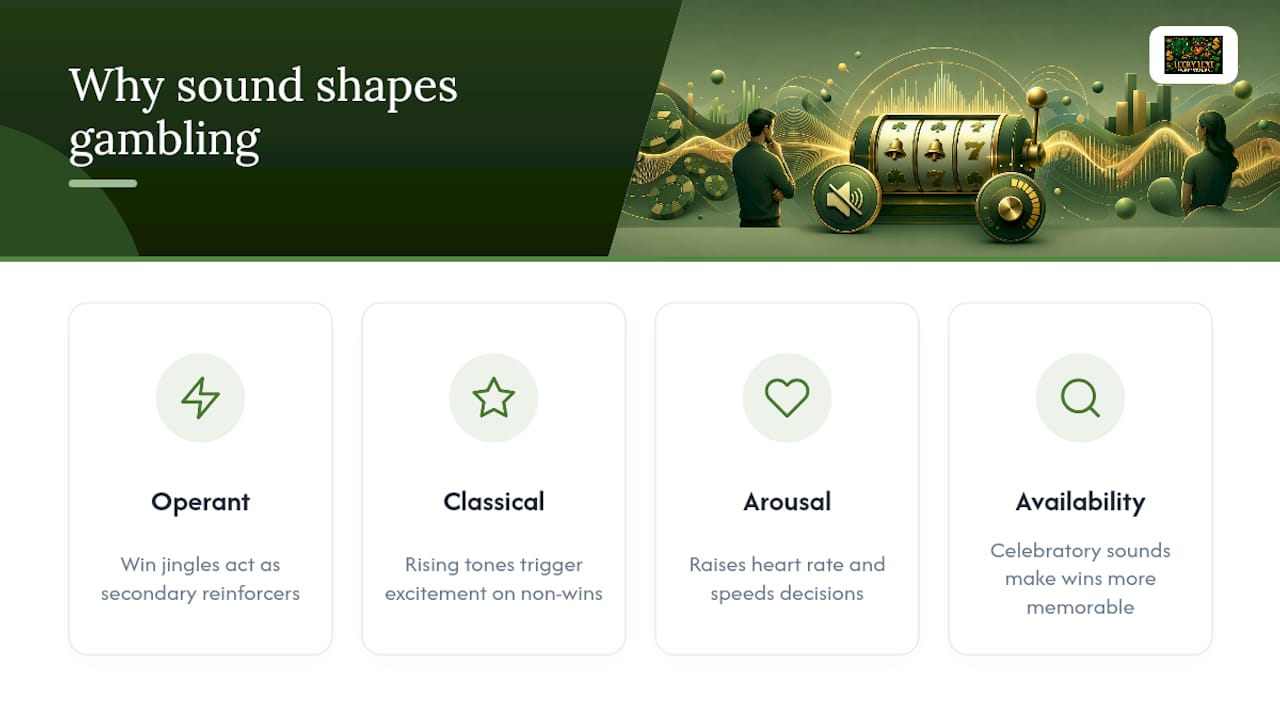
Operant conditioning is the foundational one. Win jingles function as secondary reinforcers, similar to a "cha-ching" register sound. Repeated pairing of a specific tone with a rewarding outcome trains the brain to treat that tone itself as pleasurable, independent of the actual payout size.
Classical conditioning explains near-miss cues. A rising, almost-there tone gets paired repeatedly with the anticipation of a big win, so eventually the tone alone generates excitement and urgency, even on spins that deliver nothing.
Arousal theory ties it together at the physiological level. Higher arousal, the kind measured through skin conductance and heart rate in experimental slot research, tends to correlate with more intense subjective enjoyment and, separately, with riskier or faster decision-making. Sound is one of the most direct levers a designer has for pushing arousal up without changing the actual math of the game.
Finally, the availability heuristic helps explain why LDWs work as well as they do. When a celebratory sound plays, that spin becomes more memorable and mentally "available" as a win, regardless of whether the payout actually covered the wager. Players end up estimating their overall win rate based on how many celebratory sounds they remember hearing, not on the actual numbers.
How Does Slot Sound Design Differ Across Brands and Regions?
Sound design strategy isn't uniform across the industry, and the differences track both company philosophy and regulatory environment.
Some studios lean into maximalist, constantly-reinforcing audio: near-miss stingers, escalating bonus-round layers, and a jingle for nearly every payout tier, however small. Others, as industry interviews on modern slot development point out, favor restraint. Designers at studios like Play'n GO have emphasized that audio should support game identity and pacing rather than amplify intensity nonstop, arguing that a quieter, more comfortable soundscape sustains longer sessions without triggering fatigue.
Regional regulation adds another layer of divergence. Markets with stricter oversight on marketing and problem-gambling protections push developers toward more conservative audio choices, particularly around losses and near-misses. Markets with lighter regulatory touch tend to see more aggressive celebratory audio persist, including on LDWs, which is precisely the gap researchers flagged in the analysis of UK-market slots despite existing rules aimed at curbing it.
Genre also shapes the sound palette. Retro-styled fruit machine slots typically lean on nostalgic bells and simple chimes, while cinematic, story-driven video slots invest in full orchestral scores and voice-acted bonus sequences. The difference between arcade games and slot games also shows up in audio intent: arcade titles often reward skill-based actions with sound, while slots use audio almost entirely to frame chance-based outcomes.
Does Sound Design Actually Keep Players Coming Back?
Sound is one of the strongest levers a slot has for building brand recognition and repeat play. A distinctive win theme or bonus-round musical sting becomes a signature the way a jingle becomes attached to a product. Players who enjoyed a particular game often remember its sound before they remember its exact theme or paytable.
The preference data backs this up directly. In the same study measuring physiological arousal, the overwhelming majority of participants said they preferred sound-on play, even knowing the outcomes weren't any different from sound-off sessions. That preference is the entire commercial logic behind investing heavily in audio production: players choose to keep sound on, and they gravitate toward titles whose soundtrack feels satisfying, exciting, or nostalgic.
That popularity effect cuts both ways for the player. A game that keeps you engaged and coming back because the audio feels rewarding isn't necessarily a game that's paying out any differently than a quieter title with an identical return-to-player rate. Retention driven by sound design is a real business outcome for developers, but it says nothing about your actual odds on any given spin. Checking hit frequency data rather than gut feel remains the more reliable way to judge whether a game is worth returning to.
A Closing Take on Listening While You Play
Treat celebratory audio as marketing, not information. The safest default is conservative: music on if you enjoy it, win jingles turned down, sessions kept short enough that arousal doesn't quietly creep into faster betting. Lucky Luxe's fairness checklist and responsible-gaming guide are worth five minutes before your next session, not after a losing streak makes you wish you'd read them sooner.
— Skyline
Play With Adjustable Audio and Fairness Tools You Can Actually Check
The platform offers adjustable audio settings on individual titles and provides fairness resources users can review before playing. That's the real advantage here, you're not stuck accepting whatever a game's default sound profile nudges you toward.
Before loading up on Gold Coins, spend a few minutes with the Slot Game Fairness Indicators Checklist and the Slot Bonus Feature Checklist to understand what you're playing and how its bonus rounds actually signal value.
| Quick action | Why it helps |
|---|---|
| Use separate music/SFX/mute toggles | Cuts celebratory inflation without killing the vibe |
| Check net return, not just hit frequency | Reveals LDWs hiding behind a win jingle |
| Set a time and spend limit before playing | Keeps sound-driven speed from padding losses |
Head to the Lucky Luxe games library to try titles with adjustable audio settings and see the fairness information for yourself before your next purchase.
Sources
Key research behind this article includes the PMC review on LDWs and sound, the multiline slot arousal study, and Lucky Luxe's own responsible gaming guide.
- Losses disguised as wins and the role of sound (PMC review)
- The Impact of Sound in Modern Multiline Video Slot Machine Play
- Preprint on sensory feedback increasing speed of play (2025)
FAQ
Does turning off slot sound change my odds of winning?
No, audio has zero effect on a slot's return-to-player rate or randomness. It only changes how you perceive and feel about outcomes, including making you more likely to overestimate how often you're winning when sound is on, according to experimental research.
What is a loss disguised as a win (LDW)?
An LDW happens when a spin returns less money than you wagered, but the game still plays a celebratory sound and animation as if you won. Research shows these audio cues cause players to overestimate their actual win rate and keep playing longer than they otherwise would.
Can slot sound effects make me play faster and lose more?
Yes. Richer audio and visual feedback shortens the time between spins, and a 2025 preprint on sensory feedback links that faster pace directly to increased bets per minute, which raises losses if sessions aren't time limited.
Does Lucky Luxe let me adjust audio settings on its games?
Adjustable sound settings are available across slots, fish tables, and arcade games. Paired with the fairness indicators checklist, these help users make more informed choices before purchasing Gold Coins.
Why do casinos and slot developers use celebratory sounds on small wins?
Celebratory sounds act as secondary reinforcers that make small or even net-loss outcomes feel rewarding, which increases enjoyment and encourages continued play. Studies confirm players genuinely prefer sound-on sessions even though that same sound inflates their perception of how often they're winning.