

Featured games sections are curated areas on gaming platforms where editors or algorithms spotlight standout titles to help players discover quality content fast. Whether you're browsing Steam, the Apple App Store, or a browser-based site like Addicting Games, these sections cut through thousands of available titles and surface the ones worth your time. Understanding how they work, and where to find them, makes you a smarter, more satisfied player. Luckyluxe uses the same principle, showcasing top game highlights so you spend less time searching and more time playing.
What are featured games sections and how do they work?
Featured games sections are the curated front-page displays you see on gaming platforms, labeled things like "Editors' Choice," "Top Picks," or "New and Noteworthy." The industry term for this practice is editorial curation, though platforms blend it with algorithmic signals depending on their size and goals. The core purpose is the same across all of them: reduce the effort it takes for a player to find something great.
These sections exist because the sheer volume of available games makes browsing exhausting. Steam alone lists tens of thousands of titles. Without a curated layer, casual players would spend more time filtering than actually playing. Featured sections solve that by acting as a trusted filter, one that has already done the quality check for you.

The distinction between editorial and algorithmic featuring matters more than most players realize. Editorial placements involve real people playing and evaluating games before recommending them. Algorithmic sections, by contrast, surface titles based on download velocity, ratings, or revenue. Both appear under the "featured" label, but they represent very different levels of human judgment. Knowing which type you're looking at helps you calibrate how much to trust the recommendation.
How are featured games selected on major gaming platforms?
Selection criteria vary by platform, but the most transparent and detailed process belongs to Apple's App Store editorial team. Apple's editors evaluate gameplay, UI, art, sound, and performance before placing any game in a featured section. They actually play the game. That single fact separates Apple's editorial process from most algorithmic systems, which never touch the product at all.
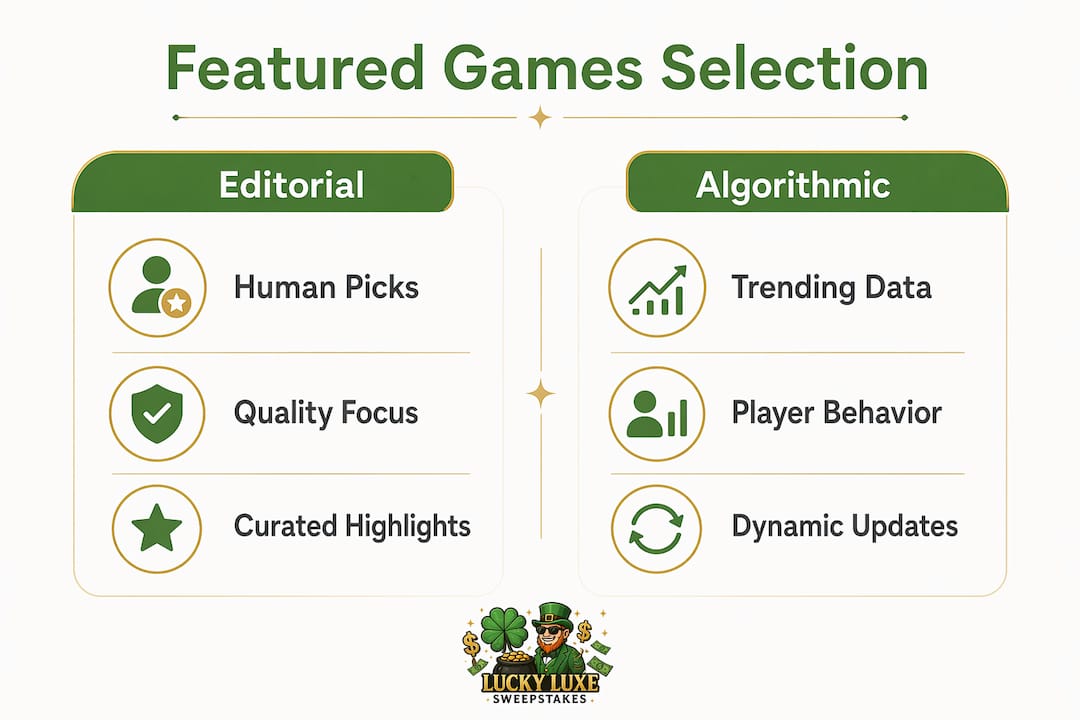
Steam takes a hybrid approach. The platform's editors select games for spotlight features, but Steam also uses community visibility tools, user reviews, and wishlist data to surface trending titles. This means a game can appear "featured" on Steam either because an editor chose it or because the algorithm detected momentum. The two pathways produce different types of recommendations.
PlayStation Plus operates on a third model entirely: time-bound promotional lineups. Sony's PS Plus June lineup, for example, makes new games available on a fixed date each month. These aren't editorial picks in the traditional sense. They're licensing agreements packaged as featured content, which is a meaningful difference if you're using the section to find hidden gems versus free monthly titles.
For developers, the path to being featured is more operational than most people expect. Apple's Featured nominations tool in App Store Connect lets developers submit games for editorial review, with editors assessing submissions weekly. The catch is that editors need a playable build to test. No build, no consideration.
Pro Tip: If you're a developer targeting App Store featuring, submit nominations at least three weeks before your target date. For editorial stories, submit eight weeks in advance to give editors enough preparation time.
Key factors editors weigh across platforms include:
- Gameplay quality: Is the core loop engaging and polished?
- UI and design: Does the interface feel intuitive on the target device?
- Performance: Does the game run well on all supported hardware?
- Localization: Is the game accessible to players in multiple regions?
- Accessibility: Can players with different needs enjoy the experience?
What types of featured game sections exist across platforms?
Not all featured sections are built the same way. The label "featured" masks a wide range of mechanisms, and casual players benefit from recognizing the differences. Here's how the major types break down:
| Section type | Primary purpose | Platform examples |
|---|---|---|
| Editors' Choice / Spotlight | Highlight games vetted by human editors for quality | Apple App Store, Addicting Games |
| Indie Spotlight | Surface smaller developers and original titles | Addicting Games, ICC Games |
| Subscription lineup | Deliver time-limited access to licensed titles | PlayStation Plus, Xbox Game Pass |
| Daily recommended | Rotate fresh content to encourage daily engagement | ABCmouse Daily Learning Quests |
| Algorithmic trending | Surface games gaining rapid community traction | Steam, Google Play |
The Editors' Choice and Indie Spotlight categories are the most useful for players who want genuinely curated recommendations. Addicting Games and ICC Games both use curated indie and editors' choice lists to highlight standout titles, giving smaller developers real visibility alongside bigger releases.
Subscription lineups like PlayStation Plus serve a different function. They're promotional in nature, shaped by licensing deals as much as editorial judgment. That doesn't make them less valuable, but you should treat them as "free games this month" rather than "the best games available."
Daily recommended sections, like the ABCmouse model, use a standard navigation pattern that rotates content to keep the experience fresh. This approach works well for platforms with large catalogs and players who visit regularly. The goal is habit formation as much as discovery.
Why featured sections matter for casual players and how to find them
Featured sections reduce the single biggest friction point in online gaming: finding something worth playing. Platforms like Addicting Games frame their featured picks as curated choices specifically designed to cut browsing effort. For a casual player with 20 minutes to spare, that matters enormously.
The practical benefits go beyond convenience. Featured sections also function as a quality signal. When Apple's editorial team features a game, it has already been tested for usability and accessibility across devices and regions. You're not just getting a popular game. You're getting one that has passed a real-world quality check.
Here's how to locate featured game sections on the most common platforms:
- Steam: Open the Steam homepage. The top banner rotates editorially featured games. Scroll down for "Featured and Recommended," "New and Trending," and "Top Sellers" sections. Each serves a different discovery purpose.
- Apple App Store: Tap the "Games" tab at the bottom of the App Store. The top of the page displays the current editorial feature. Scroll for "Editors' Choice," "New Games We Love," and category spotlights.
- Browser gaming sites: Sites like Addicting Games place featured and spotlight sections directly on the homepage. Look for labeled carousels or banner sections at the top of the page.
- Subscription platforms: For PlayStation Plus or Xbox Game Pass, navigate to the "Games" or "My Benefits" tab. Monthly lineups are listed with availability dates.
- Social discovery: Some platforms surface a "Friends Are Playing" section, which functions as a social featured layer. This is particularly useful if your network has similar taste.
For a deeper look at getting around gaming platforms efficiently, this platform navigation guide covers the most common UI patterns in detail.
Pro Tip: Bookmark the featured section of your preferred platform and check it weekly. Editorial lineups refresh on a schedule, and the best picks often get replaced before most players notice them.
How do featured sections benefit developers and the gaming community?
For developers, landing in a featured section is one of the highest-impact marketing events possible. A single editorial feature on the Apple App Store or Steam can drive download spikes that dwarf paid advertising campaigns. The traffic is also higher quality: players who find a game through an editorial feature are actively looking for something good, not just responding to an ad.
The evaluation criteria Apple's editorial teams use also push developers to build better products. Knowing that editors will test performance on all supported devices, check localization quality, and assess accessibility encourages developers to meet a higher standard before launch. The featuring process functions as an indirect quality incentive for the entire ecosystem.
Indie developers benefit disproportionately from spotlight sections. A small studio with a brilliant game but no marketing budget can reach millions of players through a single Indie Spotlight placement on Addicting Games or an Editors' Choice feature on the App Store. This levels a playing field that would otherwise favor large publishers with large ad budgets.
Community engagement also grows through featured sections. When a platform highlights a game, it creates a shared cultural moment. Players discuss the same titles, compare progress, and form communities around featured picks. This is how games like Among Us and Vampire Survivors built massive audiences quickly: platform featuring created the initial critical mass.
Operationally, developers who want to be featured should treat it like a product launch. Submitting a TestFlight build ready for playtesting is a prerequisite for App Store consideration. Nominations submitted without a playable build are simply not reviewed. For players, this behind-the-scenes process is worth knowing because it explains why featured games consistently feel more polished than average. The featuring pipeline filters out unfinished work. You can also explore fair play standards in slot gaming to understand how quality benchmarks apply across different game types.
Key takeaways
Featured games sections are the most reliable shortcut to quality gaming experiences because they combine human editorial judgment with platform-level quality standards.
| Point | Details |
|---|---|
| Definition of featured sections | Curated platform areas where editors or algorithms spotlight standout games for faster discovery. |
| Selection involves real testing | Apple's editors play games before featuring them, checking UI, performance, and accessibility. |
| Multiple section types exist | Editors' Choice, Indie Spotlight, subscription lineups, and algorithmic trending all use the "featured" label differently. |
| Players save time and find quality | Featured sections cut browsing effort and surface games that have already passed quality checks. |
| Developers gain major exposure | A single editorial feature can drive traffic spikes that outperform paid advertising for indie studios. |
Why featured sections deserve more credit than they get
Most players scroll past featured sections without thinking twice about what went into building them. That's a missed opportunity. After spending years watching how platforms surface content, I've come to believe that a well-run editorial featured section is one of the most underrated tools in gaming discovery.
The conventional wisdom says algorithms are the future and human curation is too slow and too subjective. I disagree. Algorithms optimize for engagement signals, which often means they surface what's already popular rather than what's genuinely good. Editorial teams, when they're doing their job well, find the game that deserves to be popular but hasn't broken through yet. That's a fundamentally different and more valuable function.
The platforms that invest in real editorial teams, like Apple with its App Store curation process, consistently produce featured sections that feel trustworthy. Players return to those sections because the recommendations hold up. Platforms that rely entirely on algorithmic trending end up featuring whatever went viral last week, which isn't always what you actually want to play.
My advice: treat featured sections as your first stop, not your last resort. Check them before you start browsing by genre or searching by title. The editors and curators behind these sections have already done the filtering work. Use it.
— Skyline
Discover top game highlights at Luckyluxe
Luckyluxe brings the same editorial thinking to its game selection, putting top game highlights front and center so you find something worth playing the moment you arrive. The platform features curated picks across slots, fishing games, and arcade titles, updated regularly so the selection stays fresh. Featured game categories on Luckyluxe are organized to match what casual players actually want: clear recommendations, quality graphics, and fair play built in from the start. If you're ready to skip the browsing and go straight to the good stuff, explore Luckyluxe and see what's featured today.
FAQ
What are featured games sections on gaming platforms?
Featured games sections are curated areas on platforms like Steam, the Apple App Store, and Addicting Games where editors or algorithms highlight standout titles. They exist to help players find quality games quickly without manually browsing large catalogs.
How do editors decide which games get featured?
Apple's editorial teams evaluate gameplay, UI, art, sound, performance, localization, and accessibility before featuring any game. Editors play the game themselves using a submitted build before making a decision.
Are all featured sections editorially curated?
No. Featured sections can reflect editorial picks, algorithmic trending, or time-limited subscription lineups like PlayStation Plus monthly games. The label "featured" covers all three mechanisms, so the type of curation varies by platform.
How do I find featured games sections on Steam or the App Store?
On Steam, the homepage banner and "Featured and Recommended" scroll section display current picks. On the Apple App Store, tap the "Games" tab and look for "Editors' Choice" and "New Games We Love" at the top of the page.
Why do featured games tend to feel more polished than average?
The featuring process itself filters for quality. Platforms like Apple require a playable build for review and test games across devices and regions before featuring them, which means unfinished or poorly optimized titles rarely make it through.