

A platform support center is a dedicated technical assistance function that helps users troubleshoot issues, configure settings, and get the most out of a specific digital platform. In online gaming and technology services, this means having a structured resource that stands between you and a frustrating dead end when something goes wrong. Platform support covers event configuration, troubleshooting, performance optimization, and feature guidance through portals and account resources. Understanding how this system works gives you a real advantage as a player or tech user.
What is a platform support center and what does it actually do?
A platform support center is defined as a specialized system that combines troubleshooting, operational guidance, and structured escalation to help users reliably operate a digital platform. This goes well beyond answering basic questions. Platform support is a system that combines troubleshooting with operational guidance to reliably run platform features, which separates it from a standard help desk that only reacts to reported errors.
The core services a platform support center provides include:
- Technical troubleshooting: Diagnosing login failures, game loading errors, payment processing issues, and connectivity problems specific to the platform.
- Setup and configuration guidance: Walking users through account setup, payment methods, game settings, and promotional feature activation.
- Performance optimization: Advising on browser settings, device compatibility, and connection requirements to improve gameplay quality.
- Feature education: Teaching users how to use referral programs, bonus systems, and platform tools they may not know exist.
- Escalation management: Routing complex or unresolved issues to specialist teams or engineering when front-line support cannot resolve them.
The distinction between platform support and a general help desk matters. A general help desk answers questions. A platform support center provides proactive configuration advice and feature utilization guidance, meaning it actively helps you get better results from the platform, not just fix what is broken. For online gaming platforms, this translates to faster load times, fewer payment errors, and a clearer understanding of how bonuses and game mechanics work.
Pro Tip: Before contacting support, check whether your issue falls under a known configuration problem. Many platform support centers publish known issue logs that resolve your problem in under two minutes.
How do platform support centers operate in gaming and tech services?
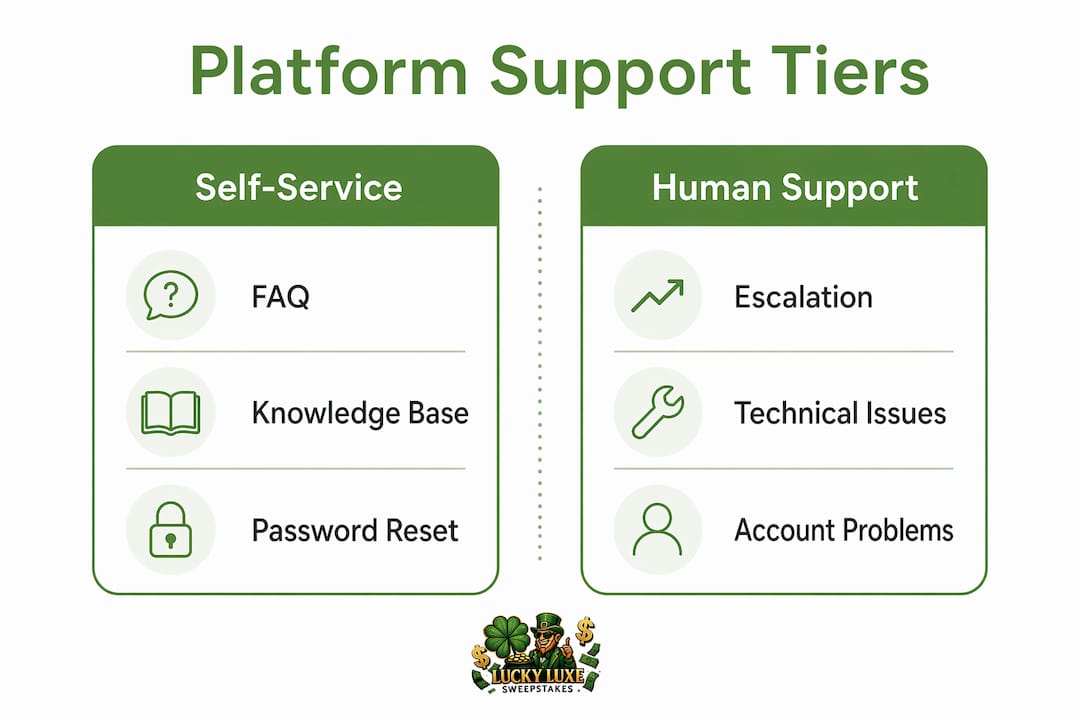
Platform support centers in gaming and technology operate through a tiered structure that routes issues by complexity. This prevents simple questions from consuming specialist time and keeps resolution times low across the board.
The standard operational flow works like this:
- Self-service layer: You search a knowledge base, FAQ section, or help portal for answers. This handles the majority of routine questions without any human involvement.
- Help desk layer: If self-service does not resolve the issue, you submit a support ticket or initiate a live chat. A front-line agent handles common technical problems using guided scripts and documented solutions.
- Specialist escalation: Complex issues, such as account integrity problems or payment system failures, escalate to a dedicated specialist team with deeper platform access.
- Engineering escalation: Bugs, platform-wide outages, or reproducibility-confirmed technical faults go to the engineering team for a code-level fix.
Microsoft Power Platform's support model demonstrates this clearly: users access self-help solutions first, then representative support if escalation is needed, with active plans required for formal requests. This layered approach is not just about efficiency. It also defines governance, meaning each tier knows exactly what it can and cannot change. Tiered support clarifies ownership boundaries, preventing agents from becoming blocked and ensuring fixes deploy efficiently.
Modern platform support centers also use omnichannel delivery. Technical support now integrates telephony, IVR, secure text, live chat, and email to unify interactions and maintain context across sessions. For a gaming platform user, this means you can start a conversation via live chat and continue it through email without repeating your entire issue history.

| Support tier | Who handles it | Typical issue type |
|---|---|---|
| Self-service | Knowledge base, FAQ | Password resets, basic navigation |
| Help desk | Front-line agents | Login errors, payment questions |
| Specialist support | Dedicated technical team | Account integrity, bonus disputes |
| Engineering | Development team | Platform bugs, system outages |
What are the key benefits of using a platform support center?
The benefits of platform support go beyond fixing problems. A well-structured support center actively improves your experience on the platform over time.
- Faster resolution: Tiered routing means your issue reaches the right person immediately rather than cycling through generalist agents who cannot help.
- Reduced repeat incidents: Support centers that provide best-practice guidance after resolving an issue prevent the same problem from recurring. This is the difference between fixing a symptom and addressing a cause.
- Operational stability: Effective technical support protects brand reputation, revenue, and customer loyalty by handling issues accurately and escalating properly. For gaming platforms, this means fewer disrupted sessions and more consistent access to games and promotions.
- Product improvement feedback: Support centers collect issue data that feeds back into platform development. When many users report the same friction point, that data drives a fix. You benefit from improvements you never directly requested.
"Platform support is often misunderstood as simple customer service, but it is a strategic system ensuring reliable platform usage and user success." — ON24 Platform Support Insight
The governance benefit deserves specific attention. Support governance structures clarify who handles specific fixes and changes, minimizing delays and improving support quality. In practice, this means you are never stuck waiting for a front-line agent to figure out whether they are allowed to process your request. The answer is already defined by the tier structure. Research shows that structured support builds player trust and loyalty within online gaming platforms, which is a measurable outcome, not just a soft benefit.
How to effectively use a platform support center in online gaming
Using a platform support center well is a skill. Most users leave resolution time on the table by skipping steps or submitting incomplete information.
Start with the self-service knowledge base. Most gaming platform support centers publish detailed guides on account setup, payment methods, bonus activation, and common error codes. Searching the knowledge base before submitting a ticket resolves the majority of routine issues in under five minutes. Accessing support resources while gaming covers common workflows that apply across most platforms.
When self-service does not resolve your issue, submit a ticket with the following details:
- Exact error message or behavior: Copy the text of any error code rather than paraphrasing it.
- Reproduction steps: List exactly what you did before the issue appeared, step by step.
- Timestamps: Note when the issue first occurred and whether it is ongoing or intermittent.
- Device and browser details: Include your operating system, browser version, and any extensions that might affect platform behavior.
Platform support centers require reproduction steps and configuration details to escalate effectively to engineering teams. Submitting incomplete information delays your resolution because the agent must contact you again before they can act. Providing complete details upfront cuts that cycle out entirely.
Pro Tip: If your issue involves a payment or account access problem, mark it as high priority in the ticket system and include your account ID in the first line. This routes your ticket to the correct specialist tier immediately rather than starting at the general queue.
When escalating to human support, be specific about what you have already tried. Telling an agent "I already cleared my cache and tried a different browser" saves both of you time and signals that the issue requires a deeper fix. Navigating gaming platforms effectively includes knowing when to escalate rather than cycling through the same self-service steps repeatedly.
Key takeaways
A platform support center is the structured system that separates platforms users trust from platforms users abandon, combining tiered resolution, proactive guidance, and governance to deliver consistent outcomes.
| Point | Details |
|---|---|
| Platform support definition | A dedicated technical assistance system covering troubleshooting, configuration, optimization, and escalation. |
| Tiered structure | Four layers handle issues by complexity: self-service, help desk, specialist, and engineering. |
| Benefits of platform support | Faster resolution, fewer repeat incidents, operational stability, and product improvement feedback. |
| How to use support effectively | Submit complete ticket details including reproduction steps, timestamps, and device information. |
| Governance advantage | Tiered ownership boundaries prevent delays and define exactly who can perform specific fixes. |
Why platform support is more strategic than most players realize
Most players treat a support center as a last resort. That is the wrong mental model, and it costs them time and frustration they did not need to experience.
I have seen users spend 45 minutes trying to fix a bonus activation error that a support agent could have resolved in three minutes with a single account flag adjustment. The support center existed. The knowledge base article existed. The user simply did not think to look. Platform support is not a fallback. It is a resource you should consult early, especially for anything involving payments, account settings, or promotional features where the stakes are higher than a minor inconvenience.
The more interesting shift happening right now is the integration of AI into platform support workflows. AI-assisted triage is already filtering and categorizing tickets before a human agent sees them, which means your ticket reaches the right specialist faster than it did two years ago. Omnichannel support, where your chat history follows you into an email thread or a callback, is becoming the standard rather than the exception. Gaming platforms that invest in this infrastructure are not doing it out of generosity. They are doing it because when designed effectively, platform support reduces internal friction, improves cross-team productivity, and informs product improvements. That investment pays off in player retention, which is the metric that actually drives platform revenue.
The platforms worth your time are the ones treating support as a strategic asset. The ones that do not are telling you something important about how they value your experience.
— Skyline
Luckyluxe and your gaming support experience
Luckyluxe is built around the idea that a great gaming experience does not stop at the games themselves. The platform provides access to support resources, tutorials, and guidance designed to help you get the most out of every session, whether you are exploring slots, fishing games, or arcade titles. Luckyluxe's referral program, promotional highlights, and fair-play commitment are all backed by clear support pathways so you are never left guessing. Visit Luckyluxe to explore the full platform, check out current game highlights, and access the support resources that make your experience consistent and rewarding from your first session forward.
FAQ
What is a platform support center in simple terms?
A platform support center is a dedicated resource that helps users troubleshoot problems, configure settings, and optimize their experience on a specific digital platform. It combines self-service tools, live agent support, and specialist escalation to resolve issues at every level of complexity.
How is platform support different from a regular help desk?
A regular help desk reacts to reported problems. A platform support center also provides proactive configuration advice and feature utilization guidance, actively helping users get better results from the platform rather than just fixing errors after they occur.
What details should I include when submitting a support ticket?
Include the exact error message, step-by-step reproduction steps, timestamps, and your device and browser details. Standardizing issue reproducibility is critical to avoid stalled escalations and accelerate resolutions.
Why does tiered support matter for online gaming platforms?
Tiered support routes issues by complexity so simple problems resolve quickly through self-service while complex issues reach specialist teams without delay. Varying support tiers handle issues by complexity, preventing agent blockage and improving governance across the platform.
When should I escalate my issue to human support?
Escalate when self-service resources have not resolved your issue after one or two attempts, or immediately for payment problems, account access failures, or any issue that is blocking your ability to use the platform. Providing complete ticket details at the point of escalation cuts resolution time significantly.