

Multi-device gaming access is the ability to play the same game across multiple devices while preserving your progress, social connections, and gameplay continuity. This capability, known in the industry as cross-platform play combined with cross-progression, has shifted from a premium feature to a baseline expectation. Platforms like Epic Games and Microsoft have built their entire account ecosystems around it. Why multi-device gaming access matters is simple: it removes the hardware wall between you and your game, your friends, and your progress. Gamers who understand this have a real advantage in choosing where and how they play.
Why multi-device gaming access matters for matchmaking
Faster matchmaking is one of the most measurable benefits of cross-platform gaming. When player pools from PC, console, and mobile combine into one, queue times drop sharply. This matters most during off-peak hours and in niche game modes where single-platform servers struggle to find enough players.

Unified player pools reduce wait times significantly compared to platform-locked servers. Shorter queues mean more time playing and less time staring at a loading screen. That improvement compounds over time, keeping communities active and games alive longer.
Game longevity is directly tied to matchmaking health. Cross-platform support extends multiplayer game lifespan because a unified base never shrinks as fast as a fragmented one. When one platform's player count dips, the shared pool absorbs the loss without degrading match quality.
| Matchmaking scenario | Typical outcome |
|---|---|
| Single-platform server, off-peak hours | Long queue times, degraded match quality |
| Single-platform server, peak hours | Acceptable times, limited mode variety |
| Unified multi-device pool, off-peak hours | Shorter queues, more mode options |
| Unified multi-device pool, peak hours | Fast queues, full competitive brackets |
Pro Tip: If a game offers an opt-in for cross-platform matchmaking, turn it on during off-peak sessions. You will find matches faster without sacrificing match quality.
Competitive fairness is a real concern in mixed-input environments. Input-based matchmaking groups players by their control method, not just their device. A controller player on PC competes against other controller players, not against mouse-and-keyboard opponents with a reaction-time advantage.
How cross-progression and cloud sync protect your progress
Cross-progression is the system that keeps your gaming identity intact across every device you own. It covers far more than save files. Cross-progression synchronizes cosmetics, stats, MMR, battle pass progress, and settings across platforms. That means the skin you unlocked on your console shows up when you log in on PC.
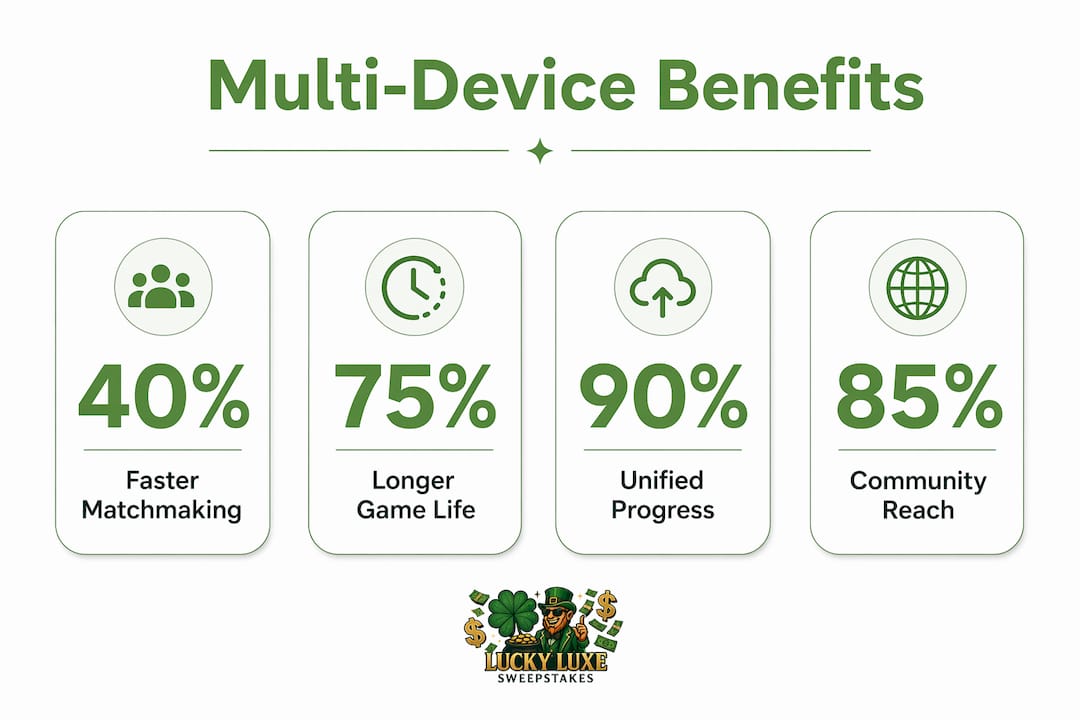
Cloud synchronization makes this possible by storing your account state on remote servers rather than local hardware. Progress made on PC stays accessible on handheld devices through this architecture. Microsoft's Xbox Play Anywhere program and Steam's Dynamic Cloud Sync are two well-known implementations of this approach.
What cross-progression typically covers:
- Achievements and trophies synced to your unified account
- Cosmetics and skins purchased or earned on any platform
- Competitive rank and MMR carried across devices
- Battle pass progress so you never lose paid content
- Settings and keybinds restored automatically on each device
- Friend lists accessible regardless of which hardware you log in from
The technical side is harder than it looks. Publishers face real hurdles reconciling anti-cheat systems, storefront policies, and account sync procedures. A game that runs Easy Anti-Cheat on PC cannot always share a progression state with a console version that uses a different integrity system. These mismatches cause account merge bugs and progression desyncs that frustrate players.
Pro Tip: Before switching devices mid-session, close your game fully and wait for the cloud save confirmation. Forcing a quit before sync completes is the most common cause of lost progress.
Understanding single sign-on gaming is the clearest way to see how unified accounts make cross-progression work in practice. One login, one identity, every device.
How does multi-device access strengthen gaming communities?
Multi-device access removes the biggest social barrier in gaming: hardware segregation. When your friend plays on console and you play on PC, a platform-locked game splits your group before you even start. Cross-platform compatibility fixes fragmented communities by letting everyone join the same lobby regardless of device.
Lowering platform entry barriers boosts long-term player retention. Players who can game with their actual friends stay engaged longer than those forced into separate servers. This is not a soft benefit. Retention directly affects a game's revenue, update schedule, and community health.
Social features that multi-device access enables:
- Cross-platform friend lists that persist across hardware
- Shared party systems so groups form without platform restrictions
- Unified voice and text chat regardless of device
- Cross-platform leaderboards that reflect the full player base
- Shared seasonal events and limited-time modes open to all players
The cultural shift matters too. Players now expect the same gaming identity on desktop rigs, handhelds, mobile devices, and consoles. This "always-connected" expectation means a game that lacks cross-platform support feels dated, not just inconvenient. Developers who ignore it risk losing players to titles that respect how people actually live and play.
Platform accessibility features also expand the social reach of multi-device ecosystems by making games playable for a wider audience across different hardware setups.
Challenges developers face in multi-device ecosystems
Supporting multiple devices is not a switch you flip. Developers face a layered set of technical and policy problems that can undermine the experience if handled poorly.
-
Input disparity. Mouse-and-keyboard players have measurable reaction-time advantages over controller users in fast-paced shooters. Without input-based matchmaking, this imbalance drives controller players away from competitive modes.
-
Patch timing and version sync. Console platforms require certification before updates go live. PC patches can deploy the same day. A version mismatch between platforms breaks cross-play until all versions align, which can take days.
-
Anti-cheat incompatibility. Different platforms use different anti-cheat systems. Developers must reconcile these systems alongside storefront policies to prevent progression desyncs and account merge bugs. This is one of the most technically demanding parts of cross-platform development.
-
Storefront restrictions. Platform holders sometimes restrict cross-platform purchases or currency transfers. A skin bought on one storefront may not transfer to another, even if the game supports cross-progression for earned content.
-
Regional privacy laws. Data residency requirements in regions like the European Union affect how player data syncs across servers. Compliance adds engineering overhead and can limit which features are available in certain markets.
Developers at GDC 2026 emphasized clear communication of performance expectations across devices as a core trust-building practice. Players who know what to expect on each platform are less likely to feel misled when performance varies. Adaptive UI design, which adjusts interface layouts for each device type, also reduces friction without requiring separate game builds.
Protecting player data across multiple access points is another layer developers must address, especially as account systems span more hardware and regions.
Key Takeaways
Multi-device gaming access is the single most important structural feature separating modern gaming platforms from outdated, hardware-locked experiences.
| Point | Details |
|---|---|
| Matchmaking improves with unified pools | Combined player bases reduce queue times and extend game longevity across all hours. |
| Cross-progression protects your investment | Cosmetics, rank, and progress sync across devices so no earned content is ever lost. |
| Social play requires cross-platform support | Friends on different hardware can only play together when the platform removes device barriers. |
| Technical challenges are real but solvable | Input-based matchmaking and adaptive UI address the fairness and usability gaps in multi-device games. |
| Player expectations have permanently shifted | Gamers in 2026 treat cross-device access as a standard feature, not a bonus. |
The part most gaming coverage gets wrong
Skyline here. Most articles about cross-platform play focus on the matchmaking speed angle because it is easy to quantify. Queue times drop, everyone cheers. But the deeper shift is about identity, not convenience.
The reason players value consistent digital progress so strongly is that gaming has become a long-term investment. You spend real money on cosmetics, real time on ranked progression, and real social capital building a friend group inside a game. When a platform forces you to abandon that progress by switching devices, it is not just inconvenient. It feels like a betrayal.
What I have seen is that gamers who use multi-device setups do not just play more. They trust the platform more. That trust translates into spending, retention, and word-of-mouth. Developers who treat cross-device access as a checkbox feature miss this entirely. The ones who build it well, with consistent identity, reliable sync, and honest communication about performance differences, earn a loyalty that platform exclusives never could.
The future I expect is a hybrid model where cloud play and local hardware coexist without friction. You start a session on your phone, continue on your PC, and finish on your TV without ever thinking about it. That is not science fiction. It is the direction every serious platform is already moving toward.
— Skyline
Luckyluxe and flexible gaming across your devices
Luckyluxe is built for players who want to game on their own terms, not on a hardware schedule.
The platform's game catalog, which includes slots, fishing games, and arcade titles, is accessible across devices without forcing you to restart your session or lose your place. Luckyluxe's interface adjusts to your screen, whether you are on a desktop or a mobile device, so the experience stays consistent. Promotional offers and hot game highlights update regularly, giving you a reason to check in from whatever device is closest. The referral program and support resources are available from any access point, so you are never locked out of the features that matter. Start playing on Luckyluxe and see how flexible gaming actually feels.
FAQ
What is multi-device gaming access?
Multi-device gaming access is the ability to play the same game across different hardware, such as PC, console, and mobile, while keeping your progress, identity, and social connections intact. It combines cross-platform play with cross-progression systems.
Does cross-platform play improve matchmaking speed?
Yes. Unified player pools across platforms reduce queue times, especially during off-peak hours and in niche game modes where single-platform servers lack enough players to fill matches quickly.
What does cross-progression actually sync?
Cross-progression syncs achievements, cosmetics, competitive rank, battle pass progress, settings, and friend lists across devices. It covers your full gaming identity, not just save file data.
Why do some games still lack cross-platform support?
Anti-cheat incompatibilities, storefront policy restrictions, patch timing differences, and regional privacy laws all create barriers. Each platform has its own certification and data requirements that developers must satisfy before cross-play goes live.
How does input-based matchmaking keep competition fair?
Input-based matchmaking groups players by their control method, such as controller or mouse and keyboard, rather than by device alone. This prevents players with inherent input advantages from being matched against those using less precise controls.